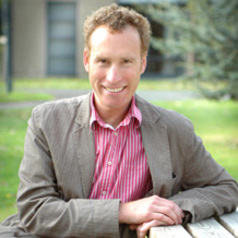
Arin Keeble's research focuses on the way contemporary literature and culture represents and responds to terrorism, crisis and disaster. Under this umbrella he is working in three distinct areas: the '9/11 novel', narratives of Hurricane Katrina and contemporary American television (particularly David Simon and TV audiences in the UK). He currently has significant projects underway in each of these areas. The '9/11 Novel' – Dr Keeble's work in this area has sought to move beyond a polarised critical paradigm that has pitted domestic narratives of trauma in opposition to more outwardly facing political narratives. This was the subject of Dr Keeble's doctoral research, and he has published three peer reviewed articles in Modern Language Review, Reconstruction and European Journal of American Culture in this area. Additionally, his monograph, The 9/11 Novel: Trauma, Politics and Identity was published by McFarland in 2014. His most current work in this area is an article on Thomas Pynchon's Bleeding Edge (2013) entitled 'Before and After in Bleeding Edge', which is under review. Narratives of Hurricane Katrina – Dr Keeble's work on Katrina focusses on the ways in which literary, cinematic and televisual narratives of Katrina respond not just to the Katrina crisis, but also to the politics of the War on Terror, and to the perceived apolitical nature of many early narratives of 9/11. Dr Keeble's first publication in this area was 'The Aggregation of Politics in Dave Eggers Zeitoun' which appeared in the peer reviewed Journal of Comparative American Studies (13.3). Dr Keeble has also guest edited a special issue of European Journal of American Cultures which comes out later this year, and includes his article on David Simon's television series Treme (2009-2013) 'Won't Bow, Don't Know How: Treme, and New Orleans Exceptionalism'. Additionally Dr Keeble is working on a new monograph on Katrina narratives which will appear in 2017. American Television – Dr Keeble's first published work in this area was a co-edited collection of essays with Dr Ivan Stacy (Hong Kong Baptist University) on David Simon's The Wire (2002-2008) which appeared in 2015, The Wire and America's Dark Corners: Critical Essays. Dr Stacy and Dr Keeble have continued to collaborate on the subject of David Simon's television; their co-guest edited special issue of European Journal of American Cultures features eight new essays on Simon. Dr Keeble's interest in US television extends to the way it is received by UK audiences and he is developing an audience studies partnership project with a colleague at Durham University and two major UK cultural cinemas.
My current preoccupation concerns interrogation of violence in the political process. There are three interrelated intellectual queries I am pursuing while using violence as the abiding theme. The first one examines the Politics of Sexual Violence in Armed Conflicts. The second one evaluates the Role of Violence in the Sacred. And the third one explores ways of Managing Violence in Post-Conflict Societies. My other subsidiary research interests are: ethno-politics; conservative nationalism; religious radicalism; and peace-building in deeply divided societies.
My latest research focuses on applyting collaborative BCIs to visual search. We have proven that by merging EEG signals from several users we can locate and localise targets within streams of images (both temporally and spatially). This topic relates to several different fields, such as neuropsychology, artificial intelligence and signal processing. Research interests: Brain-Computer Interfaces, Collaborative Brain-Computer Interfaces, visual search
Andrew Street is a Professor of Health Economics and Director of the Health Policy team in the Centre for Health Economics and Director of the Economics of Social and Health Care Research Unit (ESHCRU), a joint collaboration with the Personal Social Services Research Unit (PSSRU) at the London School of Economics and the University of Kent. He is an editor of the Journal of Health Economics, and currently serves as a board member on the NIHR Health Services and Delivery Research programme Commissioning Board Researcher-led (since 2009) and the Norwegian HSR Board (since 2011), and as chair of the Welsh Health Economics Support Service Advisory Group. He is an external affiliate to the Department of Business and Economics at the University of Southern Denmark. Andrew's research covers measurement of health system productivity, evaluation of activity based funding mechanisms, analysis of organisational efficiency, and critical appraisal of health policy. He has a MSc in Health Economics (1990), a MA in Public Administration and Public Policy (2000) and a PhD in Economics (2002), all awarded by the University of York. After completing his MSc, Andrew spent three years in Australia working at the National Centre for Health Program Evaluation, Monash University and the Victorian Department of Health and Community Services. This was followed by a five-year spell with the York Health Economics Consortium. He joined the Centre for Health Economics in April 1999. From 1999-2003 he held a special training fellowship awarded by the Medical Research Council and Northern and Yorkshire Region. In 2005 he worked part time in the Delivery Analytical Team in the English Department of Health.
Prof Amanda Weltman is a theoretical physicist who came to the University of Cape Town after earning her PhD in Physics from Columbia University under the supervision of Brian Greene, and working as a postdoctoral Researcher at Stephen Hawking's research group at the Center for Theoretical Cosmology at Cambridge University. Weltman’s research focus is on the fundamental physics that underlies the nature of the Universe. The goals of her research are to study the Universe as a whole, while gaining insight into its origin, composition, structure, evolution and ultimately its fate. Weltman has recently been awarded a SARChI in Physical Cosmology, and is the first woman in the mathematical or physical sciences to win the prestigious award. Weltman has won several prestigious awards including a Next Einstein Fellow award(2015/2016), the South African Institute of Physics Silver Jubilee Medal (2013), the Elsevier Young Scientist Award (2012) and the NSTF-BHP Billiton, TW Kambule Award (2012), the Women in Science award (2009) amongst many others. She is a member of the Cape Town Science Centre Scientific Advisory Board, the South African Royal Society and on the executive of the South African Young Academy of Sciences. “My training and my interests lie in both high energy particle theory and in cosmology,” says Weltman, “and my research is focused on developing bridges between the two.”
Dr Alice de Jonge is a senior lecturer in the department of Business Law and Taxation. Alice has travelled extensively throughout Asia and speaks Mandarin and Chinese. She lived and studied in Shanghai (Fudan University), and was a visiting scholar at Nanjing University. She has provided written advice for the Central and East European Law Initiative of the American Bar Association, and provided advice in cases before the Refugee Review Tribunal. Alice was awarded the LawAsia Research Award in 1998, and has also been the recipient of a number of travelling scholarships and research grants. Alice has also been involved in the design and delivery of a number of AusAid-funded international trade law short-courses aimed at government officials from Vietnam, Thailand, Laos, Cambodia and Burma. Her research and supervision interests include corporate governance in Asia, cross-border issues of corporate governance in China and Hong Kong, women directors in China and India, Australia-China relations, international law and its applicability to transnational corporations, sovereign bankruptcy, and international law and unequal treaties in international law.