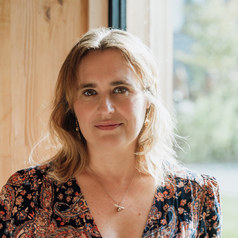
Professor of Creative Writing, York St John University Abi is Professor of Creative Writing at York St John University. She has won an Eric Gregory Award and Somerset Maugham Award for her poetry collections, The Glass Delusion (Salt, 2013) and Unexpected Weather (Salt, 2009). Abi has a PhD in Creative and Critical Writing, she joined York St John in 2010 and was Subject Director for Creative Writing until 2017, and is now co-ordinating the MA and MFA programmes. Her work often engages with other disciplines, such as visual art, science and history: she has worked with the Darwin Centre at the Natural History Museum and had poetry set to music by composers. Her writing explores such topics as mushrooms in Freud; the power of the squid in literature; the relationship between poetry and ventriloquism; climate change; ‘speculative elegy’, and pollination. Abi's most recent work is a speculative fiction novel, The Headland, is published by Gold SF (Goldsmiths/Penguin)
Director of the Business Advice Centre for Post Graduate Students at UEL, Ambassador of the Centre for Innovation, Management and Enterprise, University of East London Dr Alina Maria Vaduva is a business lecturer, leader, SME innovation evaluator and entrepreneur. Dr Vaduva is passionate about strategy, management, leadership, and the application of technology in education and human resource management. Dr Vaduva is an SME innovation expert evaluator for the European Commission and has assessed more than 150 technology related proposals. Her recent research includes the use of gamification in student induction.
Associate Professor of Criminal Law and Criminal Justice, University of Reading Dr Adam McCann is an Associate Professor of Criminal Law and Criminal Justice at the University of Reading. His specific research interests and main publications concentrate on the legal framework surrounding end-of-life medical decisions in the context of broader governance and political theories. His work on assisted dying has been cited and recognised for ‘its important empirical dimension’ by the Dutch Supreme Court and listed on the European Parliament's selected reading on 'Assisted Dying in the EU and Beyond'. He has also provided expert evidence on comparative regulatory approaches to end-of-life law, upon invitation, to the UK Parliament, the Irish Parliament, and the first ever Citizens Jury in England on Assisted Dying .
Irish Research Council Postdoctoral Research Fellow, University of Galway Aisling Walsh is a Postdoctoral research fellow, supported by the Irish Research Council. She recently completed a PhD in Sociology at the University of Galway, researching decolonial and feminist practices of healing justice in Guatemala, supported by the Andrew Grene Postgraduate Scholarship in Conflict Resolution, Irish Research Council. She previously worked as a Postdoctoral researcher for the Learning in Motion project at the University of Limerick, supported by the Irish Research Council's COALESCE fund. She has written essays and features for The Guardian, Al Jazeera, The Irish Times, The Sunday Business Post, Open Democracy, Women Under Siege, Electric Literature, Catapult and Literary Hub among others. My full portfolio is available here: https://muckrack.com/aisling-walsh-1
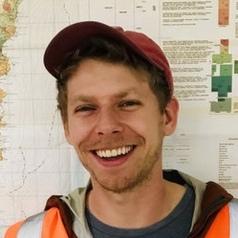
Assistant Professor of Geoscience, Boise State University Ph.D. | University of Texas at Austin, Geological Sciences, 2022 M.S. | Boise State University, Geophysics, 2017 B.S. | Georgia Institute for Technology, Earth and Atmospheric Sciences, 2014 Research Tectonics and geodynamics at active plate boundaries Structure and properties of volcanic systems and materials Seismic imaging and tomography of the lithosphere Geophysical data analysis
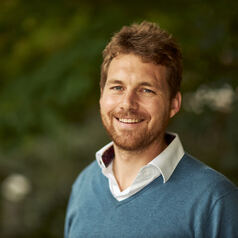
Science Lead, University of Oxford From a young age, I have been curious about the physical and natural world that surrounds us. This broad interest across physics and biology led me to study chemistry, as the central science, at Wadham College at the University of Oxford where I stayed for my MChem and PhD degrees. During my PhD, I developed a new family of catalysts – substances that speed up a reaction – and investigated their application in a range of industrially relevant processes. These catalysts do not contain metals, are cheap, generate less waste, and work under milder conditions than metal catalysts, and therefore offer a more sustainable approach to chemical processes. After this, I became interested in applying chemistry and chemical principles to address biological questions and in particular to the issue of Antimicrobial Resistance (AMR). My interdisciplinary team and I, as part of the Ineos Oxford Institute, try to understand the mechanisms of bacterial resistance to antibiotics. We then develop new molecules and combinations of molecules that are active against the bacteria. Tackling AMR is a challenge and requires interdisciplinary research involving policy makers, health economists, chemists, microbiologists, biochemists and others to advance. Good science with direct societal benefit and the diversity of people make this a great area to work in. I am a strong advocate for the use of science to better inform policy and policymakers. I have had the opportunity to present my research at the Houses of Parliament and to shadow parliamentarians and policymakers as part of the Royal Society Pairing Scheme. Advances in science and innovation are fundamental in improving the general wellbeing of society.