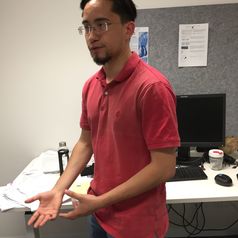
Research Assistant at the Fenner School, Australian National University I am a recent graduate and PhD-candidate looking towards improving food, water and energy security in Australia. Through the PhB Science degree at ANU, I studied primarily pure mathematics and physics, however, ended up doing my Honours year at the Fenner School for Environment and Society, on how one can model tipping points in the Earth System, specifically looking at mangrove ecosystems as a case study. I have research experience in quite a diverse range of areas, including plasma physics, physics education, machine learning, network theory, dynamical systems and most recently water security. I'm broadly interested in complex adaptive systems, transdisciplinary synthesis research and climate adaptation.
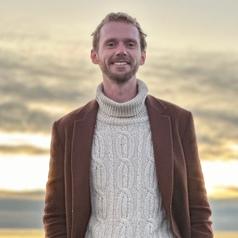
PhD Candidate, Scott Polar Research Institute, University of Cambridge I am a PhD candidate at the Scott Polar Research Institute, University of Cambridge. My research focusses on the social and ethical questions that arise alongside attempts to study ideas to artificially intervene in elements of the climate system in the Polar regions: Who is included such projects, and who isn't? What kind of questions are being asked, and how are uncertainties and risks treated? And how do these ideas relate to each other, and to more conventional adaptation or mitigation schemes? My current academic journey officially takes place within the bounds of a Geography department, but I have a background that spans various social sciences and humanities disciplines, and have also made some forays into the earth sciences.
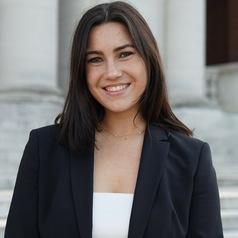
Medical Student, College of Medicine and Life Sciences, University of Toledo Anna-Grace Lilly is currently a first year medical student at The University of Toledo College of Medicine and Life Sciences. She is interested in reproductive health and has been working in the Vanderbilt University Reproductive Politics Lab since 2021.
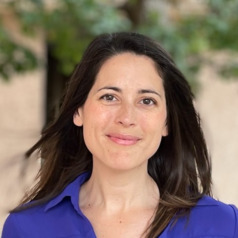
Associate professor, American politics, University of Oklahoma Dr. Shortle is an associate professor at the University of Oklahoma, where she studies group identity in the context of American political behavior. She also serves as a faculty member for Latinx Studies and Women and Gender Studies. She runs OU’s Community Engagement + Experiments Laboratory (CEEL), Oklahoma City’s Community Poll (Exit Poll), and OU’s Democracy Survey of OU freshmen. For fun, she lends research support to organizations seeking to increase civic engagement and improve the physical and mental health of their communities. At the doctoral level, Dr. Shortle teaches courses on group identity, public opinion/political psychology, and American political behavior. Dr. Shortle’s Cambridge University Press book, The Everyday Crusade: Christian Nationalism in American Politics (2022 – w. Eric L. McDaniel and Irfan Nooruddin), examines the relationship between American religious exceptionalism and prejudicial and antidemocratic attitudes. She is a 2024–25 Public Fellow with the Public Religion Research Institute.
Professor of Political Science and Global Studies, University of California, Santa Barbara ALISON BRYSK is Distinguished Professor of Global Studies/Political Science at the University of California, Santa Barbara specializing in human rights. She is the author of seven books, most recently The Struggle for Freedom from Fear: Contesting Violence Against Women at The Frontiers of Globalization (Oxford University Press, 2018) and the editor of ten, including Populism and Human Rights in Turbulent Times (Edward Elgar, 2023). Brysk has been a Fellow at the Woodrow Wilson Center; Fulbright Professor in Canada, India, and Oxford; Visiting Scholar in Argentina, Ecuador, Sweden, Japan, South Africa, the Netherlands, Spain, Austria, France, and Taiwan; and member of the Council on Foreign Relations.
Assistant Professor, Faculty of Management, Dalhousie University Professor Cloutier’s research centres on leadership. She considers antecedents to leadership emergence (who becomes a leader?), barriers to leader role occupancy (who does not become a leader?) and predictors of leadership behaviour (why do some leaders behave well, and others badly?). She examines how employees' home-life, mental health and gender affect these leadership outcomes.