Senior lecturer, Department of Population Health, University of Otago Angela is a social scientist interested in the relationships between urban environments, transport and health. She is particularly interested in how public policies, particularly in transport, urban planning and housing, can address health inequalities and transport disadvantage. Angela undertakes research exploring perceptions and experiences of accessibility and how these interact with the built environment to influence outcomes, such as travel behaviour, transport disadvantage, physical activity, health and wellbeing, for different population groups. Her research focuses particularly the experiences of older adults and lower income groups. Angela uses both quantitative and qualitative social research methodologies and is particularly interested in novel methodological approaches, including those that utilise GIS. She is a member of Living Streets Aotearoa, Public Health Association of New Zealand, Engineering NZ Transportation Group and the New Zealand Geographical Society. She is a Fellow of the Royal Geographical Society with Association of British Geographers and a Fellow of the Higher Education Academy (UK).
Lecturer in Politics and International Relations, Monash University Dr. Alexandra Phelan is a Lecturer in Politics and International Relations at Monash University. Her research interests include insurgent governance and legitimation activities, insurgent women and gender, political violence, illicit financing and organised crime with particular focus on Latin America. She has published on insurgent legitimation strategies, the Colombian conflict, and women in terrorism. She is the author of the book, The Combination of All Forms of Struggle: Insurgent Legitimation and State Response to FARC (Columbia University Press, forthcoming 2024) and the editor of the book Terrorism, Gender and Women: Toward an Integrated Research Agenda (Routledge, 2021). She currently serves as an associate editor for the journal, Studies in Conflict and Terrorism. She is also a Small Wars Journal- El Centro Fellow, and an Associate Fellow with RUSI's Terrorism and Conflict group. Alex was the Deputy Director of the Monash Gender, Peace and Security Centre (Monash GPS) between 2020-2022, where her research at GPS focused on gendered approaches to understanding terrorism and political violence.
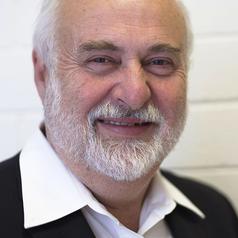
Distinguished Professor, Centre for Conservation and Ecology Genetics, University of Canberra Professor Arthur Georges is an ecologist and herpetologist whose research interests lie in the evolution, ecology and systematics of Australian reptiles. A fundamental interest in these fascinating animals takes him into the field and the laboratory to learn more of their biology and to apply what he has learned in solving contemporary challenges for their conservation.
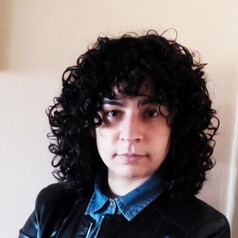
Profesora e investigadora de Organización de Empresas, Universidade de Santiago de Compostela Assistant Professor at Santiago de Compostela University, Spain (Department of Business Administration) and Valencia International University (Spain). Her research lines focus on corporate social responsibility, human resources management, and organizational behavior.
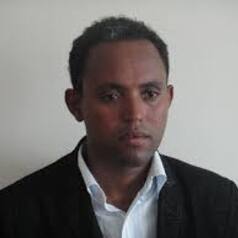
Associate Professor, Department of Environmental Health Science and Technology, Jimma University My PhD was in Environmental Science and was obtained from Vrije Universiteit Brussel. I have been working as a full-time professor at Jimma University, Ethiopia and visiting professor at Vrije Univeristiet, Brussels. The courses that I have mostly offered are pollution prevention and control, Environmental and Social Impact Assessment, Nature Based Solution for Sustainable Development and Water and Sanitation. I am currently active on research and project management.
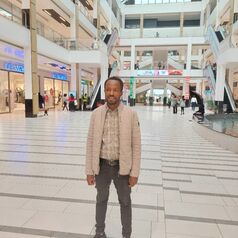
PhD student, researcher and conservationist, Jimma University I have been working on people-bird interaction studies for the past couple of years, focusing on indigenous people's relationships with local bird populations and ethno-ornithology. My research has taken me to remote communities (i.e., the Nuer community in western Ethiopia), where I have witnessed firsthand the deep and harmonious connection these people have with the birds around them. I am passionate about learning from these communities and using my research to help conserve both the birds and the traditional knowledge of the people who live alongside them. Through my work, I hope to contribute to bridging the gap between Western science and indigenous ways of knowing, ultimately leading to more holistic and effective conservation efforts. I am excited to continue learning and making a contribution at the intersection of ecology, culture, and conservation.