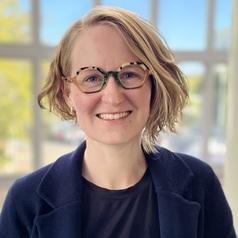
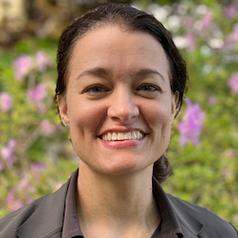
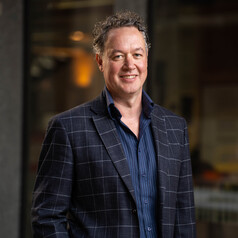
Associate Professor in Clinical Sleep Health, Flinders University Associate Professor Amy Reynolds is a clinical epidemiologist and provisional psychologist with research expertise in the relationships between non-standard work schedules (particularly shift work), health and safety. She is the current co-lead of the insomnia, shift work and body clock disruption theme at FHMRI Sleep Health (formerly Adelaide Institute of Sleep Health). Her key research focus is the experiences of shift workers living with sleep problems, many of which go undiagnosed and untreated for extended periods of time. These include obstructive sleep apnoea, insomnia, and shift work disorder. She uses mixed research methodologies in her research program, including working with large datasets, such as the multigenerational Raine Study, qualitative approaches, and intervention trials.
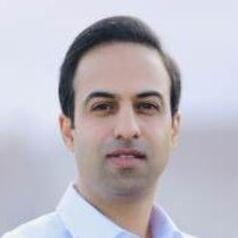
Assistant Professor of Atmospheric Science, Georgia Institute of Technology Dr. Ali Sarhadi is an Assistant Professor of Atmospheric Science at Georgia Tech. Dr. Sarhadi specializes in hurricane dynamics and risk assessment; climate risk and resiliency; compound and cascading dynamics, tropical hydrometeorology, and machine learning and manifold learning.
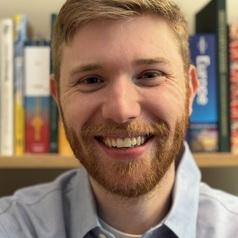
Lecturer in Media, University of Adelaide Alexander Beare is a Lecturer in media studies at The University of Adelaide. His work specialises in the dynamic relationship between televisual technologies and audience cultures. He has written about the industry logics underpinning Subscription Video on Demand (SVOD) programming imperatives and TV series such as The Sopranos, Ted Lasso, and Yellowjackets. He is the author of The New Audience for Old TV (Routledge, forthcoming 2024).
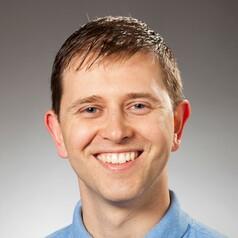
Senior Lecturer in Psychology, University of Canterbury I am a social and personality psychology researcher who studies the mental processes that enable human agency and moral character. I conduct experiments inspired by philosophical questions, such as "do people have free will?" and "what does it mean to be a moral person?"
Associate Professor of Biochemistry, Villanova University Dr. Aimee Eggler is an Associate Professor in the Department of Chemistry and Biochemistry at Villanova University. She is the recipient of a Junior Faculty Excellence in Teaching Award and a Tolle Lege Teaching Award from Villanova. Aimee's research lab, powered by undergraduate and masters students, studies the Nrf2 protein, the master switch in humans for antioxidant, detoxification and inflammatory systems. Her research papers have been cited over 3000 times. Currently funded by two National Institutes of Health grants, these projects assess 1) the effects of Philadelphia subway air pollution on human lung cells, and 2) whether combining a broccoli sprouts supplement with exercise in older individuals can boost age-related declines in Nrf2 activation.
Director, Environment Institute, University of Adelaide Professor Andrew Lowe is a dynamic and innovative research leader with executive experience in university, government, start-up industry and community sectors. He is particularly skilled at identifying and realizing research opportunities and partnerships combining collaborative research expertise with external stakeholders. Since 2015, Andrew has undertaken roles specialising in partnership building to deliver research outcomes. He is currently Director of the Environment Institute, one of the University of Adelaide’s six research Institutes with over 100 members. During his tenure he has led a culture-focused rebuilding of the institute to prioritise activity around key staff and strengths. Other roles include, Director of Agrifood and Wine (2017-2020), an institution-wide role that brought together expertise in research and teaching across Faculties, Institutes and Schools to coordinate and provide engagement with the food industry and government sectors across Australia and internationally. During this time Andrew also served as Science Director for the $121M Fight Food Waste Cooperative Research Centre. He was the research lead for the bid and responsible for developing the research investment portfolio across 60 research and industry partners. He also served as Deputy Dean – Partnerships and Collaboration in the Faculty of Science (2015-2016), coordinating early and mid-career training and mentoring programs and building partnerships with external stakeholders. Since 2012, Andrew has held significant research infrastructure management positions. He led and negotiated the South Australian node of the NCRIS funded Terrestrial Ecosystem Research Network, served as Science Director and Board member. He is currently Director, NCRIS strategy, coordinating across the University’s significant NCRIS portfolio. Andrew is a successful academic leader, and was made full professor in 2006, nine years after gaining his PhD in Plant Evolutionary Biology (1997) from the University of St Andrews, UK. He has helped secure over $250M of funding and has published over 250 scientific papers and books (including in Science, Nature PNAS), which have attracted >23,000 citations and an h index of 75. He has collaborated with over 300 researchers, from 100 institutes in 30 countries, and has directly supervised over 120 technical and postdoctoral staff, and graduate students (PhD, MSc Honours). Experienced in commercializing research, Andrew is Chief Scientific Officer of Double Helix Tracking Technologies, a Bioknowledge start-up headquartered in Singapore that uses DNA tools to identify and help eliminate illegally logged timber from global supply chains. He has served on a broad range of international and national boards and committees, including: Lead author of the Intergovernmental Platform for Biodiversity and Ecosystem Services (IPBES) assessment on Land Degradation and Restoration; the United Nation’s Office of Drugs and Crime expert working group on timber tracking; review panel for the $200M New Zealand Natural Heritage strategic investment research program; the board of the Atlas of Living Australia, and has headed up and participated in international delegations; e.g. leading the University’s delegation at COP22 in Marrakech, and working with Australian Chief Scientist Ian Chubb and departmental officials to negotiate Australian partnership priorities for the EU funding program Horizon 2020. He has also held executive positions in the government sector, including acting Director of the South Australian Museum (2013-2014), and Head of Science in the South Australian Department of Environment (2006-2012). Andrew is passionate about communicating science and knowledge to a general audience and is an experienced media article writer and public presenter. He has presented at TedX and PechaKucha events, hosted panel discussions (WOMAD Planet Talks), runs blog sites (biodiversityrevolution and andylowe), hosts podcasts (Discovery Pod, EcoFuturists, FoodFuturists) and has served as Scientist in Residence for the Australian Financial Review (2019-2020) and the Advertiser (2018). He has published over 150 media articles and given over 250 public and scientific presentations. Uni profile: http://www.adelaide.edu.au/directory/andrew.lowe Check out his blog at https://biodiversityrevolution.wordpress.com Lab group website: http://lowelabgroup.com.au Conservation Science: http://www.adelaide.edu.au/environment/cst/ Google Scholar: https://scholar.google.com.au/citations?user=7f5oIgYAAAAJ&hl=en&authuser=2 Also on ResearchGate and LinkedIn