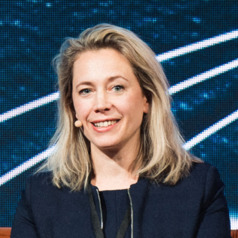
Senior Lecturer, Management and International Business, University of Auckland, Waipapa Taumata Rau Antje Fiedler (PhD, University of Auckland, NZ) is Senior Lecturer in Management specialising in entrepreneurship and International Business. She is also the Associate Director of the New Zealand Asia Institute (NZAI) at the University of Auckland Business School. She is also a Director of the Board of the Small Enterprise Association of Australia and New Zealand (SEAANZ). She is passionate about conducting research that is relevant to practice. Her research interests centre around how SMEs can productively engage with Asia. Her research has been informed courses at the Business School (University of Auckland) and practitioner workshops around New Zealand. Antje has received three Excellence Awards for her Teaching at the University of Auckland Business School. She is an Associate Editor for the Journal of Small Business Management and serves on the editorial review boards for Small Business Economics and Critical Perspectives on International Business. Her work has been published in international journals such as International Small Business Journal, Entrepreneurship & Regional Development, Human Relations, Small Business Economics, European Industrial Relations Journal and New Political Economy.
Associate Professor of Mathematics, University of Dayton Alan Veliz-Cuba is an Associate Professor at the University of Dayton. His research area is mathematical biology with applications to gene and neural networks.
Reader in Nineteenth-Century Literature, King's College London Dr Adelene Buckland studied English at the Universities of Birmingham and Oxford, before becoming a postdoctoral researcher at the University of Cambridge. Her first monograph, Novel Science: Fiction and the Invention of Nineteenth-Century Geology (Chicago: University of Chicago Press, 2013) won the Marc-Auguste Pictet Prize for the History of Science, was shortlisted for the British Society for Literature and Science annual book prize, and was awarded an Honorable Mention in the 2013 Sonya Rudikoff prize for best book in Victorian studies, awarded by the North American Victorian Studies Association. She began teaching at King's in September 2012, and is currently working on a monograph entitled Baby Machines: Mothers and Love in the Electromechanical Age, 1840-1940.
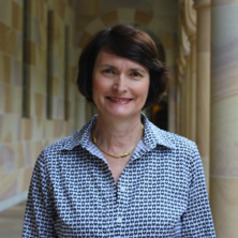
Professor of Educational Psychology, The University of Queensland Annemaree Carroll is Associate Dean Research in the Faculty of Humanities and Social Sciences and Professor of Educational Psychology within the School of Education at The University of Queensland. Her research activities focus on the social emotional learning of children and adolescents, and the importance of social connectedness, (dis)engagement, and social inclusion to their behavioural and educational outcomes. Student, teacher, and community voices and agency are key considerations in her research methodologies. She is known nationally and internationally for the development of innovative emotion regulation interventions for children and youth to bring about positive change in their lives. She has conceptualised and coordinated the development of the Mindfields Suite of Programs (www.mindfields.com.au), which encompasses a strengths-based approach to student well-being that targets school-wide practices to help young people take control of their lives. She has also led a team of researchers to develop the KooLKIDS Resources (www.kool-kids.com.au), an emotion resilience program to empower children to live well with themselves and others by learning social, emotional and cognitive skills that promote self-regulation and well-being. Her research has now extended to teacher emotion regulation strategies, demonstrating that improved teacher well-being has downstream benefits to students' well-being and the teacher-student relationship. Professor Carroll has extensive experience managing large-scale, school-based projects across classroom settings and clinic-based research, in which she has excellent skills in test administration with children and adolescents. She has also been concerned with children with neurodevelopmental disorders (e.g., ADHD, speech-language disorders, Tourette Syndrome) to examine information-processing tasks that may demand intact executive functioning and that require dual-task performance and control of impulsive reactions. From 2014 to 2020, Professor Carroll was Co-ordinator of Translational Outcomes within the Australian Research Council Science of Learning Research Centre. Building on this work, she is the co-founder and Head of the UQ Learning Lab, where multi-disciplinary researchers work in partnership with educational and industry professionals to identify and address important learning and training priorities. The Learning Lab’s primary objective is to transform education and learning across schooling and beyond, through partnered innovations and research translation initiatives. Professor Carroll is a registered teacher and psychologist. She has experience teaching in primary and special education in Queensland and has engaged in research and higher education teaching at The University of Queensland and The University of Western Australia, where she was granted a Master of Education (1991) and PhD in Educational Psychology (1995). She was elected a Fellow of the Academy of Social Sciences in Australia in 2018.
Postdoctoral researcher in the UQ Learning Lab, The University of Queensland Dr Amanda Bourgeois is a postdoctoral researcher in the UQ Learning Lab: a group of multi-disciplinary researchers, educators, and industry partners who collaborate to transform learning, teaching, and training in diverse school and post-school contexts through the science of learning. In this role, Amanda is investigating the proposed adolescent ‘dip’ across a range of social, emotional and cognitive skills and dispositions, predominantly around the age of 15. This dip has appeared in research projects looking at diverse, but related phenomena such as academic wellbeing, learning regulation, emotion regulation, engagement, curiosity, creativity, and self-esteem. Amanda is developing a comprehensive literature review of the adolescent dip with the aim to better understand what is happening, when, and the potential causes, with the aim of working with education stakeholders to co-design possible interventions and resources to support positive growth and development through the adolescent period. Amanda has experience as a teacher and counsellor working with disadvantaged adolescents in both the United States and Australia. Her research activities span the topics of adolescence, wellbeing, classroom emotions, student-teacher relationships, and student self-efficacy, particularly with a focus on those from a low socioeconomic background. Amanda is interested in incorporating innovative, real-time forms of measurement in classroom research and she recently developed the S2* emotion application, which captures real-time emotions and causes for emotions.