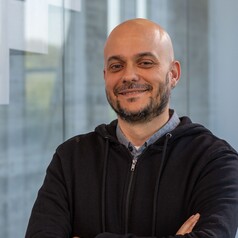
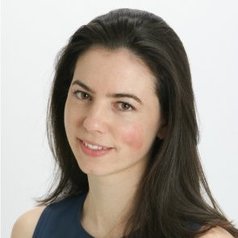
Professor of Criminology, University of Glasgow Alistair Fraser is Professor of Criminology at the University of Glasgow, and formerly Director of the Scottish Centre for Crime and Justice Research. He teaches and researches issues of youth violence, street culture, and urban crime, with a particular interest in the global gang phenomenon. His work seeks to make theoretically ambitious, empirically grounded, policy relevant contributions to academic and public debate. He recently completed a major new study, funded by the Economic and Social Research Council (UK), investigating the meaning and utility of 'public health' approaches to violence reduction in Scotland and England (https://changingviolence.org). Alistair is the author of two books: Urban Legends: Gang Identity in the Post-Industrial City (OUP, 2015) and Gangs and Crime: Critical Alternatives (Sage, 2017) and is authored or co-author of more than thirty other publications in journals or edited collections, in outlets including the British Journal of Criminology, British Journal of Sociology, Theoretical Criminology and The Oxford Handbook of Criminology. Alistair is a regular contributor to public debate on issues of crime and justice and has written for the Wall Street Journal, Herald, Scotsman and Conversation as well as making contributions to BBC Scotland, BBC’s ‘Timeline’, STV's 'Scotland Tonight', and BBC Radio Four's 'Thinking Allowed.' In 2017-18, Alistair was selected as a BBC/AHRC ‘New Generation Thinker’ and collaborated with BBC Radio 3 on a series of broadcasts on themes of gangs, street culture, gentrification, and boredom.
Distinguished Professor of Anthropology; Director, Center for the Study of Genocide and Human Rights, Rutgers University - Newark Alexander Hinton (@AlexLHinton) is Director of the Center for the Study of Genocide and Human Rights and Distinguished Professor of Anthropology at Rutgers University Newark. He is also a past President of the International Association of Genocide Scholars (2011-13) and holds the UNESCO Chair on Genocide Prevention. He is the author or editor of seventeen books, including the award-winning Why Did They Kill? Cambodia in the Shadow of Genocide (California, 2005), The Justice Facade: Trials of Transition in Cambodia (Oxford, 2018), and, most recently, It Can Happen Here: White Power and the Rising Threat of Genocide in the US (NYU, 2021) and Anthropological Witness: Lessons from the Khmer Rouge Tribunal (Cornell, 2022). Research interests: Sociocultural and psychological anthropology; genocide and political violence; extremism; transitional justice; US and Southeast Asia (with a focus on Cambodia); culture and mind; globalization and modernity; self and emotion; anthropology and critical theory.
Assistant Professor, Political Economy and Public Economics, University of Warwick I am a public and urban economist studying how households choose where to live. I also examine ways in which government policies affect location choices and can counter inequalities in access to neighbourhoods, education and health.
Adjunct professor, UniSA Business, University of South Australia Al Rainnie is an Adjunct Professor within UniSA Business, University of South Australia and the Department of Management, Curtin University.
Investigador Ramón y Cajal en Ciencias de la Tierra y del Agua, Centro Interdiscilplinar de Química e Bioloxía (CICA), Universidade da Coruña Soy paleoclimatólogo con experiencia en diferentes campos del estudio del clima que van desde reconstrucciones climáticas a lo largo del Cuaternario a calibración de datos de registros naturales mediante registros instrumentales. Además, durante mi carrera he buscado enfoques novedosos para mejorar el estudio de la variabilidad atmosférica regional y global durante los últimos milenios. Me licencié en Geología por la Universitat de Barcelona (UB) en el año 2003. Posteriormente, en septiembre de 2010, obtuve mi doctorado en ciencias de la Tierra en el GEO3BCN-CSIC y la UB con la máxima calificación. También recibí el premio a la mejor tesis doctoral en Ciencias de la Tierra presentada en la UB en ese año. Como investigador, en mi etapa postdoctoral, obtuve dos contratos en concurrencia competitiva: un contrato FCT-Marie Curie Cofund de 2012 a 2017 para trabajar en el IDL-Universidade de Lisboa (Portugal); y un contrato Beatriu de Pinós (AGAUR) de 2018 a 2020, para desarrollar mi propio proyecto de investigación en el GEO3BCN-CSIC. Después de dos años académicos (2020-2022) como profesor en gestión ambiental y forestal, actualmente (desde 2022) soy Investigador Ramón y Cajal en el CICA - UDC, profesor del Departamento de Física y Ciencias de la Tierra, y desde 2024, director de sostenibilidad de la Universidade da Coruña. Durante mi carrera, he realizado estancias de investigación en distintos centros reconocidos por sus estudios del Cuaternario, lo que me ha permitido adquirir un conocimiento interdisciplinar en biogeoquímica, geocronología y estadística avanzada, para llevar a cabo nuevas reconstrucciones climáticas del Cuaternario basadas en indicadores procedentes de registros naturales. Estas estancias fueron en el British Geological Survey (Reino Unido), la Universidade de Lisboa (Portugal), el University College of Dublin (Irlanda) y la Royal Holloway University of London (Reino Unido). Los principales resultados de mi investigación, derivados de mi liderazgo y colaboración en diversos proyectos de investigación nacionales e internacionales, han sido publicados en revistas científicas internacionales.
Lecturer, Cornell University Adrienne Rose Bitar is a lecturer in American Studies at Cornell University. She specializes in the history and culture of American food and health. Her first book, Diet and the Disease of Civilization, reveals how 20th century diets (primarily Paleo, biblical, detox, and primitive) have articulated a powerful response to anxieties about the psychic and physical costs of modernity. Following an imaginary chronology of human origins, the book examines Paleolithic diets, biblical diets, precolonial diets, and environmentalist detoxification programs. She is currently working on a new project on lab-grown meat and meat analogues. She earned her PhD in 2016 from Stanford University in Modern Thought and Literature. She can be reached at arj67@cornell.edu.