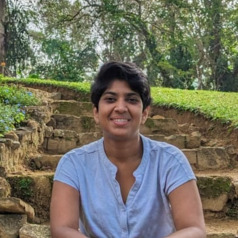
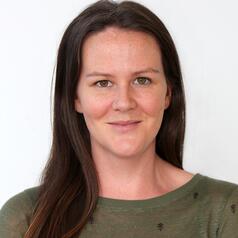
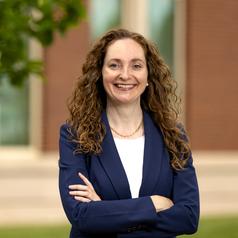
PhD Candidate in Genetic Engineering and Cancer, WEHI (Walter and Eliza Hall Institute of Medical Research) Amali Cooray is a final year PhD candidate at the Walter and Eliza Hall Institute. Her research focuses on using advanced gene engineering techniques (CRISPR) and bioinformatic tools to identify tumour promoting genes in blood cancers. She has given scientific talks, tours and demonstrations to students, donors, and members of the public, and believes science should be accessible to everyone.
Senior Lecturer in Entrepreneurship, Consumer Studies and Technology Education, North-West University Entrepreneurship education and entrepreneurial learning is at the core of my research. I also have extensive experience in the fields of Consumer Studies education and Technology education - two high school subjects in South Africa. My research focuses on investigating, analysing and benchmarking the curricula for these subjects, as well as developing teacher training programmes to support teachers in the effective implementation of these subjects' curricula in practice. I often collaborate with colleagues across Africa in my endeavours to develop and expand education, especially entrepreneurship education, on the Mother Continent.
Research fellow of Mineral Physics, University of Leeds My principal area of research is the key processes in the metallic cores and magma oceans of rocky planets which facilitate habitable conditions at the surface. I work within the Leeds Centre for Planetary Cores but collaborate broadly, so if you have ideas, I’m all ears! Feel free to send me an email or catch me at a conference. I am regularly at the AGU and EGU annual meetings and help organise the Mineral Physics Group Research in Progress meetings.
Group Leader and Senior Research Fellow, Anatomy and Developmental Biology, Monash University Dr Amy Winship is a Rebecca Cooper Foundation Al & Val Rosenstrauss Fellow and Group Leader in reproductive biology at Monash Biomedicine Discovery Institute. She obtained her PhD in 2016 at the Hudson Institute of Medical Research, defining cytokine functions in the reproductive tract (PNAS 2015, Scientific Reports 2015) and reproductive cancer (Molecular Cancer Therapeutics 2016). Her recent research has been at the forefront of the fertility preservation field in identifying ovarian toxicity profiles of new-line cancer therapies, including PARP inhibitors and immunotherapies. Immune checkpoint inhibitors (ICIs) have revolutionised cancer therapy – harnessing the patient’s own immune cells to mount an anti-tumour response. Using preclinical models, Dr Winship's research made the ground-breaking discovery that ICIs cause irreversible ovarian damage, raising concerns that people treated with these agents may be at increased risk of infertility and comorbidities related to early menopause (Nature Cancer 2022). Dr Winship’s current research proposes that uterine protection is the missing link to effective fertility preservation for healthy pregnancy for cancer survivors. Her teams’ analysis of clinical pregnancy outcomes shows survivors experience increased rates of infertility and obstetric complications after cancer therapy, even after using currently available fertility preservation methods, including embryo transfers from cryopreserved or donor oocytes (eggs), unexposed to cancer therapies (Human Reproduction Update 2020). This research has overturned dogma that because of its’ cyclical and regenerative nature, the endometrium – the inner lining of the uterus – does not sustain permanent damage. By designing unique preclinical models (Reproduction & Fertility 2022) and using primary human tissues, we showed the first empirical evidence that radiotherapy causes direct, lasting uterine damage (JCI Insight 2023), leading to new clinical guidelines for patients and clinicians (Human Reproduction Open 2020). Her other recent research has examined the essential role of DNA repair capacity in regulating quality control of the ovarian germline (Human Reproduction Update 2018). She recently revealed evidence that loss of BRCA1 exacerbates age-related decline in oocyte number and quality. This is important knowledge to support BRCA mutation carriers, who already face higher risks of developing breast and ovarian cancer, to make informed decicions about their fertility (eBioMedicine 2024). In addition, her work uncovered the first evidence for a key role of intrinsic DNA break repair in response to endogenous DNA damage (i.e. resulting from normal cellular processes) to safeguard primordial follicle oocyte number, genetic integrity and reproductive capacity (Human Reproduction 2020).
Assistant Professor, Markets, Innovation, and Design, Bucknell University My research examines the sociocultural dynamics that shape sustainable consumption practices. I'm curious about what drives consumers’ quest to buy the latest and newest, and how consumers adopt more sustainable-oriented practices.
Professor of Consumer Research, University of Bristol I am Professor of Consumer Research, University of Bristol Business School. Previously I worked for 18 years at the School of Management, University of Bath. My current research explores consumption phenomena related to the global research grand challenges of sustainability and climate change; equality, diversity and inclusivity; and health and well-being.