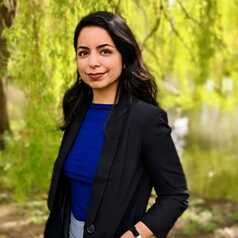
Lecturer in Politics and Policy, University of East Anglia I work at the intersection of comparative politics, communication, sociology, and public policy. I ask questions about ideology and discourse, processes of policy making, and right-wing mobilisation in the US, UK and India. I am an Assistant Professor/Lecturer in Politics and Public Policy at the University of East Anglia, UK. Prior to this position, I was a Postdoctoral Fellow in Policy and Governance at the Crawford School of Public Policy, Australian National University, and a New Generation Network Scholar at the Australia India Institute. Parallel to my independent research, I led a research project in 2021 funded by the Immigrant Learning Center and the Institute for Immigrant Research examining the policy neglect experienced by immigrant essential workers in the U.S. during the COVID-19 pandemic.
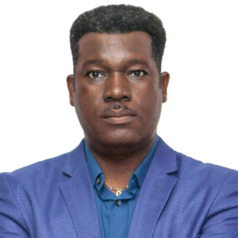
Head of Medical Entomology and Parasitology, Institut de Recherche en Sciences de la Santé (IRSS) Prof. Abdoulaye Diabaté is head of Medical Entomology and Parasitology at the Research Institute in Health Sciences (Institut de Recherche en Science de la Santé (IRSS) /Centre Muraz) in Bobo-Dioulasso, Burkina Faso and the principal investigator of Target Malaria Burkina Faso. Prof. Diabaté joined Target Malaria in 2012 when he established Target Malaria Burkina Faso. He has since become a leader in malaria research and in genetic approaches to malaria reduction in Africa. Prof. Diabaté was trained as a doctor of animal biology and ecology at the University of Ouagadougou and obtained his PhD in parasitology from the University of Montpellier II (France) in 2003. He completed a post-doctoral fellowship in 2005/2009 at the Laboratory of Malaria and Vector research of the National Institutes of Health (NIH) in the USA. He returned to Burkina Faso in 2009, where he now works at the Research Institute in Health Sciences heading the medical entomology laboratory. Professor Diabaté has been an invited speaker in several prestigious universities including Harvard University to catalyse a lasting collaboration between IRSS and other research centres or universities across the world. He is a recipient of the Royal Society Pfizer award 2013, was awarded the Grand Challenges Star in Global Health grant and the MRC/DFID African Leader Scheme grant, the PAMCA award for his contribution to the medical entomology field and the “Chevalier des Palmes académiques” of the Government of Burkina Faso in recognition of his significant contribution to scientific research in Burkina Faso. He was interviewed by several prestigious international and national media, including the BBC, Netflix, The New York Times, the National TV channel of Burkina Faso. He is a member of the African Academy of Sciences. Professor Diabaté and his team of eight researchers based in the United States and Burkina Faso received the 2019 Newcomb Cleveland Prize at the American Association for the Advancement of Science (AAAS). For more information, please read this blog by Raymond J. Monnat, Jr. M.D. More recently, he has been named as one of the 10 global winners of the prestigious Falling Walls Science & Innovation Prize 2023. An interview was published on the Falling Walls website titled ‘ERADICATING MALARIA: GENETIC SOLUTIONS AND AFRICAN LEADERSHIP‘.
Head of School, School of Architecture, Design and Planning, The University of Queensland Ali CHESHMEHZANGI is a Full Professor and Head of the School of Architecture, Design and Planning (ADP) at the University of Queensland, where he leads the school and researches across the fields of architecture, design, and planning/urbanism. He has been the World’s top 2% field leader for two consecutive years, recognised by Stanford University. He is among the top 30 global scholars in the urban sustainability research area. Ali is internationally known for his scholarly contribution and extended work on climate resilience and sustainable urbanism research. Ali has a wealth of experience, expertise, and a strong commitment to innovation and excellence in the fields of architecture, design, and planning, the three core disciplines of his School at UQ. With a career spanning over two decades, he has made significant contributions to the academic and professional communities, with a focus on sustainable and environmentally conscious design. Prior to joining UQ, Ali held several strategic leadership and senior managerial roles, such as Vice-President for International Engagement and Global Partnership, Founding Director/Head of the Center for Innovation in Education and Research, Head of the Department of Architecture and Built Environment, Founding Director of the Urban Innovation Lab, Director of a university-wide Teaching and Learning platform, Director of International Research Network for Rural and Urban Development, Head of Research Group for Sustainable Built Environment, co-director of university-wide research priority areas, Director of Center for Sustainable Energy Technologies, and Interim Director of Digital Design Lab. So far, Ali has published over 500 journal papers, articles, conference papers, book chapters, and reports. He has published 30 academic books, three of which have received awards at the national, provincial, and municipal levels. He also has received international awards and recognition for his research on urban resilience studies and sustainability research, as well as a Vice-Chancellor’s award for his impactful contribution to higher education.
PhD Candidate, Department of Health, Aging & Society, McMaster University Alexandra Nychuk (she/her) is Michif and a Citizen of the Manitoba Métis Federation. She is a PhD. Candidate and 2023 Vanier Scholar in the Department of Health, Aging & Society at McMaster University under the supervision of Dr. Chelsea Gabel. Alexandra's Doctoral research to focus on connection between Métis identity and Inflammatory Bowel Disease using an Arts-based Body Mapping Method. Having worked in governmental and non-governmental sectors, Alexandra is dedicated to using strength-based, rights-based, and community engaged participatory methods to improve Indigenous health through addressing anti-Indigenous racism in healthcare, reforming medical education, and designing Indigenous health policy.
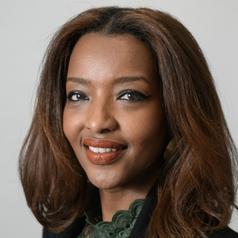
Senior Lecturer in Public Health, University of Greenwich Dr. Amal Elamin is a dentist and oral health expert who earned her PhD from the University of Bergen, Norway. With a wealth of experience, Dr. Elamin serves as a Senior Lecturer in Public Health at the University of Greenwich since 2022. She brings valuable expertise from their previous role as an Assistant Professor in Public Health at Zayed University in Abu Dhabi, United Arab Emirates. Within the University of Greenwich, Dr. Elamin teaches various undergraduate and postgraduate modules. She covers a range of subjects, including global health, health policy, health economics at the undergraduate level, and health management and global health in the postgraduate programs. Dr. Elamin's primary research focus lies in evidence-based dentistry, encompassing the exploration of oral health determinants, the evaluation of global attributes related to dental caries and periodontal diseases, and the application of evidence-based dentistry in informing policy-making processes. Dr. Elamin expertise also extends to investigating oral microbiological aspects, specifically studying intra-species phylogenetic differences and identifying virulent pathogenic clones associated with periodontal diseases.
Professor of Philosophy, Northeastern University London Anthony Clifford Grayling CBE FRSA FRSL is a British philosopher and author. Grayling is the author of about 30 books on philosophy, biography, history of ideas, human rights and ethics, including The Refutation of Scepticism (1985), The Future of Moral Values (1997), Wittgenstein (1992), What Is Good? (2000), The Meaning of Things (2001), The Good Book (2011), The God Argument (2013), The Age of Genius: The Seventeenth Century and the Birth of the Modern Mind (2016) and Democracy and its Crises (2017). Grayling was a trustee of the London Library and a fellow of the World Economic Forum, and is a fellow of the Royal Society of Literature and the Royal Society of Arts.[3] For a number of years he was a columnist for The Guardian newspaper, and presented the BBC World Service series Exchanges at the Frontier on science and society.