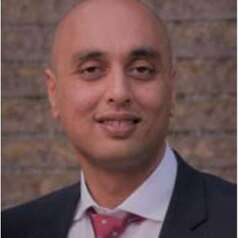
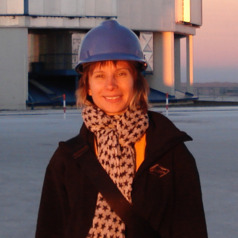
Associate Professor, School of Management, University of Bath Dr. Akhil Bhardwaj is an Associate Professor (Senior Lecturer) at the University of Bath School of Management, researching issues related to executive decision making and organization failures. He also works with organizations to help develop innovative governance solutions for high-risk environments. Prior to joining academia, Dr. Bhardwaj consulted for banks including BNP Paribas, and worked for CAT, Inc., overseeing assets worth over USD one hundred million.
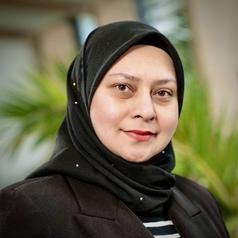
Associate Professor of Strategic Management, University of Bradford Dr. Amizan Omar is an Associate Professor of Strategic Management at the School of Management, University of Bradford, UK, and serves as Director of Accreditation for the Faculty of Management, Law and Social Sciences. Her interdisciplinary research centers on the integration of digital technology in organizations, particularly examining how digital technologies interact with institutional actors and structures in the transformation of public sector services. Her work aims to address managerial and societal challenges, contributing to the development of sustainable societies.
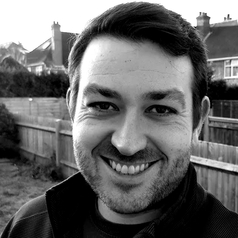
Lecturer in Pharmacology, University of Reading 18 million people die from cardiovascular diseases (CVDs) every year, accounting for approximately one-third of all global deaths. This includes deaths from heart attacks (myocardial infarction) and stroke, which involve blood clots forming within blood vessels that block blood flow to the heart of brain. Small cells in the blood called platelets play a central role in forming these clots. One of the best ways to prevent heart attacks and strokes is to reduce the ability of platelets to form clots using antiplatelet medications. These drugs are effective for many, but a minority of patients will suffer a cardiovascular event while on antiplatelet therapy. Another limitation of antiplatelet drugs is increased risk of haemorrhage, including catastrophic forms of bleeding such as intracranial haemorrhage (haemorrhagic stroke). In my research, I work with patients that are at risk of these negative outcomes to better understand why and work towards better treatments.
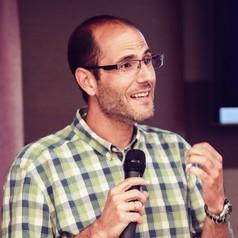
Profesor de Radiología y Medicina Física en la Facultad de Medicina de Albacete. Coordinador de la Unidad de Cultura Científica y de la Innovación (UCLMdivulga), Universidad de Castilla-La Mancha Licenciado en Física por la Universidad de Salamanca (2000) y doctor en Neurociencias por la Universidad de Salamanca (2005). Desde 2001 es profesor de la Facultad de Medicina de Albacete de la Universidad de Castilla-La Mancha (UCLM), tras pasar por la empresa privada en una multinacional tecnológica. En su tesina estudió la relación entre mortalidad y contaminación atmosférica (con la que obtuvo el Grado de Salamanca) y, aunque en su tesis desarrolló un modelo computacional que reproducía la respuesta de la membrana basilar en la cóclea, esencial en el proceso auditivo, desde 2009 investiga y divulga sobre campos electromagnéticos de radiofrecuencia y sus posibles efectos sobre la salud. Es socio de las sociedades científicas Bioelectromagnetic Society (BEMS) y de la European Bioelectromagnetic Association (EBEA). Es coordinador de la Unidad de Cultura Científica y de la Innovación de la UCLM (UCLMdivulga) y vocal del Comité Científico Asesor en Radiofrecuencias y Salud (CCARS) del Colegio Oficial de Ingenieros de Telecomunicación (COIT). Además, es miembro de la Junta Directiva de la Asociación de Profesores de Radiología y Medicina Física (APURF), socio de la Asociación Española de Comunicación Científica (AECC), del Círculo Escéptico y de la Sociedad para el Avance para el avance del Pensamiento Crítico (ARP-SAPC).
Associate Professor, School of Physics and Astronomy, Monash University My primary area of research interest is in the evolution and nucleosynthesis of sun-like low and intermediate-mass stars and the origin of elements in galaxies. The story of the origin of the elements is intimately tied to the processes of stellar evolution, which describes how stars change with time as a result of nuclear fusion. One focus of my research is the intriguing mystery of the production of heavy elements in stars, that is, elements heavier than iron. While astronomers can explain the origin of most of the elements in nature, the type of the stars that produced the heavy elements is still highly uncertain, especially in the early universe. My research has been focused on the role that low and intermediate-star stars play in this story.
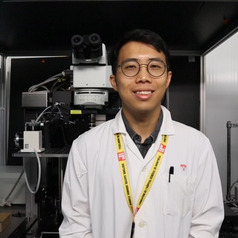
Postdoctoral Fellow in Neuroscience, McGill University I obtained my bachelor degree of biomedical sciences in the University of Hong Kong in 2016. I started my master right away and fast-tracked to obtain my PhD in neuroscience in 2021, during which I got involved in 6 publications, in 2 of which I am the first-listed author. I received extensive training in the cutting-edge theory about neurodevelopment, cognition, memory formation and neurological diseases. From 2022 until now, I am a postdoctoral fellow at McGill University, where I continue contributing to solving the questions regarding the nervous system in its health and also diseases. I have had profound experience in experimental neuroscience, especially with transgenic rodent models and non-human primate models, as shown in my previous publications. My research covers the finest scale of molecular biology to the holistic scale such as animal behaviours. I have been successful in discovering mechanisms which control memory formation in animals with state-of-the-art in vivo imaging techniques and will continue contributing to understanding the code our brain utilises to process complex information in our everyday reality.