Profesor de Humanidades, IE University Andrés Porras Chaves cambió su Madrid natal por los Estados Unidos para la realización de sus estudios de posgrado en Literatura y Estudios Culturales. Allí, obtuvo el título de máster por la Universidad de Colorado en Boulder y, posteriormente, se doctoró por la Universidad de Carolina del Norte en Chapel Hill. Su labor investigadora se centra en la literatura y el audiovisual contemporáneos a partir de un enfoque poscolonial y transatlántico. Sus publicaciones académicas más recientes abordan cuestiones relacionadas con el imperio, la memoria y la identidad en el mundo hispanohablante. En 2022, tras varios años de experiencia docente en universidades de Estados Unidos, el Dr. Porras Chaves se incorporó a IE University como profesor en la Facultad de Humanidades, donde imparte asignaturas sobre estudios culturales, métodos de investigación, escritura y lenguas modernas.
Research Fellow, Institute for Musculoskeletal Health, University of Sydney Adrian Traeger is an NHMRC Early Career fellow at the Institute for Musculoskeletal Health, a division of the School of Public Health, The University of Sydney. He is a physiotherapist who has worked in primary care for over 10 years. He completed his doctorate at NeuRA, UNSW, which focused on how best to reassure patients with low back pain. Adrian’s postdoctoral research focus is on developing strategies to improve healthcare for low back pain and other musculoskeletal conditions. He is currently investigating ways to reduce unnecessary diagnostic imaging for low back pain. Other interests include overdiagnosis and overtreatment, communicating research evidence to healthcare consumers, and evidence-based practice.
Adjunct Professor, Faculty of Law, L’Université d’Ottawa/University of Ottawa Adam R. Houston is a Canadian health & human rights advocate, specializing in access to medicines and the role of law in the response to infectious disease. He has worked with organizations across Canada and around the world on a wide range of issues, including global COVID-19 vaccine (in)equity, reconciling disparate human rights approaches towards HIV and tuberculosis, and United Nations accountability for the Haitian cholera epidemic. By day, he is the Medical Policy & Advocacy Advisor for Médecins sans frontières/Doctors Without Borders (MSF) Canada.
Associate Lecturer at the National School of Architecture and Urbanism, Université de Carthage Dr Asma Gharbi is associate lecturer at the Ecole Nationale d'Architecture et d'Urbanisme de Tunis (National School of Architecture and Urbanism), where, since 2018, she has been teaching architecture studios as well as delivering seminars. Since February 2022, she has been a member of Governance and Territorial Development research laboratory . She is a dedicated researcher specializing in architectural morphological dynamics and their social and cultural interactions. With a keen interest in the built environment, she pursued a fellowship with the University of Liverpool focusing on the preservation and valorization of cultural heritage and architectural form. Driven by a passion for understanding how architectural structures evolve and interact within societies, she has delved into the intricate relationship between urban morphology and cultural contexts. Her research delves into the nuanced layers of architectural evolution, exploring how built forms shape and are shaped by societal values, historical narratives, and cultural identities. Her interdisciplinary approach bridges the realms of architecture, sociology, and cultural studies, offering valuable insights into the intricate interplay between form, function, and social meaning in urban landscapes. Between 2010 and 2017, Asma taught urban studio at Institut supérieur des technologies de l’environnement de l’urbanisme et du bâtiment (ISTEUB) in. After obtaining her PhD in Architecture and Morphology from the Doctoral School in Architectural Sciences and Engineering of Tunis (EdSIA), she has been focusing on morphological regeneration in newly marginalized contexts. In addition to her academic work, Asma is a leading expert in the field of territorial development. Moreover, she serves as a volunteer architect with various Tunisia NGOs (Toit digne, JCI), into which she brings her expertise in heritage enhancement and territories promotion. Since her appointment as research partner in the Heritage Borders of Engagement Network (ENGAGE) in April 2021, Asma’s research has focused on morphological landscape transformations related to urban and architectural identity, heritage management in Tunisia, and the roles that government and civic stakeholders play in it. Asma’s current research revolves around cultural identities, territories and architectural forms. Her aim is to understand where existing strategies and mechanisms of cultural heritage management fail to take into account the local dynamics of territories that have been abandoned or marginalized. Asma’s research project for the University of Liverpool Virtual Fellowship Programme is entitled Decision-making and citizens participation in the management of El Kef’s heritage: barriers and opportunities. Asma aims to investigate, at both higher decision-making as well as grassroots level, the factors that currently hinder the exploitation of Kef’s economic and tourism potential. By interrogating current orientations in local development, heritage management and tourism promotion, and exploring El Kef people’s perceptions and aspirations with regard to the medina - the historic centre rich in Islamic, Christian and Jewish heritage - Asma aims to identify issues, requirements and opportunities that should crucially inform future decision-making for the city’s cultural heritage management and sustainable development. The methodologies used include regional-scale SWOT analysis, through which she will define the strengths, weaknesses, opportunities and threats for El Kef’s region, policy document review in order to understand planning strategies and decision-making orientations at various levels, and identify any misalignment or lack of alignment, interviews and questionnaires with key stakeholders, with the aim to record requirements and aspirations for the future, and participant observation, to observe and record user activities and life patterns.
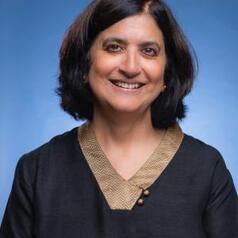
Professor of Global Studies, University of California, Santa Barbara Anshu Malhotra is Professor in the Department of Global Studies and Kunadan Kaur Kapany Professor and Chair of Sikh Studies at the University of California at Santa Barbara. She has taught at the Department of History, Faculty of Social Sciences, University of Delhi. She holds a Ph.D from SOAS, University of London. She works on gender histories, cultural studies, autobiography studies and histories of South Asia, in particular that of Punjab and the Sikhs. She is the author of Piro and the Gulabdasis: Gender, Sect and Society in Punjab (OUP, 2017) and Gender, Caste and Religious Identities: Restructuring Class in Colonial Punjab (OUP, 2002). She has co-edited Punjab Reconsidered: History, Culture and Practice (OUP, 2012); Speaking of the Self: Gender, Performance and Autobiography in South Asia (Duke University Press, 2015; South Asian Print Zubaan, 2017); and Text and Tradition in Early Modern North India (OUP, 2018). She has also published in journals like Modern Asian Studies, Indian Social and Economic History Review, Journal of Women’s History, Journal of Punjab Studies among others. She is currently working on a co-edited volume on the Sikh reformer and stalwart Bhai Vir Singh and an edited volume on Punjab’s Global and Local Histories.