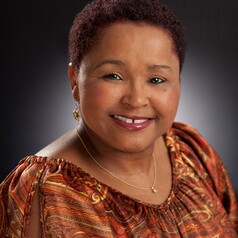
Associate Professor, School of Health and Human Performance, and Assistant Vice Provost of Equity and Inclusion, Dalhousie University Dr. Barb Hamilton-Hinch is from the historical African Nova Scotian communities of Beechville and Cherry Brook. Barb is currently employed at Dalhousie University as the Assistant Vice Provost of Equity and Inclusion and an Associate Professor in the in the School of Health and Human Performance at Dalhousie University. Her work examines the impact of structural, systemic and institutional racism on diverse populations, particularly people of African descent. She holds a Bachelor of Science in Recreation Management, Masters of Arts, (from Dalhousie University) a Bachelor of Education (secondary) from Mount St. Vincent University and a PhD from Dalhousie University. She is said to be the first African Nova Scotian to graduate with a PhD from Dalhousie University. Barb’s current research projects include: Closing the Opportunity Gap for African Nova Scotian Learners, Optimizing Services for Families Living in Communities that have been Marginalized, Examining the Impact of Racism on the Health and Wellbeing of People of African Descent, The benefits and challenges of Culturally Relevant Programs for Post-Secondary Students, Racialized Bodies and Elite Sports, and Mobilizing Supports and Programs for Incarcerated Individuals Integrating Back in to the Community and Exploring support for Care Givers of individuals with dementia At Dalhousie University Dr. Hamilton-Hinch holds a number of positions she is the co team lead for the Improving the Health of People of African Descent Research Cluster with Healthy Populations Institute, she is one of the founders of Imhotep Legacy Academy (ILA-a program that is developed to increase the number of students of African descent in Science, Technology, Engineering and Math), co-chair of Promoting Leadership in Health for African Nova Scotians (PLANS a program to increase the number of students of African descent in Health).
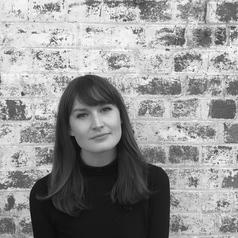
Lecturer in Digital Methods, The University of Edinburgh My research sits at the intersection of Criminology and Science and Technology Studies, drawing theory and methods from both. I study how digital infrastructures become sites where power of different kinds is exerted. Using qualitative, computational, and statistical approaches, my research falls into three strands. The first involves large-scale ethnographic studies of digital infrastructure, such as my research on the Tor network (the subject of a book with MIT Press: https://mitpress.mit.edu/9780262548182/tor/). The second focuses on how digital technologies and infrastructures become used for crime and resistance, drawing on a mix of ethnographic and AI/'data science' approaches to study large qualitative and quantitative datasets. The third looks at digital infrastructure and state power, including in-depth studies and evaluations of law enforcement interventions (such as FBI takedowns) and a recent project looking at the use of digital influence campaigns by law enforcement and government to shape the behaviour and culture of the public and achieve preventative policy goals. I draw on a range of theoretical perspectives in my work, most prominently Stuart Hall's cultural studies scholarship and Susan Leigh Star's approach to studying the social worlds of digital infrastructure.
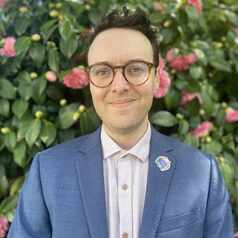
Research fellow, La Trobe University Benjamin Riordan is a post-doctoral research fellow in the Centre for Alcohol Policy Research (CAPR). His research interests are broad, but predominantly he focuses on using emerging and new technologies to understand and intervene with young adults who use alcohol. At CAPR, he co-leads the research stream on alcohol, media, and emerging technology, which focuses on understanding: 1) How is alcohol depicted or discussed in media (e.g., social media, films, music)? 2) What is the impact of exposure to alcohol-related content in the media? 3) What are the opportunities for policy change or interventions? Prior to moving to CAPR, he was a post doctoral researcher in Addiction Medicine at the University of Sydney (where he is still an affiliate; 2019-ongoing), he was a Fulbright Fellow at Brown University (2017-2018; Center for Alcohol and Addiction Studies) and completed his PhD at the University of Otago (2019; Department of Psychology).
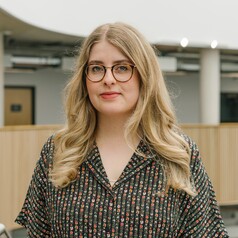
University Teacher in Sociology, University of Sheffield Dr Briony Hannell is an early-career feminist researcher and sociologist based in the Department of Sociological Studies at the University of Sheffield, UK. She completed her PhD in Politics at the University of East Anglia, UK, in 2021. Her research interests span across (digital) media, culture, and communications, feminist sociology, cultural studies, internet studies, digital sociology, youth studies, and fan studies. She is primarily interested in young people, citizenship and participation, and digital (anti)feminisms. Her research on young people, feminism and anti-feminism, fan culture, digital culture, and Tumblr has been featured in The Observer, Vice, The Independent, Dazed, WIRED, BBC Radio, and more. Her first book, Feminist Fandom: Media Fandom, Digital Feminisms, and Tumblr was published by Bloomsbury in early 2024.
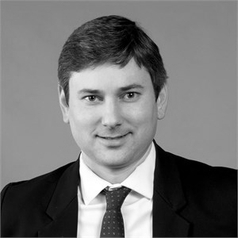
Assistant Professor of Public Policy, Harvard Kennedy School Benjamin Schneer is an Assistant Professor of Public Policy at the Harvard Kennedy School. His research is in American politics and focuses primarily on political representation: how citizens express their preferences, how government responds to them, and what may shape and distort these processes. His most recent papers have studied just how much of an effect the media has on the national political conversation, the role that petitioning has played in American political development, and the returns to elected office based on future earnings from corporate board service and lobbying. His research has been published in journals including Science, the American Journal of Political Science, the Journal of Politics, and Studies in American Political Development and has received coverage in media outlets including the New York Times, the Washington Post, the Los Angeles Times, the Economist, and Fast Company. He received his Ph.D. in 2016 from the Department of Government at Harvard University. He received his B.A. in History and in Economics from Columbia University and an M.A. in Economics from Stanford University. Prior to joining the Kennedy School, he was an assistant professor in the Department of Political Science at Florida State University.