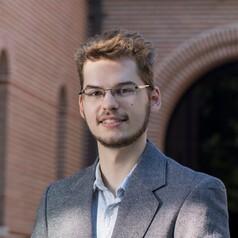
PhD Candidate, Rice University Brenton Kalinowski is a PhD Candidate in the department of sociology at Rice University. His current research focuses on Black, White, and Latina/o evangelical understandings of science and medicine. He has also published and presented work on science in India, faith in the workplace, and political polarization. Brenton holds masters degrees from Rice University and The University of Chicago.
Professor of International Relations and International Development, Department of International Relations, University of Sussex Benjamin researches and writes about global value chains, poverty and inequality, and global food systems. He is author of a number of books, the most recent being The Struggle for Development (Polity: 2017) At Sussex he teaches various courses on global development, including The Global Politics of Food. Other publications include A Green New Deal for Agriculture (https://www.tandfonline.com/doi/full/10.1080/03066150.2020.1854740). His books include 'Workers, State and Development in Brazil: Powers of Labour, Chains of Value' (Manchester University Press: 2012), based upon field research in North East Brazil throughout the 2000s. The book investigates how the Brazilian state, local public and private institutions and firms collaborated to implement a successful upgrading strategy within highly competitive global horticultural value chains, which resulted in North East Brazil becoming Brazil's main high-value grape exporting region. Within that context he investigated the extent to which workers benefitted from the region's rapid economic growth. The book details how the export boom has impacted on local level develoment, in particular on local labour standards, conditions of work and pay rates, gendering of work and women's participation in rural trade unions. He is also author of 'The Global Development Crisis' (Polity: 2014) which addresses the central paradox of our times - the simultaneous presence of wealth on an unprecedented scale, and mass poverty. It explores this paradox through an interrogation of the work of some of the most important political economists of the last two centuries - Friedrich List, Karl Marx, Leon Trotsky, Joseph Schumpeter, Alexander Gerschenkron, Karl Polanyi and Amartya Sen. In the book he advance's the concept of 'Labour-Centred Development' as a means of overcoming this paradox.
Research assistant, Monash University I am a Monash University graduate and research assistant at the Monash Gender and Family Violence Prevention Centre. My research focuses on the intersections between the LGBTQIA+ communities and the police, and intimate partner violence.
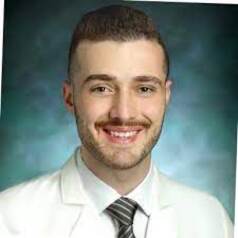
Postdoctoral Research Fellow in Plastic and Reconstructive Surgery, Johns Hopkins University Bashar Hassan, M.D., a postdoctoral research fellow in plastic and reconstructive surgery at the Johns Hopkins Center for Transgender and Gender Expansive Health (CTH) and the University of Maryland Medical Center's R. Adams Cowley Shock Trauma Center.
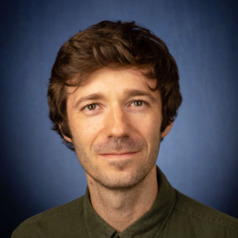
Assistant Professor of Sustainable Systems, University of Michigan Benjamin Goldstein, Ph.D, is Assistant Professor of Environment and Sustainability and head of the Sustainable Urban-Rural Futures (SURF) lab. The SURF Lab (www.surf-lab.ca) studies and emphasizes urban sustainability at multiple scales. Through his work at the SURF Lab, Benjamin helps understand how urban processes and urban form drive the consumption of materials and energy in cities and produce environmental change inside and outside cities. He develops methods and tools to quantify the scale of these changes and the locations where they occur using life cycle assessment, input-output analysis, geospatial data, and approaches from data science. Benjamin is particularly interested in combining quantitative methods with theory rooted in social science to explore multiple dimensions of sustainability and address issues of distributive justice. His topical foci include urban food systems (esp. urban agriculture), agri-commodities, residual resource engineering, global supply chains, sustainable production and consumption, and energy systems.
Professor of Astrophysics, University of Manchester My primary research interests are radio pulsars, neutron stars and rapid radio transients. I am a member of the European Pulsar Timing Array (EPTA) and international Pulsar Tming Array (IPTA) projects which are attempting to use precision timing of radio pulsars to detect gravitational waves which have a freqeuncy in the nano-Hz regime. These waves are thought to have been generated by processes in the early universe, either inflation, cosmic strings or binary supermassive blackholes have been proposed. I lead an ERC funded project called MeerTRAP which searches for radio transienst, including pulsars and Fast Radio Bursts, with MeerKAT. It operates commensally on many of the observations being undertaken with the Square Kilometer Array (SKA) radio telescope pathfinder called MeerKAT. It has the capability to detect and localise FRBs over a range of redshifts. I am also co-PI of the pulsars and fast transient project TRAPUM which also runs on MeerKAT. It is revealing hundreds of new pulsars in many different environments from globula clusters to our nearest neighbour galaxies. I am also co-PI of the transients key science project of LOFAR and the head of the pulsar science working group for the same telescope. LOFAR is the LOw Frequency ARray which is a very large radio telescope working at frequencies between 10 and 240 MHz. It is the most sensitive telescope ever built at these frequencies and wass the first of the next generation of radio telescopes which uses large numbers of small elements. As well as using these next generation telescopes I am also involved in the specification and building/wirting software for the pulsar and fast transient search capabilities of the SKA itself which will be the world's largest telescope.