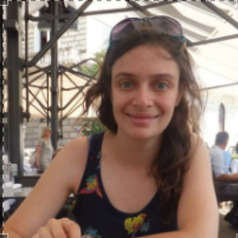
Polar Climate Scientist, British Antarctic Survey, Associate Lecturer, The Open University My research at BAS seeks to understand how the current set of climate models used in climate change assessments simulates sea ice, and how this affects our future projections of climate change both within the polar regions and remotely. I am analysing output from the Coupled Model Intercomparison Project Phase 5 (CMIP5) used in the most recent IPCC assessment (2013) to evaluate how different models simulate the dynamic and thermodynamic processes important to the evolution of sea ice concentration. I work closely with BAS colleagues in both the Polar Oceans team and Atmosphere, Ice and Climate teams. This research is funded under the NERC large grant “Real Projections – Robust projections of real world climate change” led by Mat Collins at the University of Exeter. I completed an undergraduate degree in Mathematics at the University of Cambridge, followed by an MSc in Atmosphere, Ocean and Climate at the University of Reading. With a particular interest in atmospheric dynamics, I pursued a PhD at the University of Reading Department of Meteorology. My thesis investigated the possible impacts of changes in sea ice cover on the midlatitude atmosphere, through idealised modelling experiments with imposed sea ice. I then undertook a short postdoc at the University of Edinburgh looking at impacts of climate change on Scotland in sectors such as building energy demand, before moving to the British Antarctic Survey to pursue research into the coupled climate system of the polar regions.
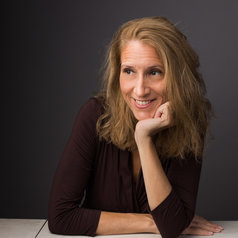
Poler Family Professor and Chair of Psychology, Amherst College Catherine Sanderson received a bachelor's degree in psychology, with a specialization in Health and Development, from Stanford University, and received both masters and doctoral degrees in psychology from Princeton University. Her research has received grant funding from the National Science Foundation and the National Institute of Health. Professor Sanderson has published over 25 journal articles and book chapters in addition to four college textbooks, middle school and high school health textbooks, and trade books on parenting as well as how mindset influences happiness, health, and even how long we live (The Positive Shift). Her latest trade book, published in North America as Why We Act: Turning Bystanders Into Moral Rebels (Harvard University Press) and internationally as The Bystander Effect: The Psychology of Courage and Inaction (HarperCollins), examines why good people so often stay silent or do nothing in the face of wrongdoing. In 2012, she was named one of the country's top 300 professors by the Princeton Review.
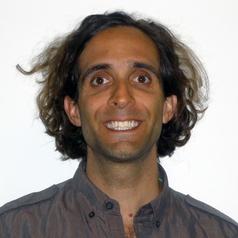
Senior research scientist, CSIRO Dr Christopher Doropoulos is a Senior Research Scientist at CSIRO, Brisbane, in the Sustainable Marine Futures Program. He is a marine ecologist with expertise in recruitment ecology, population ecology, and how environmental interactions and demographic rates influence recovery trajectories following disturbances. His research is often multidisciplinary and involves ecologists, biological and physical oceanographers, marine engineers, and most recently community stakeholders, to develop strategies to provide scalable solutions for effective coral reef restoration.
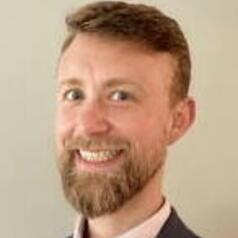
Managing Director, State Smart Transportation Initiative, University of Wisconsin-Madison Chris McCahill, PhD, is the Managing Director of the State Smart Transportation Initiative. He is national expert on the use of data analytics in transportation and land use policy decisions and he leads many of SSTI’s technical assistance and research projects. He has written and co-authored numerous studies on urban transportation policy, including a chapter in Parking and the City, and co-edited a special issue of Research in Transportation Business and Management. Prior to joining SSTI, Chris worked on the Project for Transportation Reform at the Congress for the New Urbanism in Chicago. Before that, he was a researcher at the Center for Transportation and Livable Systems and a civil engineering course instructor at the University of Connecticut.
Professor of Archaeological Science, University of Bradford I am an archaeological scientist with a PhD in Earth Resistance and for 18 years I co-owned the largest commercial company dedicated to archaeological geophysics in the UK. I was the Chair of ISAP and I previously the editor of the journal Archaeological Prospection. In the summer of 2007 I was awarded an Honorary Doctorate for popularising archaeological geophysics via Time Team and through other media opportunities. I teach both UG / MSc students and supervise a wide range of doctoral topics. My core research interests are based on the fundamental understanding that geophysical data can aide archaeology in the understanding of the life and culture of ancient peoples. In particular I am interested in challenging environments where technical excellence and novel methodological approaches can lead to enhanced interpretation of past environments.
Director, Centre for Social Research in Health, Social Policy Research Centre, UNSW Sydney Professor Carla Treloar is Director of the Centre for Social Research in Health and the Social Policy Research Centre. Carla's research interests are in the fields of hepatitis C and injecting drug use. She is a primarily qualitative researcher and is grounded in the disciplines of health and social psychology, public health and health policy. However, Carla constantly seeks to work across methods and disciplines. In particular, she sees it essential to work towards blending the insights that an individual-based discipline like health psychology can provide when issues such as hepatitis C and illicit drug use are considered in social, legal and political contexts.