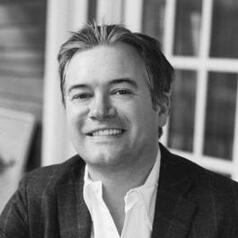
Assistant Director, Applied History Project and Intelligence Project, Harvard Kennedy School Calder Walton is Assistant Director of the Belfer Center's Applied History Project and Intelligence Project. His research is broadly concerned with intelligence, history, grand strategy, and international relations. His research has a particular focus on policy-relevant historical lessons for governments and intelligence communities today. Calder is finishing a book, Spies. The Hundred Year Intelligence War between East and West, to be published by Simon & Schuster and Little Brown in 2023. His research, and commentary, about national security issues frequently appear in major news and broadcast outlets on both sides of the Atlantic. Calder is also general editor of the multi-volume Cambridge History of Espionage and Intelligence to be published by Cambridge University Press. Over three volumes, with ninety chapters by leading scholars, this project will be a landmark study of intelligence, exploring its use and abuse in statecraft and warfare from the ancient world to the present day. Calder's research builds on his first (award-winning) book, Empire of Secrets. British Intelligence, the Cold War and the Twilight of Empire (Harper-Press 2013). While pursuing a Ph.D. in History at Trinity College, Cambridge, England, and then a Junior Research Fellowship also at Cambridge University, Calder was a lead researcher on Professor Christopher Andrew's unprecedented official history of the British Security Service (MI5), Defend the Realm (2009). This research position gave Calder, for six years, privileged access to the archives of MI5, the world's longest-running security intelligence agency. As well as his research on intelligence history, Calder is also an English-qualified Barrister (attorney). He lives in Cambridge, Massachusetts, with his wife and young son, who each day teaches him more about skulduggery than anything else.
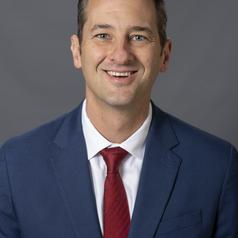
Professor of Political Science, Western Carolina University Christopher A. Cooper is Madison Distinguished Professor and Director of the Public Policy Institute in the Department of Political Science and Public Affairs at Western Carolina University. He studies American politics with a focus on state politics, elections, North Carolina politics, and politics of the American South. Cooper is the the author or co-author of dozens of articles in academic journals including American Politics Research, Political Research Quarterly, Social Forces, Public Opinion Quarterly, State Politics and Policy Quarterly, and Election Law Journal. He is also the co-editor of the New Politics of North Carolina, and co-author of The Resilience of Southern Identity. His next book, Anatomy of a Swing State: A North Carolina Politics Primer is under contract with the University of North Carolina Press. Cooper is a frequent source for journalists and has been quoted in a variety of outlets including the New York Times, Washington Post, NBC, CNN, Fox News, The New Yorker and the Sylva Herald. He also frequently writes for popular audiences in a variety of outlets, contributes to the Old North State Politics Blog, and has served as an expert witness in voting rights cases. He has also received Western Carolina University's highest awards for research (university scholar) and teaching (Board of Governors Teaching Award). In 2013, the Carnegie Foundation for the Advancement of Teaching named him the North Carolina Professor of the Year.
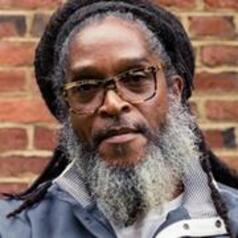
Associate Professor of Education and Human Development, Temple University Dr. Charles A. Price is an associate professor at Temple University’s College of Education and Human Development, in the Department of Policy, Organization and Leadership Studies. His scholarly interests focus on identity formation (racial identity; personal-individual identity; collective identity; Rastafari identity; Black identity), life narrative genres, action research, community organizing and community organizations, social movements, and people-centered community development, with a geographic concentration on the United States and Jamaica.
Postdoctoral Researcher in Supply Chain Management, Iowa State University Chris Faires, Ph.D., is a postdoctoral researcher studying Supply Chain Management. His research interests include returns management, last-mile logistics, and simulation modeling. His dissertation focused on the intersection of returns management and risk. Chris previously worked professionally as a web developer in Utah.
Professor of Philosophy, UMass Lowell I work primarily in normative ethics and analytic feminism, concentrating largely on the moral obligations that arise in oppressive social conditions. My other interests include liberal social and political philosophy, feminism in the liberal political tradition, oppression studies, and Kantian ethics.
Lecturer in Film and Creative Writing, University of Birmingham I am researcher in contemporary film, television and literature with a specialism in adaptations and mental health. I am also a poetry editor for a small press. My most recent book looks at character, the body, and adaptation was released in 2022. I am currently working on a book about male mental illness in contemporary culture. My primary research area is adaptations. I have published various chapters related to this field, regularly participate in the AAS conferences (and am on the board of trustees), have established the BAFTSS Adaptation group, and have recently released a book in this area. This book, Embodying Adaptation: Character and the Body examines the connection between character and the body, and the hierarchies inherent within this relationship. It seeks to find a new approach to adaptations that is framed by the body and its importance in our increasingly intangible society. It was published through Palgrave in 2022 as part of the Adaptations and Visual Culture series. My other research interests include mental health, identity, memory, and queer studies. This is reflected in the chapters I have published on these topics. Another strand of my research is male mental health and suicide in contemporary culture, which will be the focus of my next monograph.