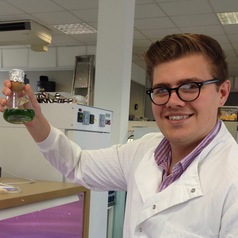
I just received my PhD in Plant Biotechnology from the Department of Plant Sciences, University of Cambridge. My research focuses on the development of industrial-scale algae biotechnology, for applications such as biofuels, nutritional supplements and animal feeds. During my PhD, I explored whether algal-bacterial consortia could enhance the productivity and stability of algal cultures, so that growing algae at very large scales might be improved. Currently, I am working in the Cambridge Algal Innovation Centre, working with biotechnology companies to explore how we can better exploit algae for more sustainable food, feed and fuels. I'm broadly interested in science - from microbiology to drug development and space exploration - and in the crossover between science and entrepreneurship.
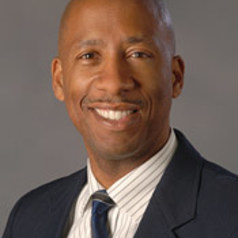
Professor Carlton Waterhouse has served at the Indiana University Robert H. McKinney School of Law since 2010. He is nationally recognized for his work on environmental justice and is known internationally for his research and writing on reparations for historic injustices and state human rights violations. His views have been published in the Wall Street Journal online and his articles have appeared in prestigious law journals including the Pennsylvania Journal of International Law, the Fordham Environmental Law Review, and the Rutgers Law Review. He attended college at the Pennsylvania State University where he studied engineering and the ethics of technology before deciding to pursue a legal education. He is a graduate of Howard University School of Law, where he was admitted as one of its distinctive Merit Fellows. While in law school, he was selected for an internship with the Lawyers’ Committee for Civil Rights Under Law where he participated in the preliminary formation and development of the Civil Rights Act of 1992. Professor Waterhouse currently serves as a member of the Indiana Advisory Committee to the United States Civil Rights Commission After law school, he began his career as an attorney with the United States Environmental Protection Agency where he served in the Office of Regional Counsel in Atlanta, Georgia and the Office of General Counsel in Washington, D.C. At the EPA, he served as the chief counsel for the agency in several significant cases and as a national and regional expert on environmental justice, earning three of the Agency’s prestigious national awards. His responsibilities at the EPA included enforcement actions under numerous environmental statutes, the development of regional and national policy on Environmental Justice and the application of the Title VI of the Civil Rights Act of 1964 to the EPA permitting actions. Following a successful nine-year career with the EPA, Professor Waterhouse enrolled in a Ph.D. program in the Emory University Graduate School of Arts and Sciences as one of the select George W. Woodruff Fellows. The previous year, he graduated with honors from the Candler School of Theology at Emory University with a Master of Theological Studies degree. In 2006, he graduated from Emory with a Ph.D. in Social Ethics.
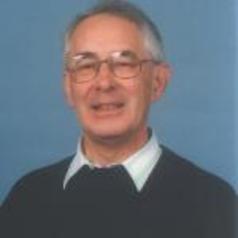
A graduate of Exeter University, Prof Church’s academic career started as a Teaching Assistant in University College, London and the School of Oriental and African Studies. From 1963-65 he was Junior Lecturer in Modern History in Trinity College, Dublin. From there he went to the University of Lancaster as Lecturer in French History, rising to be Senior Lecturer in European Studies in 1975. Transferring to Kent in 1981 he taught a variety of historical and political courses, including Swiss Studies, first for the School of Languages and then in the School of Politics and International Relations. Promoted Reader in 1988 and Professor in 1992, he was awarded a Jean Monnet Chair in European Integration in 1995. He was the first Director of the Kent Centre for Europe, a Jean Monnet Centre of Excellence, and has been an Emeritus Professor since 2003.
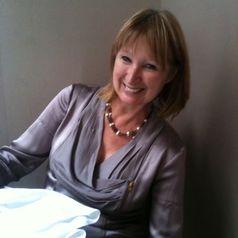
Caroline writes on race and ethnicity, especially postcolonial whiteness, circulations of people (as migrants) and objects, urbanism and madness. She specializes in visual, spatial and biographical methods. She collaborates with photographers, most recently with Douglas Harper of Duquesne University in Pittsburg investigating how British migrants live in Hong Kong (funded by the British Academy). She has just completed the biography of a pair of flip-flop sandals with artist Michael Tan of Nanyang Technological University in Singapore (funded by the British Academy). This involved following the plastic trail from factories in SE China to Ethiopia, one of China’s most important emerging markets, passing through the lives of migrant factory workers, smugglers, market traders and onto the feet of an elderly woman navigating the streets of Addis Ababa in a year old pair of flip-flops. She also worked with Roger Hewitt and colleagues in Hamburg and Bergen on 'The Architecture of Religious Transmission'. This project, funded by NORFACE, investigates the mechanisms of religious transmission among young people in the Finsbury Park area of London and comparable sites in Hamburg and Oslo. She is currently working on a research project investigating British migrants in Beijing.
As a computational biologist, Dr. Adami’s main focus is Darwinian evolution, which he studies theoretically, experimentally, and computationally, at different levels of organization (from simple molecules to brains). He has pioneered the application of methods from information theory to the study of evolution, and designed the “Avida” system that launched the use of digital life (mutating and adapting computer viruses living in a controlled computer environment) as a tool for investigating basic questions in evolutionary biology. He was also a Principal Scientist at the Jet Propulsion Laboratory where he conducted research into the foundations of quantum mechanics and quantum information theory. Dr. Adami earned a BS in physics and mathematics and a Diplom in theoretical physics from the University of Bonn (Germany) and MA and PhD degrees in physics from the State University of New York at Stony Brook. He wrote the textbook “Introduction to Artificial Life” (Springer, 1998) and is the recipient of NASA’s Exceptional Achievement Medal. He was elected a Fellow of the American Association for the Advancement of Science (AAAS) in 2011.
I am a Professor of Earth Sciences and Climate Change at the University of New South Wales where my team and I are focusing our efforts on using the past to better understand the causes and impacts of future environmental change. As part of this I set up and now direct the Earth's Past Future Project (www.earthspastfuture.com), an international, multidisciplinary programme dedicated to exploiting records of past change to help reduce the uncertainties surrounding future projections; within this I co-lead the Ellsworth Mountains Project (http://ellsworthmountains.com/) and the Ancient Kauri Project (http://ancientkauriproject.com/). To do something positive about climate change, I am working with a wonderful group of people at CarbonScape (http://carbonscape.com/), a carbon refining company that has developed microwave technology to fix carbon from the atmosphere and make a host of green bi-products, including activated carbon, sustainable fuels and biochar. Communicating science is more critical than ever. As a scientist I believe we need to show why science is such a wonderful tool for understanding the world around us; not just the headline discoveries but how science actually works. I have written several books, the most recent of which is 1912: The Year The World Discovered Antarctica which looked at the dawn of a new age in understanding the natural world, and how we might reawaken the public's excitement for exploration and discovery. Inspired by the events surrounding 1912 I led the Australasian Antarctic Expedition 2013-2014, a privately-funded multidisciplinary scientific expedition, that set out to discover the environmental changes taking place in the south. A major part of the AAE 2013-2014 was communicating our scientific findings – from the deep field and in real time. You can follow my team in the lab and the field using the full range manner of social media as Intrepid Science (www.intrepidscience.com), reporting discoveries when they happen, where they happen. I'm passionate about science, adventure and leadership. Please feel free to contact me.