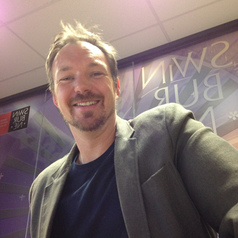
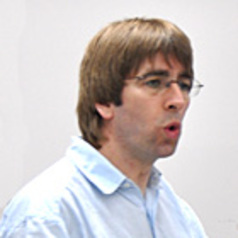
Dr Chris McCarthy received his BSc(Hons) (1999) and Masters (2005) degrees in computer science from The University of Melbourne, and PhD from the Australian National University in 2010. Chris has worked both domestically and internationally as an academic lecturer and researcher in computer vision and robotics, having held positions in Singapore (1999-2001), Italy (2007) and most recently with NICTA's Computer Vision Research Group in Canberra (2009-2015), and is a member of the Bionic Vision Australia consortium. In 2015 he took up a lecturing position with Swinburne University of Technology.
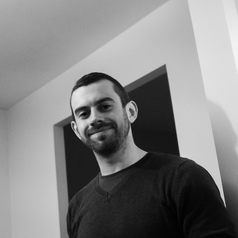
Chris is a lecturer in chemistry at Monash University, specialising in chemistry education, while moonlighting in high resolution spectroscopy using the Australian Synchrotron. Chris originally studied Bachelor degrees in both Science and Arts at the Australian National University before completing his PhD at Monash University, and spending time as a post-doctoral fellow at the University of Melbourne.
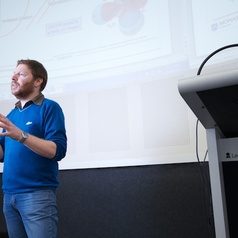
Craig has extensive consulting experience and has undertaken a number of projects looking at renewable energy scenarios, including the preparation of a discussion papers for both government and industry. Most recently, he co-authored The University of Queensland’s latest major energy research paper on Delivering a Competitive Australian Power System. A member of the University’s Renewable Energy Technical Advisory Committee, he was instrumental in having the 1.22 MW Solar Photovoltaic Array at the St Lucia campus deployed. Craig is also a member of the School of Economics, Energy Economics and Management Group (EEMG), which focusses on making key solar technologies more affordable. In conjunction with this group, he worked on the I-Grid Research Cluster with the CSIRO Distributed Energy Flagship to model and quantify the benefits of distributed energy systems while taking into account the costs of deploying and integrating them into the Australian electricity system.
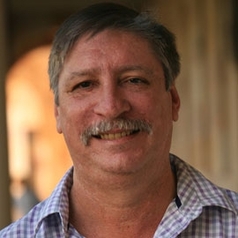
I am a Senior Lecturer in Social Policy in the Department of Applied Social Science at Lancaster University. I am also a member of the Centre for Disability Research (CeDR). My research interests include social security, income maintenance and labour market policy and their implications for disabled people. My main current research interests are concerned with analysing contemporary and historical changes in income maintenance and labour market policy. I am interested in the ways in which such policies are shaped by concerns with groups in the population that are deemed to be 'problematic', such as lone mothers and young people, and the ways in which income maintenance and labour market policies are held to be more important because of their macro-economic benefits, rather than their social benefits. I am currently engaged in research at the National Archives which is focusing upon the introduction of Family Income Supplement in 1971 and how one of the guiding principles - that market wages should not be subsidised by the state - which had shaped social security policy making from the introduction of the Poor Law Amendment Act, was overcome by policy makers in the 1970s. More directly related to criminology, I am interested in the press reporting of crime, particularly the reporting of sexual offences and the ways in which groups in the population (most notably black and working class men) are constructed as sex offenders.
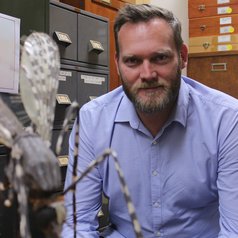
Dr Cameron Webb is a Clinical Lecturer with the University of Sydney and Principal Hospital Scientist with the Department of Medical Entomology at Pathology West - ICPMR Westmead (NSW Health Pathology & Westmead Hospital). Cameron's primary focus is understanding the role of environmental management and urban development in reducing the risks of mosquito-borne disease caused by Murray Valley encephalitis virus, Ross River virus and Barmah Forest virus. However, he has also been called on to provide expert advice on a range of medically important arthropods, such as ticks, mites, biting midges, bed bugs and flies, to local, state and federal government agencies. Key to his research is an understanding of the ecological role of mosquitoes and how wetland conservation, construction and rehabilitation projects may influence regional mosquito-borne disease risk together with changes in the local environment resulting from climate change, potential introductions of exotic mosquito species and personal protection strategies (e.g. insect repellents). In his position with the University of Sydney, Cameron regularly provides lectures in a range of undergraduate and post graduate courses and has supervised a number of research students including collaborative projects with the University of Western Sydney, the Australian Catholic University and the University of South Australia.