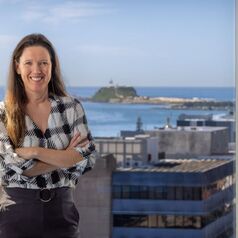
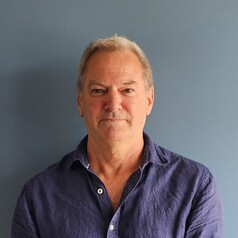
Professor, Business School, University of Newcastle Christina was born in Denmark and has lived and worked in Europe and the USA. She came to Australia on a ship in the 1990s when she worked in the American cruise industry. In 2022, Christina was the Deputy Head of School (Learning and Teaching) at the Newcastle Business School and prior to that, the Head of Discipline, Accounting and Finance at the Newcastle Business School. Before joining The University of Newcastle, Christina was employed at the School of Accounting at the University of New South Wales (2002-2020). Christina is the Founding Director of the UoN Tax Clinic. The UoN Tax Clinic was established in 2022 via a grant from the ATO totaling $299,343. The Tax Clinic provides free tax advice to clients with reduced capacity to manage their tax affairs. In the role as Director, she oversaw the Clinic's governance, stakeholder relations and research activities. Christina holds a PhD in Accounting from UNSW, an MBA in Financial Management, a Master of Commerce in Accounting and a 1st class (Honours) in Economics. Christina is an accredited member of the Chartered Accountant Australia and New Zealand (CAANZ) and CPA Australia. Christina’s research combines academic rigor and theory with industry collaboration and applied policy work. Christina has published in high quality accounting publications in A* and A journals such as Accounting, Organizations and Society, the Accounting, Auditing & Accountability Journal, Critical Perspectives on Accounting and Accounting & Finance. A career highlight is her article on emotions and accounting published in the Financial Times Top 45 journal, Accounting, Organizations and Society. She has authored several government reports and books, culminating in the High Performing Workplaces Index report, launched at the Prime Minister’s Future Job Forum in 2011 and used by firms to measure their workplace productivity and leadership and management skills. Christina’s work has featured in over 50 media articles in the Australian Financial Review, The Australian, Sydney Morning Herald and SKY News. Christina is currently leading the Australian Workplace Index project, a strategic partnership between University of Newcastle and Australian National University. Christina has won several research grants, totaling $2,143,287 in cash funding. She has worked with organisations such as Microsoft, the Department of Finance and Deregulation, the Commonwealth Department of Education, Employment and Workplace Relations, Westpac Banking Corporation, the Victorian Government, the Business Council of Australia, the South Australian Government and others to influence policy and practice. She was the acting CEO of the Society for Knowledge Economics for 2 years. She has received a number of awards for her work, including the Emerald Literati Network Awards for Excellence; the Emerald/EFMD Outstanding Doctoral Research Award in the Interdisciplinary Accounting Research category, the UK Advertising Standards Authority Award; the Mindshift Consulting Group Prize; Saunders Harris’ Prize for Outstanding Academic Achievement; the Carlson Companies’ Award; MGSM’s Award for Competitive Intelligence; and MGSM’s Award for Human Resources Management. She received an Honourable Mention at the 2008 Business and Higher Education Roundtable Awards for Outstanding Achievement in Research and Development.
Associate Professor, University of Johannesburg Prof. Clare Kelso is an environmental geographer whose research focuses on climate and environmental history, rural livelihood vulnerability and sustainability. She currently holds the position of associate professor and head of the Department of Geography, Environmental Management and Energy Studies at the University of Johannesburg. She began her career in 1997 as a junior geography lecturer at Vista University, Soweto campus. Prof. Kelso has supervised a number of Masters and PhD students in topics focusing on rural livelihood vulnerability and change, on the interface between conservation and local communities and on the gendered nature of the impacts of climate change in rural communities. Underlying these research focus areas is the central aim to identify sustainable and equitable solutions to complex environmental and social problems. Geographically, the focus of her research has been South Africa, although she has supervised students who have undertaken related research in Tanzania and the Cameroon. Link to talk on Womanity in Africa https://womanity.africa/2021/11/17/climate-change-and-gender-with-prof-clare-kelso-university-of-johannesburg/
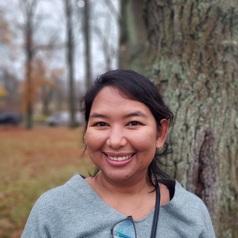
PhD Candidate, Lund University I hold a Bachelor's in Southeast Asian Studies and a Master's in International Relations from Thammasat University. My research interests include Southeast Asia, Indonesia, Chinese Indonesians, conflict and violence, and Southeast Asian cinema. I was awarded a SEASREP grant to explore ethnic relations in post-Suharto Medan and have published works on alternative memory in films and inter-ethno-religious circumstances in Southern Thailand. My doctoral research focuses on the historical memories of Aceh Chinese, examining how historical violence, from 1966 to Aceh's special autonomy, has shaped their identity and sense of belonging, with the goal of bringing attention to their often-overlooked struggles in Indonesian history.
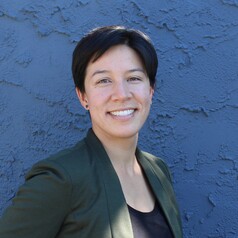
Assistant Professor, Women's and Gender Studies, Mount Royal University Dr. Celeste Pang is an Assistant Professor in Women's and Gender Studies at Mount Royal University where she is also the co-lead of the QriTical: queer + trans research hub. Dr. Pang's research, education, and community work focus on aging, disability, and care access and equity, with significant focus on 2SLGBTQIA+ issues. Prior to joining Mount Royal University Dr. Pang completed a PhD and Postdoctoral Fellowship in the Department of Anthropology at the University of Toronto, and worked in a community-based research department.
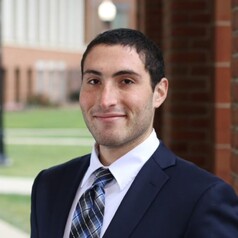
Ph.D. Candidate in Marketing, The Ohio State University Cory Haltman is a Marketing Ph.D. Candidate specializing in consumer behavior at The Ohio State University’s Fisher College of Business. Cory’s research interests include psychological response marketing communications and promotions, political ideology as a driver of consumer behavior, and consumer welfare. Cory’s research has been recognized with the Best Paper award at the Indiana University Haring Doctoral Symposium and the Brenda M. Derby Memorial Research Award for Best Student Paper at the Marketing and Public Policy Conference. He also won first place presenting his work at The Ohio State University's Hayes Graduate Research Forum. Cory holds a B.S. in Marketing and a B.A. in Psychology from Stony Brook University. Prior to starting the doctoral program at Ohio State, Cory worked as a research scientist for the marketing research firm NPD Group (now Circana) and in research and development at the advertising agency McGarryBowen (now dentsuMB). At Ohio State, Cory has taught two semesters of undergraduate marketing research and received the 2024 Fisher College of Business Ph.D. Student Excellence in teaching award.
Physical Oceanographer, Australian Institute of Marine Science Craig worked as a Physical Oceanographer at the Australian Institute of Marine Science for over 35 years, and currently remains active as a Research Associate. Craig has a background in applied physical oceanography and meteorology with significant expertise in conducting ocean observing across northern tropical Australian coasts and regional seas. He led the Oceanography and Shelf Processes research team within the Sustainable Coastal Ecosystems and Industries in Tropical Australia Program at AIMS, Townsville. A major role was the IMOS Australian National Mooring Network Facility Leader & the operation of a satellite remote sensing ground station, both responsible for delivering quality physical and biogeochemical time series to the research community, managers and industry. He continues investigating the role of tides, weather and climate on circulation, upwelling and mixing on the oceans' thermohaline structure with application to productivity hot spots and implications of thermal stress on coral reefs. The work employs hydrodynamic modeling underpinned by observations to address key coral reef and shelf circulation processes and coastal water quality issues.