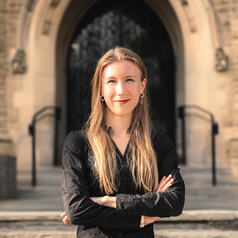
Senior researcher in water and food security, London School of Economics and Political Science Christian is an adaptation and water resources expert with 20 years of experience in conducting research and consultancy on climate and water risks. He grew up in the Netherlands and, after four years in the UK, is now living in Sydney, Australia. He is especially interested in the value of water, the link between climate variability, risk, resilience and decision making, and the concept of ‘digital twins’. Christian’s ambition is to make a science-based contribution to societal challenges linked to the water-energy-food-environment nexus. To do so, he can draw from years of experience in conducting pilot research, working with big data and remote sensing, applying hydrological and hydro-economic models, and interacting with stakeholders. Christian has a Master's and engineering degree in agriculture and integrated water management and a combined PhD in environmental economics and earth system sciences, both from Wageningen University, the Netherlands. He is the founder of Uncharted Waters ltd, a climate-tech start-up in Sydney, that is building a digital twin of the global water and food system. Previously he worked at Wageningen Environmental Research, from 2004 to 2019, and for the Grantham Research Institute at the London School of Economics in London, from 2016 to 2020. He is still a visiting senior research fellow at both.
Director, One Health Institute, Assistant Dean, and Professor of Epidemiology and Swine Health Management, Ontario Veterinary College, University of Guelph Cate Dewey, DVM, MSc, PhD, is an Assistant Dean of Special Projects, Director of the One Health Institute, and a Professor of Epidemiology and Swine Health Medicine in the Department of Population Medicine at the Ontario Veterinary College, University of Guelph, Canada. Her current research utilizes a One Health approach to prevent zoonotic diseases in vulnerable populations. Previously, she explored the connections between swine health, disease management, and welfare. Dr. Dewey has successfully supervised 32 doctoral and 20 master’s students, and she has published over 230 peer-reviewed articles. At the University of Guelph, she has served in key leadership roles, including Chair of the Department of Population Medicine and Associate Vice-President Academic. As the inaugural Director of the One Health Institute, she was instrumental in launching new graduate programs and Canada’s first Bachelor of One Health degree. She is currently developing a series of micro-credentials aimed at professionals across various sectors, including government, non-profits, academia, and private industries, with the first course set to launch in February 2025.
Assistant Professor in Global Studies and Human Geography, Middle Tennessee State University I am an Assistant Professor of Global Studies and Human Geography at Middle Tennessee State University. I received my PhD from West Virginia University (2018) and my Master’s in Geography and Bachelor of Science in Visual Journalism from Kent State University (2014, 2009). I previously taught at West Virginia University in the Department of Geology and Geography and at Kent State University in the School of Media and Journalism. I am a human geographer whose research focuses on identity, visuality (including photography), South Asia and its diaspora, and the connections between rurality and race in the United States. I have published several articles in Environment and Planning C, Gender Place & Culture, Political Geography, GeoHumanities, Journal of Cultural Geography, and Area as well as book chapters for The Changing World Language Map, Changing geographies of the state: New spaces of geopolitics, Tamil Diaspora, Concise Encyclopedia of Human Geography, and Human Geography and Professional Mobility. Additionally, I have presented 20 papers and organized or chaired 10 sessions at various national and international conferences. I serve on the Editorial Board of the Annals of the American Association of Geographers and I have been a reviewer for several journals including Gender, Place, & Culture, Antipode, Journal of Sonic Studies, Professional Geographer, Media, Culture, and Society, Contemporary South Asia, and National Identities.
Assistant Professor in Evolutionary Biomechanics, University of the Sunshine Coast Dr Clemente is interested in the relationship between form, function and ecology of living and extinct animals. His earliest studies examined the relationship between vision and ecology in spiders. Later, at the University of Western Australia, Dr Clemente switched his focus to the evolution of locomotion. He studied morphology, metabolic rates and biomechanics and compared these to ecological characteristics and locomotory ability in a large group of lizards, the varanids. Dr Clemente similarly studied these traits in other lizard groups, including an extensive project examining the evolution of bipedalism in dragon lizards, showing lizards were essentially popping a wheelie. He later continued his research at the University of Cambridge, focusing on insect adhesion, examining the multitude of solutions insects have developed to overcome the problems of sticking to smooth surfaces. At Harvard University, Dr Clemente examined the vertebrate muscle system, specifically how muscle mechanics integrate with the environment dynamically, during locomotion. His research at the University of Queensland continued my research into lizard locomotion, with a focus on the design of biologically inspired climbing robots. He has combined many aspects of this research into his current role at the University of the Sunshine Coast and is particularly interested in the emerging field of Evolutionary Biomechanics.
PhD, McMaster University Dr. Caroline Seiler recently defended her PhD in Medical Sciences (Physiology and Pharmacology) at McMaster University on the clinical effects of gluten, wheat, and the nocebo effect in irritable bowel syndrome and whether patients change their diets when presented with tailored information. Having worked at McMaster's Farncombe Institute, she published high-impact meta-analyses on celiac disease, inflammatory bowel diseases, and probiotics, and coordinated two irritable bowel syndrome clinical trials. In her free time, she has been a ballroom dancer for the past 7 years and enjoys dancing modern jive and American-style tango.