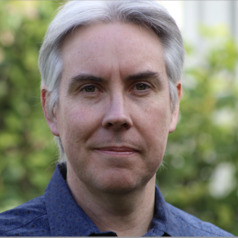
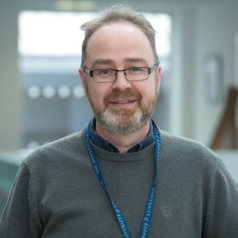
Researcher, University of the Witwatersrand I am a researcher in the Department of Internal Medicine, University of the Witwatersrand, with a PhD in molecular biology. My post-doctoral fellowship was undertaken at the International Agency for Research on Cancer (IARC) focusing on epidemiological aspects of breast cancer in South Africa. For the past 15 years, I have worked as part of the Translational Research Team, headed by Prof Raquel Duarte. Research interests include the epidemiological, genomic and molecular aspects of breast cancer and kidney disease in Africa.
Associate Professor (Research and Development), Faculty of Business and Creative Industries, University of South Wales Chris is an Associate Professor in History. His research interests span across the fields of environmental history, imperial history, and the history of science and technology. His recent research, funded by the Arts and Humanities Research Council (AHRC), has explored the multifaceted role of imperialism across the cycle of nuclear development in Britain, from uranium extraction in Namibia and South Africa to nuclear weapons tests in Australia and the Pacific. Chris is Principal Investigator for the Office for Veterans’ Affairs project, 'An Oral History of British Nuclear Test Veterans'.
Affiliated Professor in Communication Studies, Emerson College Camille Mumford is the Director of Communications at Emerson College Polling. She is responsible for communicating survey findings to the public, with a comprehensible and transparent approach. Mumford is an Affiliated Professor at Emerson College where she teaches an undergraduate courses in survey research. Mumford is a member of the American Association for Public Opinion Research, and serves on the Executive Council of its New England chapter, and the Communications Committee of AAPOR. Mumford’s primary area of research is related to women in public office, specifically on the differences in legislative and executive office through public opinion surveys and candidate debate content analysis.
Professor of Geography, University of Nebraska Omaha My specialties include the various intersections of landscape (especially the Great Plains), media, and gender. I have published numerous articles on the Great Plains and its perception by humans (historically, also coverage by the media of the pipeline battles). I have worked on women's use of maps for their social activism during the Progressive Era (such as on the "suffrage map" used by suffragists as a propaganda tool during the suffrage movement) and I have published a book on the subject (Routledge). I am currently a partner in the Omaha Spatial Justice Project which is examining the history of discriminatory housing practices (restrictive covenants, redlining, neighborhood erasure in the name of urban renewal) in Omaha Nebraska. This project is just beginning but I believe it has the most potential for articles of interest to The Conversation.
Professor, Swinburne University of Technology Professor Christopher Fluke holds an academic position with Swinburne’s Centre for Astrophysics and Supercomputing, and was the foundation Director of Swinburne's Advanced Visualisation Laboratory (Digital Capability Research Platform). His primary research interests are in the use of advanced visualisation (hardware and software) to accelerate discovery in data-driven contexts. A particular emphasis has been addressing the challenges of next-generation petabyte and exabyte-scale astronomy projects. From 2020-2023, he was the SmartSat Cooperative Research Centre Professorial Chair in space system real-time data fusion, integration and cognition, undertaking research and development activities to help grow Australia's Space Industry. Supported by strong transdisciplinary collaborations, Prof Fluke's current work considers the potential for new visualisation methods, and human-machine teaming, to enhance data-intensive real-time decision-making in astronomy, defence, public health and a range of space-related contexts.
Chair of Medical Bioinformatics, University of Edinburgh Professor Chris Ponting is Chair of Medical Bioinformatics and a Principal Investigator at the MRC Human Genetics Unit, Institute of Genetics and Cancer. Chris started his research in particle physics before moving via biophysics to bioinformatics and genomics. Aside from one year at the National Centre for Biotechnology Information (NIH, Bethesda, MD), he pursued his research at the University of Oxford before moving to Edinburgh in 2016. His research group has made substantial contributions to protein science, evolutionary biology, genetics and genomics. Early in his career he discovered many important protein domain families. He then provided the first evolutionary analyses for mammalian genomes whilst leading protein analysis teams for the human and mouse genome sequencing projects. His research established that 8.2% of the human genome is constrained, and thus is likely functional. Chris has been on Editorial Boards of Genome Research, Genome Biology, Human Molecular Genetics, Annual Review of Genomics and Human Genetics, and Trends in Genetics, and was a Senior Editor of eLife until 2015. He served as Program Committee member for the CSHL Biology of Genomes, American Society of Human Genetics and Genome Science conferences. He was Head of the UK Node of ELIXIR and Chair of EMBL-EBI’s External Training Advisory Group and founded CGAT (www.cgat.org), an MRC-funded training centre. Professor Ponting is a Fellow of the Academy of Medical Sciences and a Member of the European Molecular Biology Organisation. He leads the DecodeME study which is a £3.2m NIHR and MRC-funded strategic grant running until August 2025. With 18,000 DNA participants, this is the world’s largest genetic study into ME/CFS. An initial genome-wide association analysis (using matched UK Biobank individuals as controls) will occur late in 2024. DecodeME is a co-production with people with lived experience of ME/CFS that adheres to UK PPI Standards. PhD students also work in the group on ME/CFS genetics funded by Action for ME or by ME Research UK. We support Action for ME’s vision to establish the UK’s first Genetics Centre of Excellence, a virtual network of ME researchers who, with the ME community, will build on the genetic insights gained through DecodeME and other studies.