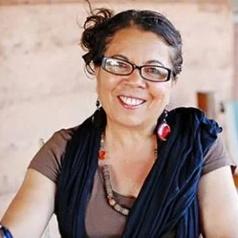
Research Fellow, School of Allied Health, Western Australian Centre for Rural Health, The University of Western Australia Born in Eradu, Charmaine is a proud Wajarri, Badimaya and Wilunyu woman of the Yamaji Nation. A visual artist, author, poet, storyteller and social science researcher, she shares her cultural knowledge in many different spheres. Charmaine has written five books, won several awards including the prestigious Australian Literary Society Gold Medal, and her poetry is studied as part of primary and school curriculum. Involved with the Yamaji Art Centre in Geraldton for over 22 years, she is currently their Chairperson. Charmaine was awarded the 2022 Magabala Fellowship 2022 and 2023 Red Room Poetry Fellowship and is a member of the national First Nation Aboriginal Writers Network .
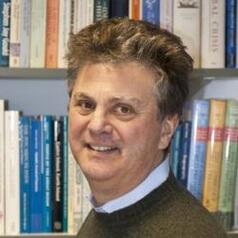
Disney Professor of Archaeology, Director, McDonald Institute for Archaeological Research, University of Cambridge As an undergraduate at Oxford I studied history and received an education in archaeology from Andrew Sherratt. I took an MA in Aegean and Anatolian prehistory at Bristol, and first came to Cambridge in 1987 to start a PhD with John Cherry. I returned briefly to Oxford as a junior research fellow in 1991, and from 1993 spent twenty years at UCL’s Institute of Archaeology, starting as lecturer in Aegean archaeology and ending as professor of Mediterranean archaeology. In 2014 I returned to Cambridge to take up my current position. In 2015 I was elected a fellow of the British Academy. I have held visiting fellowships at All Souls, Oxford, and at institutions in the US. My books have won the Runciman Prize, James R. Wiseman Prize, Wolfson History Prize and Premio Nonino. I see archaeology as a form of deep history, as the best way of understanding the global experience of humankind over time and why we are where we are today. My interests are therefore broad, comparative and not period-specific. My first grounding was in the Aegean, where I have been centrally involved in a project on the island of Kythera for the last twenty years. The Aegean, not least as an in-between place in spatial, analytical and interpretative terms, taught me the value of theory, material culture study, landscape archaeology, archaeological science, comparison and connectivity. From there my interests led outwards to island archaeology world-wide and to the overall early history of the Mediterranean, itself a space that brings together Europe, Africa and Asia. My most recent projects explore the long-term dynamics of Mediterranean Africa, and the archaeology of politics and urban life through the lens of fieldwork on Iron Age to Roman Kythera. I have a long-term interest in trans-Eurasian cultural processes and in the scope for an archaeology of oceanic connectivity. Key publications: Broodbank, C. and G. Lucarini 2019. ‘Mediterranean Africa, 9600-1000 BC: an interpretive synthesis of knowns and unknowns’ Journal of Mediterranean Archaeology 32, 2. Broodbank, C. 2018. ‘Does island archaeology matter?’, in A. Knodell and T. Leppard (eds.) Regional Approaches to Social Complexity; Studies in Honour of John F. Cherry, 188-206. Sheffield: Equinox. Broodbank, C. 2013. The Making of the Middle Sea: A History of the Mediterranean from the Beginning to the Threshold of the Classical World. London: Thames and Hudson. Broodbank, C. 2010. ‘“Ships a-sail from over the rim of the sea”: voyaging, sailing and the making of Mediterranean societies c. 3500-500 BC’, in A. Anderson, J.H. Barrett and K. Boyle (eds.) The Global Origins of Seafaring (McDonald Institute Monographs), 249-64. Cambridge: McDonald Institute for Archaeological Research. Broodbank, C. and E. Kiriatzi 2007. ‘The first “Minoans” of Kythera re-visited: technology, demography and landscape in the pre-palatial Aegean’, American Journal of Archaeology 111: 241-74. Broodbank, C. 2007. ‘The pottery’, in C. Renfrew, C. Doumas, L. Marangou and G. Gavalas (eds.), Keros, Dhaskalio Kavos: The Investigations of 1987-88 (McDonald Institute Monographs), 115-237. Cambridge: McDonald Institute for Archaeological Research. Broodbank, C. 2006. ‘The origins and early development of Mediterranean maritime activity’, Journal of Mediterranean Archaeology 19: 199-230. Broodbank, C. 2004. ‘Minoanisation’, Proceedings of the Cambridge Philological Society 50: 46-91. Broodbank, C. 2000. An Island Archaeology of the Early Cyclades. Cambridge: Cambridge University Press. Broodbank, C. 1989. ‘The longboat and society in the Cyclades in the Keros-Syros culture’, American Journal of Archaeology 93: 319-37.
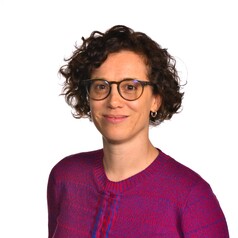
Senior Lecturer in Education, Swinburne University of Technology Catherine is a Senior Lecturer in the Department of Education at Swinburne University of Technology. She is an educational sociologist with expertise in children and young people's citizenship, participation, rights, diversity, and wellbeing. She is the author of 'Conditional Citizens: Rethinking Children and Young People's Participation' (2017) and co-author of 'Young People, Citizenship and Political Participation: Combatting Civic Deficit?' (2017).
Associate Research Fellow (Deakin) and Research Officer, Monash University I am a social anthropologist and STS scholar. My work focuses on nourishment, reproduction (including epigenetics and DOHaD), and human/ environment intra-action. My PhD explores human - environment relationships in the South African city of Kimberley, where I established the social anthropology department and undergraduate programme. I coordinate Deakin University's interdisciplinary Science and Society Network (SSN), working as an associate research fellow in the Alfred Deakin Institute, and work as a research officer at Monash on the 'Creating families' project. This Marsden-funded project studies the experiences of people as they seek assisted reproduction in Aotearoa /New Zealand.
Adjunct Professor of Philosophy, George Washington University My main area of research is in empirically informed moral psychology, moral theory, and applied ethics/public policy. My most recent book is on drug legalization.
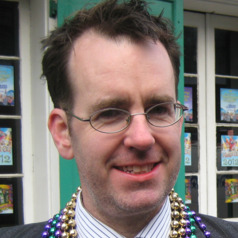
Lecturer in Cyber Security and Computer Science, University of Staffordshire Chris has served for over 7 years as a Detective Constable before returning to University to complete his Master’s in Cyber Security and PhD in Computer Science. He is a EC-Council Certified Ethical Hacker to Master level and has experience in GNU/Linux OS, Operating System Security, Cyber Security Policy and Governance and Penetration Testing.