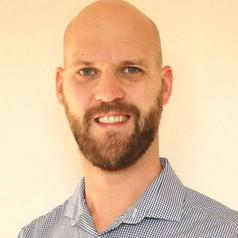
Associate Research Fellow at the Centre of the Digital Child, Deakin University Chris is a former teacher of French and now works as a Research Fellow at the ARC Centre of Excellence for the Digital Child. His research interests include the datafication of learning, gamified learning platforms and the use of technology in education more broadly. Chris completed his doctoral thesis in 2023. In his thesis he investigates how gamified learning applications reshape ideas, understandings and enactments of student engagement in a competitive private girls' school.
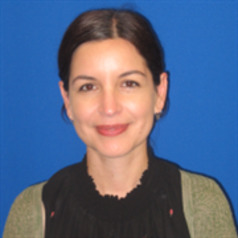
Lecturer, Faculty of Education and Social Work, University of Auckland, Waipapa Taumata Rau I am interested in sociological and philosophical approaches to schooling and education and how these disciplines might help us to make education good and right. I have a particular interest in secondary English curriculum and its relationship to social equity and educated ideals. I am also interested in education policy and in the relationships between policy and practice, with a focus on teacher subjectivity.
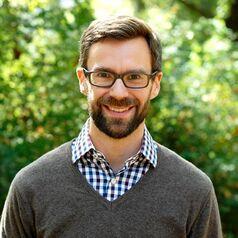
Senior Lecturer in German and Translation, University of Bristol The focus of my research, teaching and consultancy work is on the intersection between language and community. It is based on the recognition that words are actions that matter in specific social situations. I analyse language use across various communities and support the development of communicative practices that are effective and appealing, most recently around the language of Brexit. This work is based on research into the way in which linguistic and social practices intersect; applying Richard Sennett’s theory of craftsmanship to literature I have identified and described the poet Stefan George’s ‘workshop’ as his major work. The resulting monograph was #2 on the NDR/SZ list of the best new non-fiction books. It was followed by a five-year working group I led at the Hanse Institute for Advanced Study, deepening the exploration of linguistic creativity and community and resulting in an edited volume published with Klostermann. In parallel, I examined the need for a reconceptualisation of the link between encounter on the one hand and textual criticism on the other. This notion of a possible phenomenology of language use was put to the test in work on the various medial traces of conversations between the writer Ernst Jünger and the ‘interview artist’ André Müller. I edited these materials and have since published two articles on them. Part of this work was supported through a Marie Curie Fellowship held at the University of Bristol. My teaching is an ongoing inquiry into the various forms in which language aids or hinders the emergence of communities. I have designed courses on discourses around the ‘centre’ in society and politics, the language of economic policy-making, and the poetics and practices of German humour. My aim is to help students understand the extent to which they can actively participate in the processes analysed, because I contend that the current historical moment of crisis is a crisis of agency – of translating values and ambitions into action. Research and teaching can clarify the ways in which this is possible, and I see it as my job to do so. In my translation teaching this concerns the way in which new graduates become entrepreneurs, in an industry dominated by freelancers and marked by a tension between automation and creativity that linguists today can harness. I am hoping to expand the ways in which the study of language and the joys of venture creation can be linked up. As a former managing partner of a research and consultancy firm I can offer the business development perspective needed in the process. I was, from 2010 to 2018, a founding partner at Nimirum, a research and consultancy firm tracking the language of socio-economic change and consumer biographies. I was responsible for around 300 completed projects, enabling over 100 clients across multiple industries to sharpen their profile, win a record number of bids, base strategic decisions on a secure footing, and increase revenue. I was also in charge of recruiting, training, and deploying researchers in 65 countries, and for Nimirum’s research methods portfolio. Many of the projects carried out at Nimirum serve as proof that a sense of individual agency, business success and linguistic competency can be brought into close alignment. In terms of my own contribution to creative language use I am the German translator of a number of bestselling and highly-acclaimed writers, including Guardian columnist Owen Jones, Atlas of Prejudice internet sensation Yanko Tsvetkov, science writer Hugh Aldersey-Williams and American poet Joshua Mehigan. As a creative writer I am the author of two volumes of poetry and two travel books, the most recent one outlining 111 reasons to love England, which was featured in broadsheets, tabloids and on radio.
Senior Lecturer in Clinical Forensic Psychology, Te Herenga Waka — Victoria University of Wellington I undertook my PhD and clinical psychology training (PGDipClinPsy) at the University of Auckland. I worked clinically in child and adolescent mental health including for a specialist youth forensic service before joining Te Herenga Waka Victoria University of Wellington. I currently teach at undergraduate and postgraduate level and am Director of the Forensic psychology programme in the School of Psychology. My key areas of research interest include risk assessment, offender rehabilitation and ethical issues associated with young people’s interactions with the justice system.
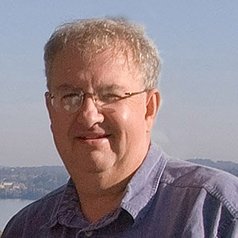
Director of Research for the Center for the Blue Economy, Middlebury Institute of International Studies Dr. Charles Colgan is the Director of Research for the Center for the Blue Economy (CBE) overseeing the conduct of research activities and serving as Editor-in-Chief of the Journal of Ocean and Coastal Economics (JOCE). In addition, he serves as adjunct faculty in the International Environmental Policy Studies program. Dr. Colgan served as a consultant with the National Ocean Economics Program (NOEP) for more than 14 years. The NOEP was created in 1999 by Dr. Judith Kildow at MIT and began producing its annual ocean economic databases with the subsequent hiring of Dr. Colgan the following year. While there were several articles and a report about the U.S. ocean economy published before 1999, the launch of the NOEP laid the foundation for a new field of study based on a unique methodology, with consistent time series data that allowed the public to track trends over time. During its 15-year history, NOEP has created the field of ocean and coastal economics, and its methodologies have been used by over 20 countries around the world. It is extremely well-respected in the U.S. and internationally, and it forms the foundation of the CBE research program. It has more than 2,000 regular users across all sectors and geographies in the U.S., and more than 37 nations. It is considered by many researchers to be the best source of data on ocean and coastal economics. In 2013 Dr. Colgan and Dr. Jason Scorse, the Director of the CBE, began the development of the Journal of Ocean and Coastal Economics (JOCE), which will launch its first volume in January, 2015. With a distinguished editorial board and its open review process, JOCE will further solidify the CBE’s position as the leader in the ocean and coastal economics field, and help foster an international community of researchers and practitioners. Upholding the CBE commitment to open access, the journal will be freely available to all: there are no fees to authors or readers. Until JOCE, those wishing to share research in this field outside of fisheries have used outlets that specialized in economics, but not specific to oceans and coasts. JOCE is the first in this growing field. Contracting with the Monterey Institute’s world-class translators, JOCE will provide abstracts of all papers in Arabic, Chinese, French, Korean, Japanese, Portuguese, and Spanish. Prior to his role as Research Director for the CBE, Dr. Colgan served as a Professor of Public Policy and Management in the Edmund S. Muskie School of Public Service at the University of Southern Maine. Dr. Colgan was the Chair of the Muskie School’s PhD Program in Public Policy and is a Senior Research Associate in the USM Center for Business and Economic Research. His long term economic forecasts are used by the Maine Department of Transportation and the Economic Development Districts of Maine. Prior to joining the University of Southern Maine, he served in the Maine State Planning Office, was State Economist, and Director of Natural Resource and Economic Policy.
Professor in Classics, Trinity College Dublin I studied Classics at Churchill College Cambridge, followed by a Ph.D. at University College London. I worked for the British School at Athens (at Knossos) and as research assistant to Colin Renfrew before coming to Trinity in 1994. I am the Trinity representative on the Managing Committee of the Irish Institute of the Hellenic Studies at Athens, and co-edited the Institute's first publication, The Lure of Greece (2007). My main area of expertise is the archaeology of the Aegean Bronze Age. Specific areas of interest include ceramic studies (pictorial pottery; figurines); ancient art; Mycenaean intercultural relations in the Aegean and Eastern Mediterranean; ancient religion (goddesses; experiential/embodied aspects). My work on the historiography of the goddess in early archaeology situates the study of goddesses and gender within the intellectual trends and ideologies of the mid-19th to early 20th centuries. I am also involved in a number of long-term archaeological projects in Greece, most notably the Atsipadhes peak sanctuary project in western Crete (in collaboration with Dr Alan Peatfield). This project has received IRCHSS funding to apply GIS technology to the spatial study of the figurines and pottery within the excavated site.