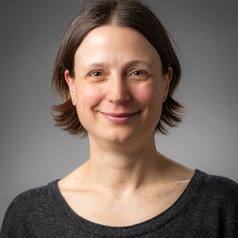
Senior Lecturer in Drug Discovery, Department of Life Sciences, University of Bath I'm a biophysicist and Senior Lecturer in Drug Discovery at the University of Bath. A chemist and biologist, my research is interdisciplinary and my team works at the interface of the biological and physical sciences. We use the best technique we can find to answer our scientific question, and are currently using single molecule fluorescence spectroscopy to measure changes in the conformation of protein drug targets with the ultimate aim of using our results to improve drug discovery.
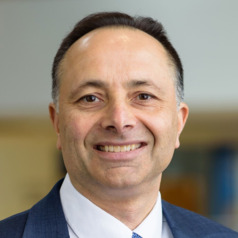
Senior Lecturer in Economics, The University of Queensland I'm an economist at the University of Queensland specialising in quantitative methods and health economics. Prior to this, I completed my doctorate at the University of Bristol in 2016 followed by a post-doc at Toulouse School of Economics. I've worked on diverse topics including peer effects among patients recovering from a substance use disorder, peer effects among doctors in the diffusion of healthcare innovation, peer effects in the demand for private health insurance, the role of wealth in funding healthcare, and the impact of enforcement in the market for illicit drugs.
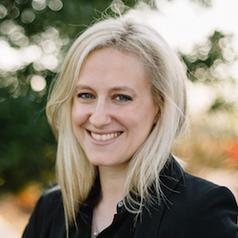
Director of the Center for Energy Innovation, UMass Lowell Christopher Niezrecki is a Distinguished University Professor; Director of Center for Energy Innovation; Co-director of the Structural Dynamics & Acoustic Systems Laboratory; and Co-director of the Rist Institute for Sustainability and Energy. His primary research includes renewable energy systems, wind turbine dynamics, structural health monitoring and inspection, structural dynamic and acoustic systems, bio-acoustics, manatee detection, parachute systems, smart structures, digital image correlation, signal processing, and smart materials. His goals include expanding the global use of renewable energy, developing technologies that can impact the 1.1 billion people in the world who do not have access to electricity, and advancing sensing technologies to measure and monitor structural systems.
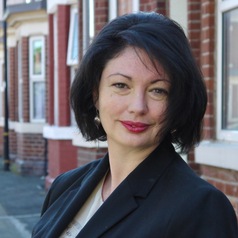
Associate Professor of Social Research and Economic Thought, Catholic University of America Catherine Ruth Pakaluk (Ph.D, 2010) joined the faculty at the Busch School in the summer of 2016, and is the founder of the Social Research academic area, where she is an Associate Professor of Social Research and Economic Thought. Formerly, she was Assistant Professor and Chair of the Economics Department at Ave Maria University. Her primary areas of research include economics of education and religion, family studies and demography, Catholic social thought and political economy. Dr. Pakaluk is the 2015 recipient of the Acton Institute’s Novak Award, a prize given for “significant contributions to the study of the relationship between religion and economic liberty.” Pakaluk did her doctoral work at Harvard University under Caroline Hoxby, David Cutler, and 2016 Nobel-laureate Oliver Hart. Her dissertation, “Essays in Applied Microeconomics”, examined the relationship between religious ‘fit' and educational outcomes, the role of parental effort in observed peer effects and school quality, and theoretical aspects of the contraceptive revolution as regards twentieth century demographic trends. Beyond her formal training in economics, Dr. Pakaluk studied Catholic social thought under the mentorship of F. Russell Hittinger, and various aspects of Thomistic thought with Steven A. Long. She is a widely-admired writer and sought-after speaker on matters of culture, gender, social science, the vocation of women, and the work of Edith Stein. She lives in Maryland with her husband Michael Pakaluk and eight children.
ARC DECRA Fellow in Hydrology, University of Sydney Conrad Wasko is an ARC DECRA Fellow at the University of Melbourne. Conrad has over ten years experience in both consulting and research. His research has won him numerous awards including the MSSANZ Early Career Research Excellence Award and the Lorenz G. Straub award for best PhD thesis globally in water engineering. He has contributed to the current national guidelines on flood estimation and his current research focuses on understanding the effects of climate change on hydrology and specifically extreme events.
Reader in Geography, University of Manchester Cristina Temenos is a Reader in Human Geography and a UKRI Future Leaders Fellow. Her research is focused on health inequalities and the politics of access to care in cities globally. Working in the field of policy mobilities, a new approach to knowledge translation, and she has developed this work in relation to drug use and treatment, public health, housing, economic austerity, environmental sustainability, transport, and climate change. Cristina is the Co-lead on Poverty and Deprivation for the University of Manchester’s Healthy Futures Initiative, and Co-leads the Cities, Politics, and Economies Research Group. Cristina is an editorial board member for Environment & Planning C: Politics & Space and Geography Compass. She is co-author of Moving Towards Transition: Commoning Mobility for a Low Carbon Future and Co-editor of The Urban Politics of Policy Failure.