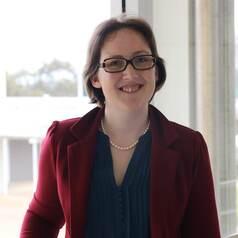
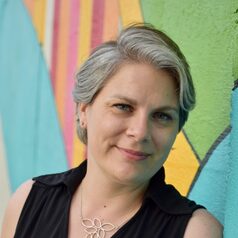
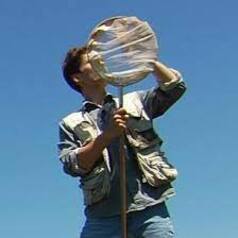
Lecturer in Law, Federation University Australia Christine Peacock is a Lecturer in Law at Federation University. She has significant experience teaching and researching, and often writes from a comparative perspective. Her industry experience includes working in the Asia Pacific region and Europe. In 2019 she was the recipient of the Australasian Tax Teacher's Association Promoting Women in Tax Academia Scholarship.
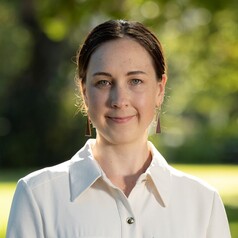
Lecturer in Physiotherapy, Swinburne University of Technology Dr Clara Zwack is a qualified physiotherapist, researcher and educator. She has been working as a physiotherapist for eight years in a variety of settings, including community, post-acute care, sports, aged care and hospital. More recently, she completed her PhD at the Iverson Institute at Swinburne University of Technology, whereby she undertook a study exploring the cardiometabolic risk profile of young adults with intellectual disability. Following, she completed two years of post-doctoral studies at the University of Sydney, looking at modernising cardiovasuclar rehabilitation practices. Clara has since returned to Swinburne University in a lecturing capacity and is currently teaching Masters of Physiotherapy students in multiple subjects. Clara's ongoing research focus is in the areas of disability, digtial health, cardiac rehab, science of science and physical actvity during complex pregnancy. In recent projects she has collaborated with the the National Heart Foundation Australia, Medibank and Yooralla, with whom she has ongoing industry partnerships.
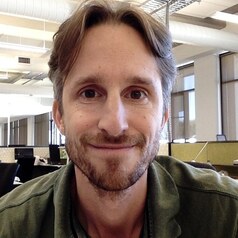
Postoctoral Researcher, School of Science, RMIT University An early career researcher whose interests could be summed up with: “Environmental sequencing, microbial ecology, chlorinated pollutants, organic matter, wastewater, anaerobic digestion, and how everything connects". In 2021 I joined the ARC Biosolids Training Centre at RMIT (www.transformingbiosolids.org.au), where we help water utilities to improve circular resource management by getting more renewable biogas and carbon/fertiliser values out of our municipal biosolids. In project 1C of the Centre we develop metagenomic methods to monitor the microbiome of anaerobic digestion, an important microbial treatment process for wastewater. DNA-based diagnoses of wastewater sludges promises to help the water/biosolids sector improve resource recoveries and risk management. Before that, after a career in one of the most fast-cycled and short-sighted manufacturing industries that took me from Germany to Vietnam and Hong Kong/Shenzhen, I decided to hit the switch and start thinking long-term and circular. Ten back-to-uni years later, in 2021 I finished a PhD in Soil Science at La Trobe Uni where I sequenced soil DNA and explored if and how soil biology was involved in the degradation of extremely persistent legacy pesticides that contaminate agricultural surface soils since several decades.
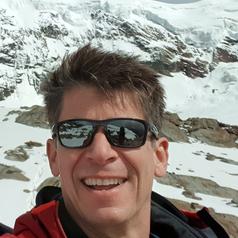
Professor, Curator of the Palaentological Museum, University of Zurich I am interested in the palaeobiology of the Palaeozoic and Mesozoic. As far as groups are concerned, I focus on cephalopods and early vertebrates. Cephalopod research is a vast field; I thus focus on the origin of ammonoids, Middle Triassic ammonoids (mainly taphonomy), Jurassic coleoids, and soft tissue preservation. Currently, my students and me work on Devonian faunas from Morocco, Devonian non-ammonoid cephalopods, Devonian placoderms and chondrichthyans etc.
Lecturer of History, Boston University Cari Babitzke specializes in 20th century US history with a focus on firearms politics. Her research and teaching investigate the changing landscapes of US media, protest politics, and political history. Her dissertation explored the development of the gun rights movement and the NRA’s role as a foundational element of the modern American Right. Babitzke’s work has been featured on the Washington Post’s “Made by History” blog. She has also appeared on C-SPAN and as a guest on the “This Day in Esoteric Political History” podcast.
Researcher in Biology, Lund University Charlie Nicholson is a community and landscape ecologist seeking to understand 1) how biodiverse communities provide ecosystem services and 2) how these species and services are affected by the way we manage and use land. To do this, he combines field-based experiments with economic valuations, ecological models, and theory to unpack the tradeoffs that characterize complex socio-ecological systems. He earned a PhD with Taylor Ricketts at the University of Vermont where he investigated how agricultural landscapes and management affect ecosystem services and agricultural yields. He followed this with postdoctoral work with Neal Williams at the University of California Davis and with Maj Rundlöf at Lund University. He is now a researcher at Lund University working on pollination ecology, landscape ecotoxicology and ecological modeling in agricultural landscapes. Together with Jessica Knapp, he is part of a team that aims to develop pesticide risk assessment for bees at landscape scales.