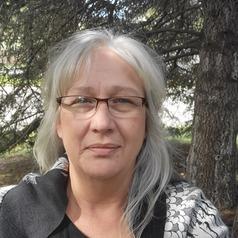
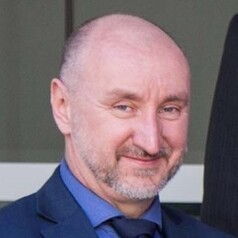
Assistant Professor, Faculty of Education, Concordia University of Edmonton Christine Martineau (Cree/Métis) is an Assistant Professor in the Faculty of Education at Concordia University of Edmonton where she teaches in the undergraduate Education minor, the Bachelor of Education After-degree, and the Master of Education degree programs. She has more than 20 years of teaching and leadership experience in Alberta, the majority of which has been in First Nations communities as a secondary teacher and school leader. Dr. Martineau’s primary teaching and research focus is in Indigenous Education policy and practice in Canada. In 2006, Dr. Martineau established an accredited on-reserve Alternative Junior/Senior High School, for which she served as Principal and Director of Education before pursuing her PhD. Dr. Martineau’s research over the last two decades has focused primarily on educational policy and practice in relation to Indigenous Peoples in Canada, with a specific focus on the Alberta context. Her PhD research was an analysis, from a Cree perspective, of Alberta’s Aboriginal education policy requiring teachers to infuse Indigenous perspectives into the K-12 curriculum. Her dissertation presents an understanding of Cree identity, an examination of how colonization has impacted identity for Aboriginal Peoples in Canada, and a discussion of the role of public education in relation to Aboriginal identity development. Dr. Martineau’s research interests include: Indigenous education policy and practice Educational leadership Teacher education Indigenous research methodology Race and racialization in education
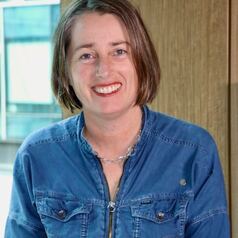
Professor of sociology, Australian National University Celia Roberts is a Professor in the School of Sociology at The Australian National University. She is author of several books on sex/gender, health and technology, including Messengers of Sex: Hormones, biomedicine and feminism (Cambridge UP, 2007), Puberty in Crisis: The sociology of early sexual development (Cambridge UP, 2015), and with Adrian Mackenzie and Maggie Mort, Living Data: Making sense of health biosensing (Bristol University Press, 2019).
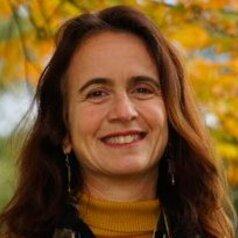
Senior Researcher at Swiss Federal Institute for Forest, Snow and Landscape Research and Adjunct Associate Professor of Ecology and Evolution, Stony Brook University (The State University of New York) I study how the spatial and temporal arrangement of habitats influences biological diversity. This issue relates to a number of fundamental questions in ecology that have challenged scientists for decades. Questions include: Why do mountains have extraordinary biodiversity? What is the importance of niche partitioning in maintaining biological diversity? and How does the climate history of a region influence its current patterns of biological diversity? Addressing these types of questions requires integration from a range of fields, including ecology, evolutionary biology, biogeography, climatology, geology and conservation biology because mechanisms that influence biological diversity are played out across a range of spatial and temporal scales. Much of my current work is focused on the role of plant-hummingbird interactions in the generation and maintenance of high tropical diversity; however, I also work on multiple other systems and questions including drivers of global diversity and, most recently, of European montane plants.
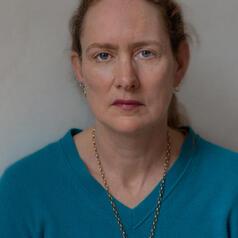
Senior Lecturer, Art and Public Engagement, King's College London My work focuses on the intersection of contemporary art and various forms of state violence including socially detrimental urban overdevelopment and militarized force. I research how art, artists, architects, and urban planners have been implicated in the exercise of hard and soft state power, ‘inadmissible heritage’ in public collections, and artist monitoring by the state. Conversely, I explore visual histories of interracial solidarity and work to develop revisionist curatorial formats that reinterpret the art of the past. My doctoral research combined contemporary art history and theory with security, intelligence, and media studies to investigate officially commissioned art during the Irish ‘Troubles’ and the 1982 Falklands/Malvinas conflict. My monograph based on this study 'The Deployment of Art' will be published by Routledge in 2023. I was Exhibitions Curator at the Hayward Gallery (1999-2007), Senior Curator at Modern Art Oxford (2009-10), and Deputy Head of the Curating Contemporary Art Department, Royal College of Art (2007-2014). Recent projects include 'The Surface of the World: Architecture and the Moving Image' (Museum of Contemporary Art and Design, Manila, Philippines, 2014-17); 'Spectres of Modernism: Artists Against Overdevelopment' (Bowater House/Raven Row, London 2017-18) and 'Open Plan: Communities in Contemporary Art' (South London Gallery, 2022) (co-edited with Carey Robinson). I have worked in a freelance and associate capacity with diverse visual arts organisations including Tate; Kettle’s Yard, Cambridge; South London Gallery and the Alytus Biennale (Lithuania). My doctoral research combined contemporary art history and theory with security, intelligence, and media studies to investigate officially commissioned art during the Irish ‘Troubles’ and the 1982 Falklands/Malvinas conflict. The monograph based on this work appears in 2023 (Routledge) addressed to their art, heritage, intelligence, social movement, and media studies lists. This feeds directly into the design of my next research project which explores interracial solidarity tactics and visual activism linking Northern Ireland and Black America during the 1960s, 1970s and 1980s. I will analyze contemporary art, political film, murals, and embodied protest actions to investigate how activists in Northern Ireland looked to the visual imagery of Black America as the basis for resistance and solidarity and ask if, and how that ‘look’ was returned. Planned research outputs for that project include a second monograph which will have wide appeal given current interest in interracial solidarity and anti-Imperialist struggle.
Master's student, Department of Sociology, Queen's University, Ontario Christina Pilgrim is a Master's candidate in the Department of Sociology at Queen's University. Her research is focused in surveillance, media, and communication technology.