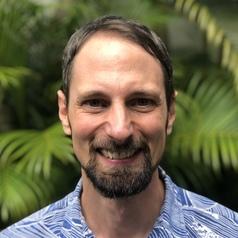
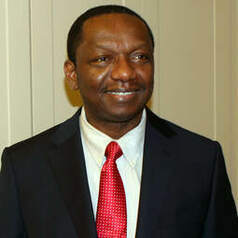
Chair of Psychiatry, The University of Melbourne David is Professor of Psychiatry at St Vincent’s Health and The University of Melbourne. He has wide clinical and research interests, encompassing schizophrenia and related disorders, bipolar disorder, cannabis abuse, OCD spectrum disorders and disorders of body image. He has published over 600 papers and chapters; and 22 books. His broader interests include music, literature, theatre and art.
Postdoctoral researcher in pulsar timing and gravitational waves, Swinburne University of Technology Postdoctoral researcher at Swinburne University of Technology, studying pulsars and gravitational waves. I am expert in the precision techniques of pulsar timing and interstellar scintillometry.
Astronomer, University of Sydney I am ab Future Fellow at the University of Sydney and an Associate Professor at the University of Hawaii. My research focuses on the study of stars and exoplanets in our galaxy.
Professor of Theoretical Physics, University of Canterbury David L Wiltshire is a professor of theoretical physics at the University of Canterbury, Christchurch, New Zealand. His research interests are in general relativity, cosmology and quantum gravity. He began his career working on higher-dimensional gravity, brane worlds and black holes as a PhD student in the Cambridge relativity group in the mid 1980s. He has subsequently explored a large range of ideas on topics including quantum cosmology, gravastars and dark energy. Since the mid 2000s his research has focused on the averaging problem and backreaction in inhomogeneous cosmology. By revisiting the foundational principles of general relativity, he has developed the "timescape cosmology", a phenomenological viable alternative to the standard cosmology, without dark energy. David is on the editorial board of Classical and Quantum Gravity, an IUPAP representative on the committee of the International Society on General Relativity and Gravitation (ISGRG), President of the New Zealand Institute of Physics, and a member of the Foundational Questions Institute (FQXi). He is also a past President of the Australasian Society for General Relativity and Gravitation.
Research director, Centre d’Analyses de Mathématiques Sociales (CAMS), Ecole des Hautes Etudes en Sciences Sociales (EHESS), Centre national de la recherche scientifique (CNRS) David Chavalarias is Director of Research at the CNRS lab Center for Social Analysis and Mathematics (CAMS) and is the head of the Complex Systems Institute of Paris Ile-de-France (CNRS, ISC-PIF – http://iscpif.fr). He studies the social and cognitive dynamics, both from the modeling and data-mining perspective, with an interdisciplinary approach grounded in cognitive and complex systems sciences. His work on science evolution features new methods for the reconstruction of science dynamics from academic productions, as well as models of collective dynamics of scientific discovery. He also has contributed to the development of several macroscopes and visualization tools for mapping knowledge dynamics from large corpora : academic digital repositories, online media or press.
Professor of Obstetrics and Gynaecology, University of Sheffield Professor Anumba is currently Professor of Obstetrics and Gynaecology at the University of Sheffield and has worked as a Consultant Obstetrician and Gynaecologist at Sheffield Teaching hospitals for 22 years. He is Faculty Director of Clinical Academic Training in Sheffield. He serves on the Council of The Royal College of Obstetricians and Gynaecologists of GB as International Representative coordinating Sub-Sahara Africa. He is Honorary Professor of Obstetrics and Gynaecology at the University of Cape Town. Professor Anumba investigates the physiology of human parturition, particularly the role of immunity and inflammation in term/preterm labour and pregnancy complications such as hypertension, fetal growth restriction and stillbirth. He is also investigating new techniques to predict preterm birth by the detection of cervical remodelling changes as well as changes in the vaginal microbiome and metabolome. He runs specialist clinics in Prenatal Diagnosis and Fetal Therapy, Prematurity Prevention, and High-Risk Pregnancy, all of which have research spin outs. One spin out is ECCLIPPx, a research programme that explores electrical impedance spectroscopy and several other innovative techniques and devices for predicting preterm birth. The NIHR Global Health Research Group on Preterm Birth Prevention and Management in LMICs PRIME is another spin out which brought together interdisciplinary researchers from the United Kingdom and South Africa amongst others to address the challenges of preterm birth management in low-middle income countries where its prevalence is highest.