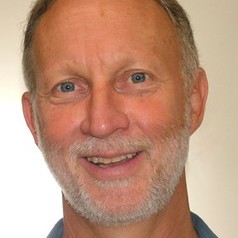
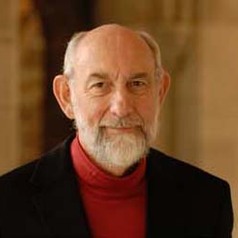
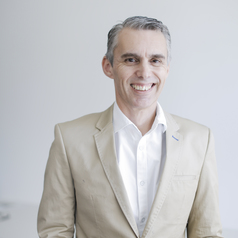
Director of the NSW Bureau of Crime Statistics and Research; Adjunct Professor, School of Social Science, UNSW Australia Don Weatherburn has been Director of the NSW Bureau of Crime Statistics and Research since 1988. He was awarded a Public Service Medal in January 1998, an Alumni Award for Community Service by the University of Sydney in 2000 and made a fellow of the Academy of Social Sciences in Australia in 2006. He is an Adjunct Professor in the School of Social Science at the University of New South Wales and is the author of three books and more than 200 articles, reports, and book chapters on crime and criminal justice.
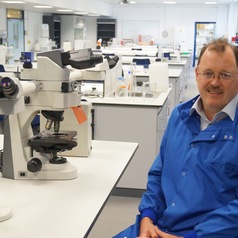
Scientific Director of the Kidscan Childrens Cancer Research Charity, University of Salford I am currently the scientific director of the children's cancer research charity Kidscan, and a senior lecturer in biomedicine at the University of Salford. I teach biomedical science students on a IBMS accredited degree course and a biochemistry course that is accredited by the Society of Biology. My research interests include cancer treatment, drug design and discovery, ECM biology, polysaccharide structural studies, technical development in glycomics and control of angiogenesis for the treatment of cancer. I also have considerable experience in clinical research, including taking part in radiotherapy and photodynamic therapy clinics and clinical trials. My current research interests include the development of complex polysaccharides as cancer therapeutic agents and the discovery of new antibiotics.
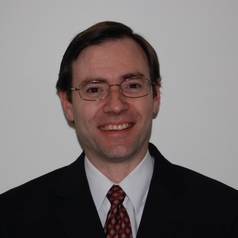
Professor of Electrical & Electronic Engineering, University of Melbourne Professor David Grayden is Deputy Head (Academic) of the Department of Electrical and Electronic Engineering at The University of Melbourne. His main research interests are in understanding how the brain processes information and how best to present information to the brain using medical bionics, such as the bionic ear and bionic eye. He is also conducting research in epileptic seizure prediction and electrical stimulation to prevent or stop epileptic seizures.
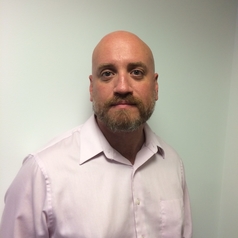
Adjunct Professor at the School for Conflict Analysis and Resolution, George Mason University David Alpher, PhD, has spent the past fourteen years applying conflict resolution theory and methodology to practical international development work in fragile and unstable areas. He has twice led field programs in Anbar Province, Iraq; first working to reduce the involvement of youth in the insurgency in 2007 and 08, and then working to peacefully reintegrate Internally Displaced People in the Ramadi district in 2010. In addition he has worked with track two dialogues between conflicting parties in Israel/Palestine, conducted conflict and development assessments in Nepal and Ethiopia, and helped facilitate inter-religious dialogues in the US. Dr. Alpher completed his PhD from the School of Conflict Analysis and Resolution at George Mason University in 2011. In addition to continuing field work, Dr. Alpher teaches courses on development and conflict, global conflict issues and terrorism at George Mason University. His dissertation, entitled "Developmental Politics: The Minnow and the Leviathan," examined the nature of democratization as an alternative to poverty alleviation as the driving force behind success in international development work. His focus of research is on issues relating to policy and action reform within the development field, development implementation in areas of ongoing conflict, civil-military coordination and complex operations, and on ethnic and religious conflict. He has published scholarly work on the nature of mass violence, as well as writing articles in OpenDemocracy, Politico and Bitterlemons International, among others, on the nature of policy reform within development work, and political stability in Iraq and Israel/Palestine, and has been quoted both domestically and internationally about domestic right-wing extremism in the United States. Dr. Alpher has briefed Congress, non-governmental organizations and a range of offices of the US Government on development and security policy in the Middle East, and speaks frequently at area universities. Dr. Alpher also earned his MS degree from the School of Conflict Analysis and Resolution, focusing on ethnic and religious conflict, and is a BA alumnus of Brandeis University's history department.
Senior Research Fellow in the Centre for Advancing Journalism, University of Melbourne Denis Muller was born in New Zealand in 1948 and emigrated to Australia in 1969. He was educated at Rosmini College, Auckland, and at the University of Melbourne. After three years on suburban newspapers in Auckland, he joined The Sydney Morning Herald as a sub-editor in 1969. In 1978 he joined The Times, London, also as a sub-editor, before returning to take up the position of Chief Sub-editor of the Herald in 1980. He subsequently held the positions of Night Editor, News Editor and Assistant Editor (Investigations) at that newspaper, until joining The Age, Melbourne, as Associate Editor in 1986. At both newspapers, his responsibilities including representing the papers as an advocate before the Australian Press Council. From 1984 until he left newspapers in 1993, he worked closely with Irving Saulwick, one of Australia's leading public opinion pollsters, in the management and writing of the Saulwick Poll which was published in The Age as AgePoll and in the Herald as HeraldSurvey. In 1990 he was accepted as a mature-age student into the Public Policy program at the University of Melbourne. He completed a Postgraduate Diploma in 1992 and a Master's degree in 1994. In 1993 he left The Age to take up a position as Group Manager, Communications, at the Board of Studies, Victoria. In 1995 he established the research consultancy Denis Muller & Associates, and was appointed a Senior Research Fellow in the Centre for Public Policy at the University of Melbourne. In 2006 he completed a doctoral thesis on media ethics and accountability, and was appointed a Visiting Fellow at the Centre for Public Policy, where he has taught in the Public Policy program since 1997. He has also taught research methodology at RMIT University, and teaches defamation law to practising journalists through the Communication Law Centre.
Research Fellow, Faculty of Law/Faculty of Arts and Social Sciences, University of Technology Sydney I have a law degree from UQ and a PhD in media studies from QUT. Previous positions include Executive Director of the Australian Press Council, Manager at the Australian Communications and Media Authority, and Director of the Communications Law Centre at UNSW.