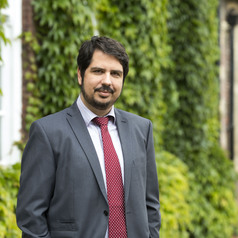
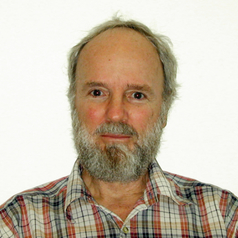
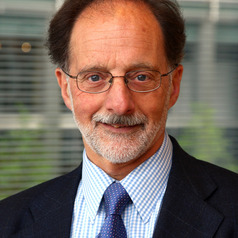
Dr Dionysios Demetis is a Lecturer in Management Systems at the Hull University Business School. He holds a PhD on Anti-Money Laundering and Information Systems from the London School of Economics and Political Science, where he taught classes on Information Systems Management, IS Security and Research Methods. While at the LSE, he contributed widely to a number of research deliverables for the European Union, but most importantly to the domain of Anti-Money Laundering for the Spotlight EU project, as well as the GATE EU Project targeting Money Laundering and Terrorist Financing. His research on the Risk-Based Approach to Anti-Money Laundering and the 3rd EU Directive has been featured in the IMOLIN select bibliography of the United Nations while his research on ‘Data Growth and the Consequences to Anti-Money Laundering’ has won the Emerald Highly Commended Award from the Journal of Money Laundering Control. For his teaching at the London School of Economics, he was awarded the departmental Teaching Assistant award for Outstanding Contribution based on peer review and student feedback from the Information Systems Department in 2006. During his PhD, he secured three consecutive research scholarships from the LSE. His book on AML entitled ‘Technology and Anti-Money Laundering’ and published by Edward Elgar is the first book to provide a coherent theoretical structure for Anti-Money Laundering research and practice, based on Systems Theory, and the first book to provide an Information Systems perspective on Anti-Money Laundering. With LSE Professor Ian Angell, he co-authored another book that applies second-order cybernetics to uncover deep-seated epistemological paradoxes in science. The book is entitled ‘Science’s First Mistake’, and it is published worldwide by Bloomsbury. Dr Demetis has a background in Physics from the University of Crete, as well as an MSc from the London School of Economics on the Analysis, Design and Management of Information Systems. Prior to this academic post he was an Adjunct Professor for the California based Thomas Jefferson School of Law (TJSL), where he lectured on the International Compliance and Anti-Money Laundering courses for the university’s online program for about three years. He has also been lecturing for TJSL on Qualitative Research Methodology for both MSc-level and PhD-level students, while advising a number of students in their research. He has given a large number of talks in conferences, and is a regular speaker at Cambridge University at the Annual Economic Crime Symposium.
I am Danushka Bollegala, a Senior Lecturer (Associate Professor) at the Department of Computer Science, The University of Liverpool, United Kingdom. See my short vita. I am also a member of the Institute for Risk and Uncertainty of the University of Liverpool, and Global Research Center for Big Data Mathematics National Institute of Informatics (NII). My research interests are Artificial Intelligence, Computational Linguistic and Web Mining. I have worked on various topics related to above fields such as measuring semantic and relational similarity from Web data, domain adaptation, sentiment analysis, social media, personal name disambiguation, name alias extraction, and information ordering in multi-document text summarization. I have published my work in various conferences in Web, AI and NLP fields. See my list of publications. I teach Data Mining in the graduate school.
Dee Goddard is a PhD student in Comparative Politics at the University of Kent, investigating the representation of women in ministerial positions across Europe. Dee is collecting an original dataset of the women appointed to ministerial posts across Europe since 1945, and seeks to develop an understanding when and why women are appointed to the cabinet. She is also an active member of the Global Europe Centre and Comparative Politics Workshop at Kent.
Since I retired from teaching at the University of Queensland I have continued collaborating with academic colleagues on forest restoration. I have undertaken a series of consultancies with the World Bank in China (involving forest restoration in degraded land) and with the Australian aid program in Vietnam (involving adaptions to climate change in the Mekong Delta). In recent years I have also given lectures to post graduate students (University of Melbourne, Yale University, Swedish Agricultural University) and participated in reforestation training programs (China, Thailand, Malaysia).
I am Honorary Professor in the Centre for Transport Studies at UCL. I was formerly Chief Scientist at the Department for Transport. Earlier in my career I was a member of the scientific staff of the Medical Research Council and a civil servant in various Whitehall departments. My research interests focus on the growth of travel demand, particularly as this is influenced by demographic factors, and on how this demand is met by investment in the transport system, as this is influenced by transport policy and new technologies.
Danny Dorling joined the School of Geography and the Environment in September 2013 to take up the Halford Mackinder Professorship in Geography. He was previously a professor of Geography at the University of Sheffield. He has also worked in Newcastle, Bristol, Leeds and New Zealand, went to university in Newcastle upon Tyne, and to school in Oxford. Much of Danny's work is available open access (see www.dannydorling.org). With a group of colleagues he helped create the website www.worldmapper.org which shows who has most and least in the world. His work concerns issues of housing, health, employment, education, wealth and poverty. His recent books include, co-authored texts The Atlas of the Real World: Mapping the way we live and Bankrupt Britain: An atlas of social change. Recent sole authored books include, Injustice: Why social inequalities persist in 2010; So you think you know about Britain and Fair Play, both in 2011; in 2012 The No-nonsense Guide to Equality, The Visualization of Social Spatial Structure and The Population of the UK; and in 2013 Unequal Health, The 32 Stops and Population Ten Billion. Before a career in academia Danny was employed as a play-worker in children's play-schemes and in pre-school education where the underlying rationale was that playing is learning for living. He tries not to forget this. He is an Academician of the Academy of the Learned Societies in the Social Sciences, Honorary President of the Society of Cartographers and a patron of Roadpeace, the national charity for road crash victims.