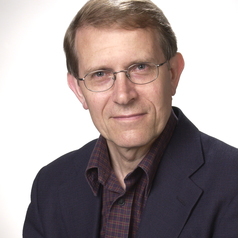
Professor Dorrik Stow FRSE: Director, Institute of Petroleum Engineering; Director, Centre for Energy Economics Research & Policy; Professor of Petroleum Geoscience, Heriot-Watt University. He is an internationally renowned geologist and oceanographer with an extensive record of scientific publications, including over 300 scientific papers, numerous books and edited volumes. He specialises in the deep sea and its sedimentary record – modern, ancient and subsurface. In pursuing this scientific quest he has sailed on all the world’s major oceans, and visited, lectured or worked in more than 50 countries. He has worked in and with the oil industry, particularly in their on-going quest for deep-sea oil and gas and on new and tight reservoir targets, and has led major international missions for scientific drilling into the deep Indian Ocean seafloor and the Gulf of Cadiz, as well as many other expeditions on land and at sea. He also maintains a strong interest in the field of geoscience, development and capacity building, especially concerning hazard mitigation, geoscience education and marine management. He is enthusiastic to popularise ocean and earth sciences through lectures, writing and broadcast.
David Hutchison has been leading a research group in computer networks for 30 years, focusing largely on Quality of Service (QoS) and more recently on resilient systems. He has completed many projects, mostly with international and industry collaborations, and has written many papers in his areas of interest. He has served on the key conference technical program committees in his field and on several journal and book publishing editorial boards.
I am a PhD student at the University of Cambridge in the faculty of Education. My current research examines the ways in which behavioural genetics research on intelligence does and could shape how American educators conceptualize intelligence and student success. Specifically, I study how genetics research on IQ and educator understandings of intelligence may engage with the phenomenon of ethnic minority and low income underrepresentation in US gifted education programs.
His research focuses on the psychology underlying human misbelief. In his most widely-cited work, he showed that people tend to hold flattering opinions of their competence, character, and prospects that cannot be justified from objective evidence—a phenomenon that carries many implications for health, education, the workplace, and economic exchange. He also examines how many of these same processes also injure judgments made by groups. Dunning’s other research focuses on decision-making in various settings. In work on economic games, he explores how choices commonly presumed to be economic in nature actually hinge more on psychological factors, such as social norms and emotion. In particular, he documents that people trust complete strangers in situations in which the economic analysis would suggest no trust whatsoever. Finally, Dunning explores how people’s preferences and wishes distort their judgements and conclusions. In past work, he has shown how the influence of motivated reasoning extends even down to shape perceptual experience, such as vision and hearing.
Dan is a third year Ph.D. candidate at the University of Oxford. In his doctoral thesis, ‘Fighting Rust: The Long Economic Crisis and the Rebuilding of the Northeast and Midwest’, Dan explores the political and economic forces that helped transform the Northeast and the Midwest from industrial to post-industrial during the 1970s and 1980s. Chronicling the efforts that members of the business community, labor unions, community activists and elected officials (local and national) made to help struggling industries and geographic regions negotiate the shifting economic terrain between 1974 and 1988 Dan examines the interlinked histories of urban decline, deindustrialisation, and economic development. By thoroughly examining the political environment of the 1970s and 1980s from a local and regional level Dan hopes to challenge the assumption that the economic success of the 1990s was produced by the limited government and free market policies of the Reagan administration or the ingenuity of individual entrepreneurs.
Dr Danika Wright is a Lecturer in the Discipline of Finance and the Honours Program Director at the University of Sydney Business School. Dr Wright’s expertise is in the design, investment and operations of real estate markets. Her research has contributed to the development of the benchmark house price index used in Australia. She is sought out for her knowledge on real estate prices and modelling, and is a member of the Sirca-RP Data joint research committee. Her current research projects examine investor behaviour in different settings, including real estate markets, and links to corporate finance. Prior to appointment at the University of Sydney Business School Dr Wright held quantitative research positions in funds management firms, and continues to provide expert advise to a range of significant industry bodies including the Financial Services Council of Australia and the Reserve Bank of Australia.