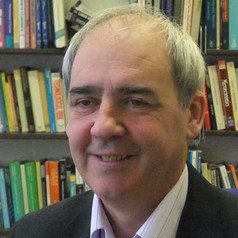
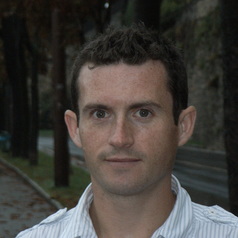
Deborah Berry is Assistant Professor and Co-Director of the Histopathology and Tissue Shared Resource. The Histopathology & Tissue Shared Resource (HTSR) is Georgetown Lombardi's resource for accessing human tissue for translational research and provides comprehensive, high quality laboratory and interpretive pathology services. The HTSR consents for, collects and distributes fresh- and formalin-fixed paraffin embedded tissue as well as provides technical and pathological support for investigator-driven collection protocols including the novel conditionally reprogrammed cells program. The HTSR also coordinates with the company Indivumed for the collection of high-quality biospecimens including matching fresh frozen and formalin fixed tissues, serum, plasma, urine and comprehensive clinical data. HTSR Co-Director Brent Harris, MD, PhD, provides comprehensive pathology services with a speciality in neuropathology. Under the direction of HTSR Co-Director Deborah Berry, PhD, the Histopathology Laboratory provides comprehensive histology services including necropsy, tissue processing, microtomy, staining, immunohistochemistry, laser capture micro-dissection and tissue microarray construction, staining and high-throughput analysis. In addition, the HTSR provides expert technical support, consultation services and educational support and training for users.
Dana Ruggiero is a Senior Lecturer in Learning Technology in the School of Education at Bath Spa University. She is involved in research initiatives from various European research institutes including the EU TEMPUS and ERASMUS programs. Dana completed her Ph.D. in Learning Design and Technology from Purdue University and earned an M.A. in Education from Augsburg College. Her research interest focuses on praxis in design for persuasive technology, multimedia installations, and affective knowledge, including the application of games for social issues such as homelessness, juvenile offenders, children in care, and healthcare. In addition to speaking at international conferences and publishing in peer-reviewed journals she has edited a book on societal effects of persuasive games and is currently writing two other manuscripts around game design and learning. Currently, Dana is involved in research focusing on player experience in social impact games, Bayesian statistical models to predict behaviour in serious games, and designing games for e-learning in teacher education.
David has extensive experience developing both energy and broader public policy in both Australia and the UK. He has spent the past three years working on energy and earth resources policy for the Victorian State Government, where he recently led the review of the Victorian Energy Efficiency Target scheme. David has a Bachelor degree in Economics (Hons) from the University of Hull and a Masters degree in Economics of the European Union from the University of Exeter.
David Bell is currently Professor of Economics at the University of Stirling, Scotland and the Budget Adviser to the Finance Committee of the Scottish Parliament. He studied economics at the University of Aberdeen and the London School of Economics. After a spell at the University of St Andrews, he joined the University of the Strathlyde, where he wrote his PhD. He joined the Macroeconomic Modeling Bureau at the University of Warwick in the early 1980s, and then was appointed a lecturer in the Department of Political Economy at the University of Glasgow. He joined Stirling in 1990 and since then, his main interests have been in labour economics, fiscal decentralization and the economics of social care. He has published widely and has acted widely as an adviser to policymakers.
David R. Keith is an Assistant Professor of System Dynamics at the MIT Sloan School of Management. David uses simulation modelling to examine the diffusion of new technologies in the automotive industry. His research examines corporate strategy and public policy issues including spatial patterns of technology adoption, supply constraints in production, competition between existing platforms and emerging alternative fuel vehicles, and the impact of new technologies on energy consumption and environmental impacts. David has received several awards for his research, including a Fulbright scholarship, an Alcoa Foundation Fellowship from the American-Australian Association, a Martin Family Sustainability Fellowship from the MIT Energy Initiative, and the Dana Meadows award recognizing the best student paper at the International System Dynamics Conference. David previously worked for Holden, the Australian subsidiary of General Motors, and URS Corporation, a global engineering and environmental consultancy. David holds BEng (Hons.), BCom, and MEnv degrees from the University of Melbourne (Australia) and a PhD from the MIT Engineering Systems Division.
David Eiser is a Research Fellow in Economics at the University of Stirling, and at the Centre on Constitutional Change. He specialises in the economics of constitutional change, regional economics, and labour markets. David has published extensively on the economics of devolution in the UK, particularly in regard to fiscal issues in Scotland. He co-edited work on the economics of Scottish independence published by the Scottish Economic Society, and has published a number of papers on inequality in Scotland. David has given evidence to various Scottish Parliament Committees, and published research for the Scottish Government on issues including, the integration of employment and skills services, broadband rollout, and the Commonwealth Games.