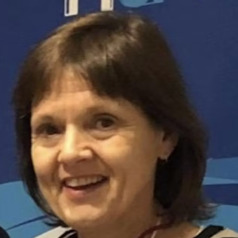
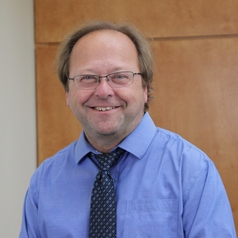
Eczema and Allergy Nurse; Lecturer, University of South Australia PhD, MN, BN, PC Allergy Nursing Experienced in Nurse-directed eczema care education, allergy care and education. Course co-ordinator Professional certificate of Allergy, University of South Australia. Eczema Nurse myProderm Adelaide, Allergy Nurse, AllergySA . My PhD focused on how nurses use cognitive Learning Principles in parent education practice, helping parents to develop thinking, reasoning and problem solving skills, required to be confident and capable to deliver health care to their children. In an Action research study participants created a resource, comprising cues, based upon the Dimensions of Learning Framework, to help nurses guide parent education practice, and parents to optimise their leaning experiences.
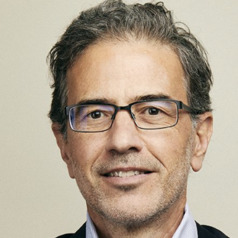
Professor of Political Science, University of California, Los Angeles Daniel Treisman is a professor of political science at the University of California, Los Angeles and a research associate of the National Bureau of Economic Research. A graduate of Oxford University (B.A. Hons.) and Harvard University (Ph.D.), he has published six books and many articles in leading political science and economics journals including The American Political Science Review and The American Economic Review, as well as in public affairs journals such as Foreign Affairs and Foreign Policy. His research focuses on Russian politics and economics as well as comparative political economy, including in particular the analysis of democratization, the politics of authoritarian states, political decentralization, and corruption. A former editor of The American Political Science Review, he has served as associate editor or on the editorial boards of the journals Post-Soviet Affairs, Comparative Political Studies, Economics and Politics, Politeia, and the Russian Journal of Economics. He has served as a consultant for the World Bank, the European Bank for Reconstruction and Development, and USAID. In Russia, he has been a member of the International Advisory Committee of the Higher School of Economics and a member of the Jury of the National Prize in Applied Economics. At UCLA, he has served as acting director of the Center for European and Russian Studies. He has been a Guggenheim Fellow and an Andrew Carnegie Fellow, as well as a visiting fellow at the Hoover Institution, the Institute for Human Sciences (Vienna), and the Center for Advanced Study in the Behavioral Sciences (Stanford). He is an elected member of the American Academy of Arts and Sciences. His latest book, co-authored with Sergei Guriev, Spin Dictators: The Changing Face of Tyranny in the 21st Century (Princeton University Press, 2022), was one of the “Best Books of 2022” (The New Yorker, Foreign Affairs), “Best Political Books of 2022” (Financial Times), and “Books That Made Us Think in 2022” (The Atlantic, Moment). It has been translated into 14 languages. The Return: Russia’s Journey from Gorbachev to Medvedev (The Free Press, 2011) was one of the Financial Times’ “Best Political Books of 2011.” It won the Prix Guido et Maruccia Zerilli-Marimo de l’Académie des Sciences Morales et Politiques, Paris, and the Arthur Ross Book Prize Bronze Medal, New York. Since 2014, he has been the director of the Russia Political Insight Project, an international collaboration funded by the Carnegie Corporation of New York, to investigate political decisionmaking in Putin’s Russia. This resulted in the publication of The New Autocracy: Information, Politics, and Policy in Putin’s Russia (Brookings Institution Press 2018).
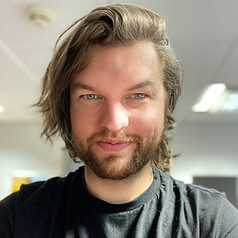
Lecturer in Cognitive Psychology and Environmental Temporal Cognition Lab Director, Keele University, Keele University Darren Rhodes is a cognitive computational neuroscientist and Director of the Environmental Temporal Cognition Lab at Keele University, United Kingdom. His primary research explores how humans perceive time, particularly in extreme environments, alongside investigations into multi-sensory processing and the nature of consciousness. The lab’s research spans Arctic, desert, and space-analog settings to understand how environmental extremes shape temporal perception and cognitive processes. Darren uses psychophysical techniques and cognitive computational models to uncover the perceptual mechanisms underpinning our experience of time, and to develop predictive frameworks for understanding human adaptation in challenging conditions. His research has applications for improving well-being in polar regions, astronaut training, and other extreme environments. He is committed to transparent research processes and advocates for open science. Darren actively works to reform academic practices toward openness, both through his research and in his teaching, encouraging future researchers to adopt more transparent methodologies. Darren obtained his PhD from the Centre for Computational Neuroscience and Cognitive Robotics at the University of Birmingham under the supervision of Dr. Max Di Luca. He then worked as a postdoctoral fellow at the Sackler Centre for Consciousness Science, under Prof. Anil Seth, contributing to the ERC TIMESTORM Project. Prior to joining Keele, he served as a senior lecturer in psychology and statistics at Nottingham Trent University. Darren is a Senior Fellow of the Higher Education Academy, recognized for his contributions to the integration of digital technology in pedagogy and fostering open science culture change.
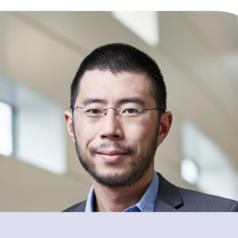
Radiation Oncologist at Peter Mac; Course Coordinator, Masters of Cancer Sciences, The University of Melbourne Dr David Kok is a Radiation Oncologist and Medical Educator dually employed by the Peter MacCallum Cancer Centre and The University of Melbourne. He holds numerous senior roles, including being Peter Mac's Associate Director of Radiation Oncology (Education) and Director of Peter Mac's Monash Moorabbin campus. Clinically, he treats all tumour subtypes but has a particular interest in skin, urological and neurological malignancies. He has expertise in the use of Stereotactic Radiosurgery, VMAT and Intensity Modulated radiotherapy to achieve the best possible outcomes for his patients. David is also an award winning medical educator. He completed an education degree alongside his medical degree and also completed a medical education fellowship before taking up his current position as the inaugural Course Convenor of the University of Melbourne's Master of Cancer Science Degree - a program delivered jointly by the University of Melbourne and the Victorian Comprehensive Cancer Centre. Delivered online using a variety of innovative methods including interactive case scenarios, fully animated videos and virtual reality simulations, it has been recognised as a sector-leading degree with numerous international accolades and is one of the University's fastest growing degrees. In addition he has led the design of two short courses and three microcertifications for the University. David sits on a range of national and international educational committees. This includes being the Chair of the VCCC Alliance's Cancer Education and Training Advisory Committee - the overarching educational committee that sits across the Alliance's 10 hospital's and academic institutions - and Chief of Training and Assessment for the Royal Australian and New Zealand College of Radiology's Faculty of Radiation Oncology. He is also an Adjunct Associate Professor in the Monash University Department of Medical Imaging and Radiation Sciences. He has published and lectured widely relating to best practice in tertiary and postgraduate medical education.
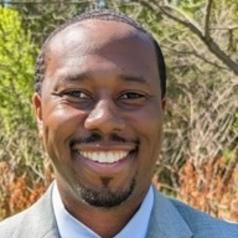
Assistant Professor of Political Science, Auburn University Dr. Donovan A. Watts is an Assistant Professor in the Department of Political Science at Auburn University. Dr. Watts’ research interests include American Politics, Black politics, racial and ethnic politics, political behavior, and political socialization. His book project examines how the racialization of American politics has uniquely shaped the political attitudes and policy preferences of Black millennials.