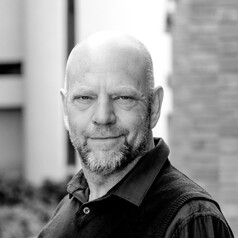
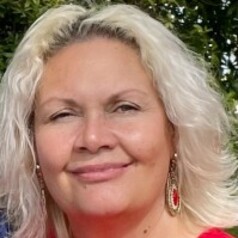
Senior Instrument Scientist (SIS) and Manager Electron Microscopy Unit, Rhodes University Interests: Analysis of inorganic materials; Extraterrestrial Petrology; Mineral Exploration; Economic Geology.
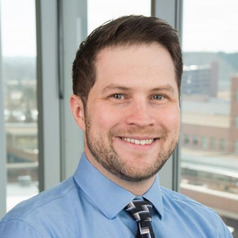
Professor of Neurology, Medicine (Infectious Diseases), and Epidemiology, University of Colorado Anschutz Medical Campus Dr. Pastula is a board-certified neurologist, CDC-trained medical epidemiologist (EIS), veteran of the U.S. Public Health Service (USPHS), policy maker, and teacher. He has cross-disciplinary interests in neurohospitalist medicine; neuro-infectious, emerging infectious, and vector-borne diseases; public health and epidemiology; outbreak investigation and control; emergency preparedness and response; biodefense and biosecurity; environmental health and toxicology; meteorology and climatology; public policy; communication; and education.
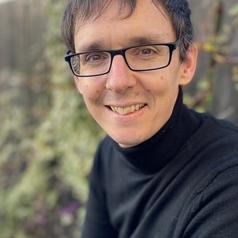
Senior Researcher in Chronobiology, Pontificia Universidad Católica de Argentina Daniel Eduardo Vigo was born in Buenos Aires in 1973. He received his medical degree in 1998 and completed his specialty in Internal Medicine in 2003. He obtained a PhD from the University of Buenos Aires in the area of Physiological Sciences in 2007. As a Visiting Research Fellow, he conducted his post-doctoral training at the Katholieke Universiteit Leuven (Belgium), being involved in the Mars500 project (Russian Academy of Sciences, European Space Agency). He directs the Laboratory of Chronophysiology at the Biomedical Research Institute from the National Research Council (CONICET) and Catholic University of Argentina (UCA), where he holds a position as Independent Researcher and Senior Professor. His basic research interests are the study of complexity in biological rhythms; the chronobiological aspects of autonomic, emotional, and cognitive functions; the sleep-wake cycle in different human groups and complex chronic diseases; and life sciences in space and space analogues. He coordinated in Argentina the European Space Agency operational tests of the Tempus-Pro device deployed in Antarctica, and he currently directs the project “Chronobiology of Antarctic isolation: the use of Belgrano II Argentine Antarctic station as a space analogue”.
Reader in Human Geography, Queen's University Belfast My research interests include the cultural history and geography of the life and earth sciences, with a particular emphasis on religious responses to scientific developments in the nineteenth and early twentieth centuries. My earliest work examined the reception of glacial theory in Victorian Edinburgh, investigated the historical geographies of Scottish natural history societies in the period 1831-1900 and, with Charles Withers and Rebekah Higgitt, explored the role of geography in the work of the British Association for the Advancement of Science from 1831 – c.1933. My book on natural history societies in Victorian Scotland was published by Pickering & Chatto in 2009 and was awarded the Frank Watson Book Prize for Scottish History in 2011. In 2014, I completed a two-year AHRC-funded project on science in nineteenth-century Belfast. I have also written about the mix of metaphysics and science in the writings of the geologist James Croll and the reception of ideas about human evolution in the context of religious debates about the creation of Eve (rather than Adam). More recent work has centred on public speech as a situated mode of interaction between science and culture in the nineteenth century. A monograph on this subject examining the lecture tours of five British celebrity scientists in Gilded Age America published by the University of Pittsburgh Press has recently appeared. With Professor David N. Livingstone, I have now completed a 27 month project investigating debates about evolution and theology in the early twentieth century. This is part of a larger John Templeton Foundation-funded project on conjunctive explanations in science and religion (CESAR). I am currently at the early stages of writing a biography of Scottish evolutionist and evangelist, Henry Drummond.
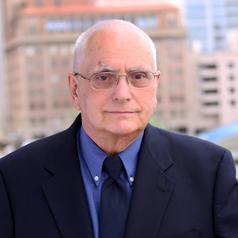
Professor Emeritus of Political Science, Arizona State University David Herman is a Professor Emeritus of Political Science, Arizona State University, and a long-time observer of Arizona politics, past and present. Among his several books on the subject is Arizona Politics and Government: The Quest for Autonomy, Democracy, and Development (Lincoln, Nebraska: University of Nebraska Press, second edition, 2024).
Indigenous Research Officer, The University of Queensland Deanna Stuart-Butler is a descendant of the Arabana people of the ‘Pantu Parnda’ (Lake Eyre) Region of South Australia. She leads the Indigenous work of the NHMRC Stillbirth CRE and associated programs such as the Safer Baby Bundle, chairs the Stillbirth Indigenous Advisory Group and is a member of a number of other stillbirth committees to increase awareness and broaden knowledge of Aboriginal culture, priorities, and needs. She shares her knowledge on how to encourage Indigenous women to seek and participate in antenatal care, and how to incorporate Aboriginal culture into health service delivery, associated with connection to land, health and wellbeing, life and sorry business. She is leading and co-leading several research projects investigating voices of Indigenous families relating to stillbirth, stillbirth research priorities for Indigenous women and extensive adaptation of Stillbirth CRE masterclasses for Indigenous healthcare personnel. She is a founding member of the Aboriginal Community and Families Research Alliance, a group instigated by SAHMRI Women and Kids to translate community priorities into research and to integrate research and policy. She was the first graduate of the South Australia Aboriginal Maternal Infant Care qualification in 2010, going on to become the manager of the Aboriginal Family Birthing Program at the Women’s and Children’s Hospital in Adelaide. She is particularly passionate about translating research into operational practices within mainstream maternity models to ensure better health and wellbeing for Indigenous babies, women, and their families.