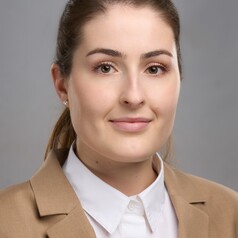
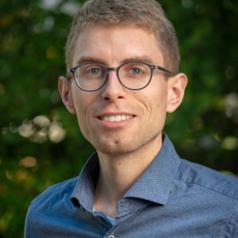
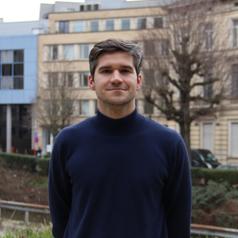
Research associate at the Institute for Industrial Production, Karlsruhe Institute of Technology Research associate at the Institute for Industrial Production.
James T. Watkins IV and Elise V. Watkins Professor of Political Science, Stanford University David D Laitin is the James T. Watkins IV and Elise V. Watkins Professor of Political Science at Stanford University. His specialty is comparative politics. In that field he conducts research on political culture, ethnic conflict, and civil war. His field expertise spans Somalia, Nigeria, Catalonia, Estonia and France.
Profesor Asociado, Universitat de Barcelona David Fontanals es graduado en Filología Inglesa (2011), Historia (2016) y Filología Hispánica (2017) por la Universitat de Barcelona, donde también ha cursado sus estudios de máster (2014) y doctorado (2020), que concluyeron con la tesis From the World of Yesterday to the Europe of Tomorrow: On Commitment, Ethics, and Europe in the Works of Stefan Zweig (Premio Extraordinario de Doctorado UB), dedicada al estudio del compromiso europeo del escritor judío-austríaco Stefan Zweig. Entre 2022 y 2024 ha sido beneficiario de una ayuda posdoctoral Margarita Salas para llevar a cabo en el Instituto Franklin (UAH) un proyecto sobre el estudio de los espacios domésticos en la obra del escritor angloamericano Henry James. Actualmente compagina su trabajo como profesor asociado en el grado de Estudios Ingleses de la Universitat de Barcelona con la investigación en los campos de la literatura y la historia americana y europea de los siglos XIX y XX. Fuera del ámbito académico, y siguiendo su formación en el Máster de Edición de la UPF-BSM (2016), es socio fundador de Proofediting, SL, donde trabaja como corrector, editor y traductor.
Huck Distinguished Chair in Evolutionary Genetics and Professor of Biology, Penn State My research has spanned across molecular biology, cell and developmental biology, genetics and genomics, and evolution with a focus on regulatory systems that control development, morphology, physiology, and behavior and how they systems evolved over the evolution of vertebrates to provide both universal and unique solutions. Currently, research in my group is focused in two areas: Genetic changes underlying the unique morphology and physiology of the giraffe. We have sequenced the giraffe genome as well as a closely related species okapi, which lacks giraffe unique morphology and turbocharged cardiovascular system. By using comparative genome analysis, we have identified candidate genes that we propose underlies giraffe’s long neck and legs and associated cardiovascular adaptations. Current studies are focused on testing the function of these genetic changes as related to giraffe's unique adaptations. Population, ecological, and conservation genetics of Masai giraffe. Giraffe populations have experienced massive declines in Sub-Saharan Africa due to poaching and habitat loss. Less than 100,000 giraffe remain, and the Masai giraffe population has fallen to less 40,000 leading the IUCN to list it as an endangered species. In collaboration with Derek Lee and Monica Bond, my group is investigating the spatial and demographic genetic diversity of Masai giraffe in Tanzania to assess gene flow between subpopulation, inbreeding depression, mating systems. The impact of climate change, habitat loss through conversion of land to agriculture, loss of natural corridors through Great Rift escarpment, is being investigated to inform conservation efforts in Tanzania save the Masai giraffe from extinction. In addition, we are investigating the highly diverse coat spot patterns that are unique to the Masai giraffe, and which have been shown to confer differential survivorship to giraffe calves during the first year of life. We speculate that different spot-pattern phenotypes provide different predator avoidance camouflage value as a function of variation in vegetative habitat. We are mapping the genes and genetic variation responsible for the spot-pattern types in Masai giraffe, which is a prerequisite to investigating adaptation and natural selection of this important trait in natural populations.
Post-Doc, Ghent University Dawid Walentek is a postdoctoral researcher at the Ghent Institute of International and European Studies. His work focuses on conflict and cooperation in international relations, with a particular focus on economic sanctions. In his current project, Dawid studies the micro-dynamics of sanctions and investigates the relation between individual preferences and economic coercion. Dawid’s work appeared in journals such as West European Politics, International Interactions and Journal of European Public Policy.