Professor of Political Science, University of Haifa I am a professor of political psychology and the Dean of the Herta and Paul Amir Faculty of Social Sciences at the University of Haifa. My research focuses on the micro-foundations of political conflicts in the Middle East and elsewhere. I am particularly interested in the impact of individual-level exposure to cyber-terrorism and political violence on war/peace attitudes. I study psycho-political responses to multiple acts of political violence and terrorism. Methodologically, I use controlled randomized field experiments, spatial analysis, survey experiments, bio-political and physiological-political research. I have received over $3 million in research grants to study people in conflict zones. Grantors include the Israel Science Foundation, United States-Israel Binational Science Foundation, Yale’s McMillan Center, Yale’s institution for Social and Policy Studies, Israel Ministry of Science, Technology, and Space, “Start” project, and the National Institutes of Health. I serve on the editorial boards of The Journal of Political Psychology, Journal of Peace Research, and the Journal of Conflict Resolution. I was a Fulbright Fellow and a Visiting Fellow at the Helen Kellogg Institute for International Studies, Notre Dame University, as well as a Rice Family Foundation Visiting Professor at the Council on Middle East Studies, the MacMillan Center and the Department of Political Science, Yale University. My awards include the International Society of Political Psychology’s Erik Erikson Early Career Award and Roberta Sigel Award, and the American Political Science Association’s award for Best Paper. I have written widely on the psychological reactions to war, violence and terrorism, and published in journals such as American Journal of Political Science, Journal of Conflict Resolution, Political Behavior, Political Psychology, Psychiatry – Interpersonal and Biological Processes, Political Studies, Political Research Quarterly, Armed Forces & Society, Journal of Consulting and Clinical Psychology, Electoral Studies, Journal of Peace Research. When I’m not chasing missing cortisol samples across checkpoints in the West Bank and Gaza, I enjoy chillaxing with my family, cycling and running.
Associate Professor of English, Trinity College Dr. David Sterling Brown—a Shakespeare and critical race studies scholar—is Associate Professor of English at Trinity College (Connecticut). And he is the author of Shakespeare's White Others (Cambridge University press, 2023). Learn more at: www.DavidSterlingBrown.com He was a 2022-2023 Sacred Heart University Shakespeare Scholar in Residence. His antiracist research, which centers on pedagogy and on how racial ideologies circulate in and beyond the early modern period, is published or forthcoming in numerous peer-reviewed and public venues such as Shakespeare Bulletin, Literature Compass, Radical Teacher, Shakespeare Studies, Hamlet: The State of Play, White People in Shakespeare, Public Books and Los Angeles Review of Books. His forthcoming book projects, both under contract with Cambridge University Press, examine how whiteness operates in Shakespearean drama. Through his Mellon/ACLS Scholars and Society Fellowship, Dr. Brown had a 2021-2022 residency with The Racial Imaginary Institute, founded by Claudia Rankine; he is also the dramaturg for Keith Hamilton Cobb's Untitled Othello Project. A member of Phi Beta Kappa and an engaged academic citizen, Brown sits on the editorial boards of Shakespeare Bulletin and Shakespeare Survey; and he is an executive board member of the Race Before Race conference series and a member of the American Shakespeare Center Board of Trustees. A passionate and innovative pedagogue, Dr. Brown pushes his students to pursue the ideas that intrigue them most. He trains students to close read texts and he encourages them to take intellectual risks. By discussing critical issues such as power, class, sexuality, gender and race in the classroom, he enables his students to identify ways in which the past intrudes into and informs the present. He first experimented with this pedagogical approach while serving as Trinity's 2013 Ann Plato Predoctroal Fellow in English. During the fellowship, he developed his signature course, "(Early) Modern Literature: Crossing the Color-Line," which combines the study of English Renaissance drama and African-American literature.
Lecturer, School of Politics and International Relations, Australian National University Daniel Casey is a lecturer in the School of Politics and International Relations at the Australian National University. His research focuses on responsiveness of political elites to public opinion. His other research interests include government transparency and accountability; public administration; and the training and mentoring of PhD candidates. Prior to academia, he had an extensive career in the Australian Public Service, working across central and social policy agencies. He has also worked for Members of Parliament and peak NGOs.
FinTech Capability Lead | Senior Lecturer, Emerging Technologies and FinTech, Swinburne University of Technology Dr Dimitrios Salampasis is an award-winning global thought leader, educator, researcher, and sought-after keynote speaker, passionate about FinTech innovation and strategy, global affairs and geopolitics, sustainability and emerging technologies nexus. Dr Salampasis is the FinTech Capability Director, Director, Master of Financial Technologies, and Senior Lecturer of Emerging Technologies and FinTech Innovation at the AACSB-accredited Swinburne School of Business, Law, and Entrepreneurship, Swinburne University of Technology in Melbourne, Australia. Dr Salampasis is a Visiting Professor of FinTech at the Bahrain Institute of Banking and Finance, Visiting Professor of FinTech at the University of Québec at Rimouski, Canada, Blockchain and FinTech Fellow at the Singapore University of Social Sciences, Visiting Faculty at the School of Management in Fribourg, Switzerland, and an Academic Council Member of the Global FinTech Institute. Dr Salampasis is a member of the Australian Institute of Company Directors, a Fellow within the Financial Services Institute of Australasia, and a member of the CPA Australia Digital Transformation Centre of Excellence. Prior to joining academia, Dr Salampasis worked in management consulting, legal services, non-profit and public sector being involved in global advisory activities in research and strategy on emerging market geopolitics and technology policy governance, assisting companies in developing long-term strategic focus and sustainable market business strategies. Dr Salampasis is the recipient of the 2022 Innovation Excellence Award by the Hellenic Chamber of Commerce and Industry, the 2021 Blockchain Educator of the Year Award by Blockchain Australia and the 2021 Swinburne University Vice Chancellor's Engagement Award - Industry Engagement (Individual). Dr Salampasis publishes in international peer-reviewed academic journals and books and his work is regularly presented in major international conferences and invited keynote presentations around the world. Dr Salampasis’ research interests revolve around the organizational, human, geopolitical and ESG sides of innovation and open innovation in emerging technologies and FinTech innovation. His areas of specialist expertise, research, teaching, industry engagement, policy and advisory work revolve around the emergence and development of FinTech-enabled business models, Blockchain for business and public sector, corporate sustainability and human rights due diligence, synthetic identity fraud and scams, quantum computing for financial services and public sector, neuromorphic computing for business and public sector, along with the relevant global regulatory, ethical and policy interventions. Dr Salampasis is regularly involved in advisory work with leading private, public, and governmental stakeholders of the Australian and international FinTech and broader business ecosystem. Dr Salampasis has a strong media presence in Australia and abroad, excellent communication and presentation skills with thought leadership experience presenting at large conferences. Dr Salampasis is regularly providing forward-thinking insights and sound contributions to knowledge networks and communities of practice, furnishing strategic guidance by synthesizing analysis and insights from research across various innovation and emerging technological domains. Dr Salampasis is a trusted partner to CEOs, C-Level Executives and Board of Directors of leading corporations, start-ups and government officials harnessing the power of emerging technologies to identify solutions that lead global change and impact. Dr Salampasis has been playing an instrumental role in shaping Australia’s FinTech innovation policy and advocacy agenda by participating in working groups, providing expert strategic advice and critical policy analysis, and submitting research-grounded responses to policy consultations. Dr Salampasis has been actively supporting Australian and international ecosystem stakeholders by identify synergistic opportunities, incubating new strategic opportunities, and curating conversations of policymaking, ESG and regulatory implications and direct impact on business models and organizational transformations. Dr Salampasis has received international recognition for his global perspective and creative research and thought leadership approach for thinking about innovation, entrepreneurial mindset and the evolution of the emerging and financial technologies landscape, together with, his novel practice-infused curriculum innovation in terms of designing and contextualizing a transformational, industry-relevant and career pathing learning and development experience across multiple modes of delivery. Dr Salampasis is a dual citizen of Australia and Greece, currently living in Melbourne, Australia.
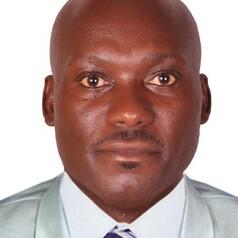
Lecturer in the Department of Management, Uganda Management Institute I am currently a consultant and lecturer in the Department of Management at the Uganda Management Institute. Previously, I worked with various education service and health related development organizations as a program manager and monitoring and evaluation manager. I have more than 15 years of experience in program management, monitoring and evaluation, research and learning, and management consultancy in education and health sectors, as well as youth and children related programs. My research interests are mainly in the areas of sustainability and climate change education, internationalization of higher education in the African context, higher education management, as well as monitoring and evaluation. I have attended various short-term training programs within and outside Uganda on competence-based training and assessment, results-based monitoring and evaluation, outcome and impact evaluation, research methodologies and research management, capacity building and pedagogical skills for lecturers and research supervisors, training of trainers and project planning and management. I hold an MA in economics from the University of Lucknow in India, and a PhD in education and social sciences from Carl von Ossietzky University of Oldenburg, Germany.
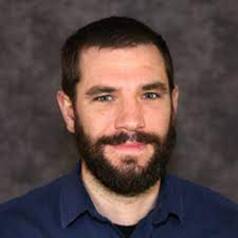
Senior Research Associate Engineer, The Ohio State University Daniel Veghte earned his Bachelor of Science degree in Chemistry from New Mexico Institute of Mining and Technology in 2010, followed by a Ph.D. in Chemistry from The Pennsylvania State University in 2015. After finishing his Ph.D., he worked at the Penn State Materials Characterization Laboratory where he helped manage the SEM and FIB systems. Daniel came to CEMAS in 2018 following his postdoctoral work at the Environmental Molecular Sciences Laboratory at Pacific Northwest National Laboratory (PNNL), where he studied atmospheric particles collected from field sites across the globe. His work at PNNL utilized in-situ electron and X-ray microscopy to probe the influence of different atmospheric conditions on particles. Throughout Daniel’s career, he has developed instrumentation used for collecting and analyzing aerosol particles, leading to a wide range of knowledge in conventional and novel sample preparation techniques. He has analyzed many different materials through working in two different user facilities, where he managed instrumentation and tackled projects ranging from high-resolution analysis to complex in-situ experiments. Outside the lab, Daniel enjoys exploring the outdoors through hiking, camping, snow sports, and disc golfing. When the weather does not cooperate, he spends his time playing board games and building things from whatever he has on hand.