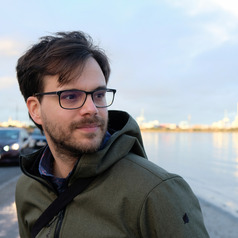
Postdoctoral Research Associate, Behavioural and Evolutionary Ecology, University of Oxford I am interested in understanding why individuals behave in the way they do and the ultimate fitness consequences and proximate mechanisms of those behaviours. I am keen on exploring the causes that generate individual variation in behavioural traits in the animal kingdom, regardless of the target species. Further, I also have a deep interest in exploring how individuals adapt to the fluctuating environmental conditions and the fitness consequences of the different life-history strategies present under those variable conditions. After being a PhD student at the National Natural History Museum (MNCN) in Madrid studying kestrel colouration, I moved to Montpellier to continue my research on the evolutionary dynamics of coloration focusing on blue tits and on the Paridae family as a postdoctoral researcher. Currently, I am a PDRA at the Edward Grey Institute (University of Oxford), where I focus on analysing great tit phenological responses to climate change.
Lecturer, Department of Literature Film and Theatre Studies, University of Essex Daniel O’Brien’s research considers the relationship between cinema, interactive art and computer gaming. His work focuses upon the interdisciplinary nature of visual media, particularly how audiences have become participants in visual and audible storytelling through a postphenomenological framework. He has taught and had work published across each of these areas at a range of research institutes and academic journals, including the International Journal of Performance Arts and Digital Media.
Assistant Professor of Anesthesiology, School of Medicine, University of Washington I am physician scientist at the University of Washington. My research is focused on the use of next-generation sequencing methods to understand mechanisms of bacterial infection, with an emphasis on surgical site infection and antimicrobial-resistance. Clinically, I work as critical care physician and anesthesiologist at Harborview Medical Center with a focus on recovery from major trauma and burn injuries.
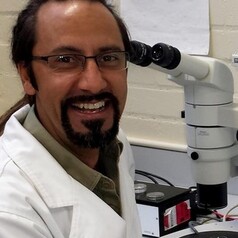
Associate Professor and Head of the Gamete and Embryology (GAME) Laboratory, James Cook University Dr Damien Paris is head of the Gamete and Embryology (GAME) Laboratory at James Cook University. He is a cross-disciplinary reproductive/molecular biologist passionate about developing assisted reproductive technologies for animal breeding and conservation, as well as understanding the impact of adverse environmental conditions on fertility. He and his team produced the first macropods by artificial insemination, developed an antioxidant diet to protect pig sperm from heat-induced DNA damage, and developed a sperm freezing technique suitable for sperm banking and artificial insemination in the endangered African wild dog. Moreover, he has worked with a diversity of other domestic and wild species including primates, marsupials, horses, fish, frogs and crayfish. His group uses sperm cryopreservation, artificial insemination, in vitro fertilization, hormones and behaviour coupled with gamete & molecular analysis tools to investigate the underlying mechanisms that affect gamete (sperm & egg) quality & embryo survival in both aquatic & terrestrial animals. Moreover, his group actively develops mitigation strategies that will ultimately improve breeding and conservation management of these species. Dr Paris has a BSc first-class honours degree in plant genetics/molecular biology (Monash University, Australia) and a PhD in mammalian reproduction (University of Melbourne, Australia), and was a Marie Curie Incoming International Fellow (University of Glasgow, UK) and postdoctoral research fellow (Universiteit Utrecht, Netherlands) before joining JCU in 2011. He has worked at several other prominent Australian and international research institutions throughout his career including the Monash Institute for Medical Research, Monash University, Murdoch Royal Children's Institute, Baker Medical Research Institute and CSIRO (Australia); Wildlife Breeding Resource Centre (South Africa); and Max Planck Institute (based in Ivory Coast).
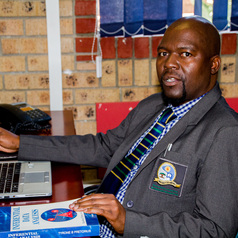
Associate Professor of Statistics & Head of Department , University of Limpopo I hold a Postgraduate Certificate in Doctoral Supervision (Stellenbosch University), a SARIMA Ethics Research and Integrity Certificate (University of Witwatersrand), and a Postgraduate Diploma in Higher Education and Technology (Durban University of Technology)
Senior Lecturer, University of KwaZulu-Natal Danielle holds a PhD in Statistics. She has extensive experience in curriculum development, research and student supervision in applied statistics and data science. She takes a data-driven approach to solve real world problems using statistics, machine learning and technology, with a focus on public health and other societal challenges in resource-limited settings in Africa.