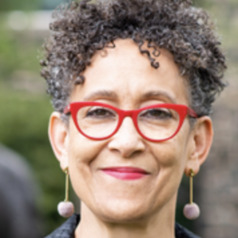
Pierre and Pamela Omidyar Dean, Jonathan M. Tisch College of Civic Life, Tufts University Dayna Cunningham is the Pierre and Pamela Omidyar Dean of Tufts University’s Jonathan M. Tisch College of Civic Life. The only university-wide college of its kind, Tisch College studies and promotes the civic and political engagement of young people at Tufts University, in our communities, and in our democracy. Dean Cunningham joined Tisch College in 2021 and has devoted her career to promoting civic participation, building community partnerships, and advocating for underrepresented communities. Before leading Tisch College, Dean Cunningham was the founder of Community Innovators Lab (CoLab) at the Massachusetts Institute of Technology (MIT). At CoLab, she built large-scale, multi-sector development collaborations that combined sustainability, wellness, and democratic control of economies in marginalized communities. Promoting inclusive economic development that is environmentally sustainable, socially just, and deeply democratic, CoLab applies expertise from disciplines and sectors including urban planning, civil rights advocacy, business, and community and labor organizing, among others. A civic rights lawyer by training, Dean Cunningham spent several years with the NAACP Legal Defense and Educational Fund, litigating cases in Arkansas, Tennessee, Louisiana, Mississippi, and other states in the South. She has also served as associate director at the Rockefeller Foundation and program director of the ELIAS Project at MIT, which was a collaboration of government, businesses, and NGOs to create initiatives that supported economic, social, and environmental sustainability. Dean Cunningham earned an undergraduate degree from Harvard and Radcliffe Colleges, a JD from New York University School of Law, and an MBA from MIT Sloan School of Management.
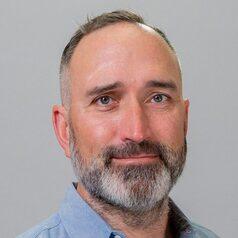
PhD Candidate in Psychology, Bournemouth University Danielle is a Postgraduate Researcher in the Department of Psychology (Science and Technology Faculty), she is currently completing a PhD under the supervision of Prof. Katherine Appleton and Prof. Jeffery Bray. Her PhD is focused on healthy sustainable eating, exploring the factors that affect making sustainable food choices, understanding the barriers and facilitators to increasing and developing strategies to help encourage healthy sustainable diets in the UK. She recently worked on a clinical research trial investigating a role for sweet taste in reducing free sugar intakes in the general population. More broadly, she is interested in nutrition security, disordered eating, and mental health. She teaches psychology, behaviour change, and research methods in relation to nutrition part-time for undergraduate courses in the Department of Rehabilitation and Sports Science. Her academic background is in Psychology (BSc Psychology and MSc Health Psychology).
Research Fellow, University of South Australia Dr Rachael Potter is a Research Fellow at the Psychosocial Safety Climate Global Observatory within Justice and Society at the University of South Australia. She is an experienced researcher, analyst, and communicator with a variety of specialist areas of inquiry such as work stress, national policy, digital communication management and gender equality. She is an ‘outward-facing’ academic whose work cuts across the disciplines of psychology, work health and safety, public health, and law. Rachael’s methodological stance is that research should give a voice to members in society and enact tangible and beneficial change. In alignment with this ethos, her unique contribution to academe is that she advocates for workers by focusing on the broader ecological system in which they operate. This expands knowledge beyond the work design and organisational perspective to incorporate the surrounding policy context, thereby striving to change systems and wide-ranging behaviour. Rachael’s work has been cited in national and international documents that put forward policy changes to improve worker health and safety and she has presented at numerous international conferences. She is an active team member on a five-year project (2020 – 2025) at the Psychosocial Safety Climate Global Observatory (PSC-GO) called ‘Mind the Worker: Transformative Change for a Human-Centered Corporate Climate’ led by distinguished Australian Research Council Kathleen Fitzpatrick Laureate Professor Maureen Dollard. Rachael is currently leading the 2023 national review into workplace discrimination for pregnant persons, those on parental leave and parents returning to work, as well as the Australian Work Addiction project.
Professor of Occupational Health and Safety in Mining, The University of Queensland David Cliff was appointed Professor of Occupational Health and Safety in Mining and Director of MISHC in 2011. His primary role is providing education, applied research and consulting in health and safety in the mining and minerals processing industry. He has been at MISHC over twelve years. Previously David was the Safety and Health Adviser to the Queensland Mining Council, and prior to that Manager of Mining Research at the Safety In Mines Testing and Research Station. In these capacities he has provided expert assistance in the areas of health and safety to the mining industry for over twenty three years. He has particular expertise in emergency preparedness, gas analysis, spontaneous combustion, fires and explosions, including providing expert testimony to the Moura No,2 Warden’s inquiry and the Pike River Royal Commission. In recent times he has also devoted a lot of energy to fitness for duty issues particularly fatigue management. He has been a member of the organising committee for the level one emergency exercises in Queensland underground coal mines since their inception in 1998. He has also attended or provided assistance in over 30 incidents at mines. David has also extensive experience in providing training and education in OHS in mining to in many countries.
Associate Professor of English and Comparative Literature, USC Dornsife College of Letters, Arts and Sciences I write about the relation between literature, science, and the environment. My work has appeared in various academic journals, including Critical Inquiry, English Literary History, Studies in English Literature, Victorian Studies, and Book History. My first book, "The Age of Analogy: Science and Literature Between the Darwins," published in 2016 by the Johns Hopkins University Press, examines how historical novels shaped both the life sciences and the humanities, by means of a new comparative method that established our modern, relational understanding of history. It was shortlisted for the British Society of Literature and Science’s book prize, and was runner-up for the first book prize of the British Association for Romantic Studies. I am also the co-editor of "After Darwin: Literature, Theory, and Criticism in the Twenty-First Century," which was published by Cambridge University Press in 2022. The collection gathers an international roster of scholars to ask what Darwin’s writing offers future of literary scholarship and critical theory, as well as allied fields like history, art history, philosophy, gender studies, disability studies, the history of race, aesthetics, and ethics. I am now working on a new book project, “The Ecology of Power,” which examines how Marxist and Darwinian philosophy offer alternative models for ecocriticism and the energy humanities.
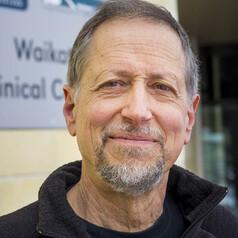
Associate Professor in Psychological Medicine, University of Auckland, Waipapa Taumata Rau David Menkes is an academic psychiatrist with a background in psychology and pharmacology (MD 1982; PhD 1983, Yale). Since completing specialist training in Dunedin (FRANZCP 1989) he has worked as a liaison psychiatrist in NZ and the UK. His academic role includes scholarly publication (200+ articles and chapters, h-index 30), teaching and research supervision. He is an honorary consultant to the Uppsala Monitoring Centre (WHO Collaborating Centre for International Drug Monitoring) and participates in the Mental Health Advisory Committee for New Zealand’s drug purchasing agency (PHARMAC). He has worked with the International Society of Drug Bulletins (www.isdbweb.org) and contributed to the development of its conflict-of-interest policies.