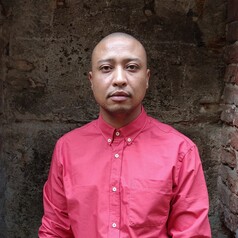
Associate Professor of Mathematical and Computational Sciences, University of Toronto I am an Associate Professor Teaching Stream in Computer Science at University of Toronto Mississauga. I teach Intro Programming, Intro CS, Theory of Computation, Systems Programming, Data Structures, Principles of Programming Languages, Algorithms, Computer Science Education Research, and Operating Systems. I have a PhD from the Ontario Institute for Studies in Education (OISE) at the University of Toronto in Computer Science Education. My dissertation focused on evaluating Peer Instruction (PI) as a pedagogical approach for teaching CS courses.
Professor of Geography, University of Tennessee Derek H. Alderman is Professor of Geography and Betty Lynn Hendrickson Professor of Social Science at the University of Tennessee. He is a past President of the American Association of Geographers (2017-18) and founder of Tourism RESET, an interdisciplinary and multi-university initiative devoted to analyzing and challenging historical and contemporary social injustices in travel, tourism, and mobility. Dr. Alderman’s specialties include race, public memory, civil rights, heritage tourism, counter-mapping, and critical place name study—all within the context of the African-American struggle for social and spatial justice. He is the author of over 150 articles, book chapters, and other essays along with the award-winning book (with Owen Dwyer), Civil Rights Memorials and the Geography of Memory. He is co-editor (with Reuben Rose-Redwood and Maoz Azaryahu) entitled The Political Life of Urban Streetscapes: Naming, Politics, and Place (Routledge) and co-author of Remembering Enslavement: Reassembling the Southern Plantation Museum (UGA Press). Dr. Alderman's scholarship advances our understanding of the role of named places in struggles over civil rights, race, memory, and public space in America. He is a nationally recognized authority on the topic of street naming, especially for Martin Luther King Jr. He also explores, more broadly, place names as cultural arenas for reckoning with the histories and ongoing legacies of racism and as tools for promoting reconciliation, anti-racist and decolonial education, and more socially just landscapes. In 2022, Dr. Alderman was appointed by Secretary Deb Haaland to serve on the Department of Interior's Advisory Committee on Reconciliation in American Place Names. Committed to publicly engaged scholarship, Dr. Alderman frequently uses his research to engage and inform the news media, government officials, community activists and organizations, and the broader public. He has been interviewed or quoted over 250 times in print, radio and television media outlets, including CNN, MSNBC, New York Times, CityLab, Washington Post, USA Today, The Guardian, and BBC Radio News. He is the recipient of a Distinguished Career Award from the Ethnic Geography Specialty Group of the AAG, a Lifetime Achievement Award from the Southeastern Division of the AAG, and a recently elected Fellow of the American Association of Geographers.. Dr. Alderman's recent work includes a NSF-funded project that examines the contested place of discussions of slavery at plantation museums in the southeastern United States, with an emphasis on reforming the way these institutions represent racism, memory, and African American identity. He is also involved a NSF-funded project that examines the role of counter-mapping, geospatial intelligence, and opposition research within SNCC, the important 1960s civil rights organization. In 2022, Dr. Alderman co-directed a National Endowment of Humanities-funded summer training institute for K-12 educators on the role of geographic mobility in the African American Freedom Struggle.
Lecturer in medieval history, University College Cork Diarmuid Scully devised the first module on LGBT history to be taught in an Irish university in 2018, the 25th anniversary of the decriminalisation of homosexuality in the Republic. The study of LGBT Irish identities on the island of Ireland is an emergent research area with huge potential. Modern Ireland, North and South, has seen many transformations, but few as dramatic as the change in the perception and status of LGBT people. The module explores the experiences of LGBT people and the shaping of LGBT identities in Ireland from the 1970s to 2022 via activists’ testimonies, LGBT rights promotional materials, media reports, personal accounts, and creative productions including songs, poems and the visual arts. These sources are located and analysed in their historical contexts. The module also asks how, and to what extent, Irish LGBT issues have been analysed by historians. My research interests focus on representations of Ireland, its inhabitants, and wonders in a wider archipelagic context in Antiquity, the Middle Ages, and the Early Modern era. I am interested in Classical ideas concerning Britain, Ireland, and their surrounding seas, and the shaping of those ideas by Graeco-Roman world-geographical and ethnographical thought and the demands of Roman imperialism. The analysis of the long-term legacy of these concepts, topoi, and stereotypes dominates my current research. I am investigating their transmission to the early Insular world and adaptation and subversion by Insular authorities, and the response of twelfth to seventeenth century English and other textual and visual sources to both Classical and early Insular interpretations of Irish and archipelagic history, culture, geography, and marvels. My research interests converge in a monograph in preparation, The Bull of the Herd: Giraldus Cambrensis and the Invention of Barbarian Ireland. This is the first full-length study of Gerald of Wales's Irish writings since 1662. Gerald of Wales's Topography of Ireland (1188) dominated discourse on Ireland from the late 12th to the 17th centuries. I am examining the work in relation to the Classical and Early Insular sources as well as 12th century views of European peripheries, and considering its impact on Early Modern perceptions of Ireland.
Doctorante, Centre interdisciplinaire de recherche en biologie (CIRB), Collège de France Je suis doctorante au sein de l'équipe Paléoanthropologie du CIRB. Mon principal intérêt de recherche est le développement de nouvelles méthodologies appliquées à l'ADN humain ancien et aux protéines. Mes thèses de licence et de maîtrise étaient toutes deux axées sur les tests et la modification de méthodes de récupération d'ADN ancien à partir d'os et de dents humaines. Le résultat de mon doctorat sera de développer et d'appliquer une nouvelle approche protéomique pour identifier les espèces biologiques de spécimens osseux archéologiques en criblant avec la technologie Orbitrap jusqu'à 200 échantillons par jour. Les avantages par rapport à l'empreinte de masse peptidique seront représentés par l'acquisition d'un ensemble de données beaucoup plus riche par échantillon, une sensibilité plus élevée, une automatisation plus élevée et la possibilité d'utiliser un logiciel d'identification spectrale standard.
Lecturer Department of African Studies and Linguistics, University of Cape Town Duane Jethro is a Lecturer in the Department of African Studies and Linguistics at the University of Cape Town. He specialises in the analysis of the cultural construction of heritage and contested public cultures. A graduate of Utrecht University, he was Junior Research Fellow at the Centre for Curating the Archive, at the University of Cape Town between 2020 and 2022, and pursued a research project takes a multiperspectival approach to the loss and salvage of the University of Cape Town Jagger Library and its collections after a devastating fire in April 2021. He was co-curator (with Michaelis Galleries curator Jade Nair) of the Jagger Library Memorial Exhibition in April 2022, and co-organised a symposium, After the Fire: loss, archive and African Studies with Archive and Public Culture Research Initiative postdoctoral research fellow Alirio Karina. Between 2019 and 2020 he worked as a researcher at the Centre for Anthropological Research on Museums and Heritage, CARMAH, at the Humboldt University in Berlin, which was founded and directed by Professor Sharon Macdonald. He held an Alexander von Humboldt Georg Foster Post doctoral research fellowship and was also based at CARMAH between 2017-19. And he is an Associate Research Fellow at the Archive and Public Culture Research Initiative at the University of Cape Town. He serves as ambassador scientist and on the selection committee for the Alexander von Humboldt German Chancellor Fund for South Africa. Since 2023, he also serves on the executive commitee of the Association for Critical Heritage Studies. He has published in the International Journal of Heritage Studies, Material Religion, African Diaspora and Tourist Studies. He is an editor of the journal Material Religion and serves on the editorial board of the journal Museums and Social Issues. His book Heritage Formation and the Senses in Post-Apartheid South Africa: Aesthetics of Power is published by Bloomsbury Academic.