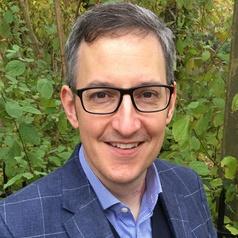
Professor of Politics and Public Policy, University of Cambridge Dennis C. Grube is a Professor of Politics and Public Policy at the University of Cambridge, where he is also the research lead in political decision-making at the Bennett Institute for Public Policy. Dennis’ research interests include political and administrative leadership, political rhetoric, the Westminster system of government, the processes of public policy decision-making, and institutional memory.
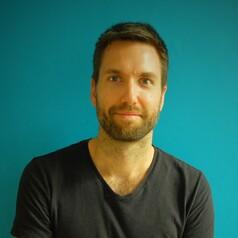
Postdoctoral Researcher, Ghent University I am a Roman archaeologist with an outspoken holistic and comparative approach to my work. My research deals with agriculture and economy, but I specialize in all things related to ancient vines and wines. My focus lies on Italy and the Western Mediterranean from Republic to Empire, but I have conducted fieldwork in Italy, Greece, Portugal and Belgium. I hold a double PhD in Classical Archaeology from the universities of Pisa (Italy) and Ghent (Belgium), and I have been a postdoctoral researcher at the latter institute since 2015. I was a Fellow of the Academia Belgica (and Belgian Historical Institute) in Rome, the Collegio dei Fiamminghi in Bologna, and the DAI in Berlin, and a Visiting Scholar at Columbia University in the City of New York and Padova University. My latest work on Roman winemaking in earthenware vessels is scheduled for publication in Antiquity (2024). Recent publications include the edited books Reframing the Roman Economy (Palgrave Macmillan, 2022), Vine-growing and Winemaking in the Roman World (Peeters, 2023) and Methods in Ancient Wine Archaeology (Bloomsbury, 2024). I am a contributor to the upcoming A Cultural History of Wine in Antiquity (Bloomsbury 2024) and The Handbook of Roman Rural Archaeology (Cambridge 2025).
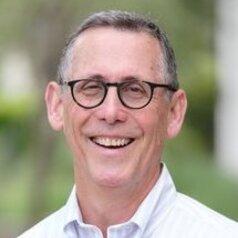
Associate Dean for Research, Professor and Endowed Chair of Rural Safety and Health, University of Iowa In her work, Rohlman, Associate Professor in the Department of Occupational and Environmental Health at the University of Iowa College of Public Health, has collaborated with researchers from Brazil, Thailand, the Philippines and elsewhere. One of those collaborations has taken her to Egypt, to examine the health effects of organophosphorus pesticides on young Egyptian field workers. Rohlman received both her master’s and Ph.D in experimental psychology from Bowling Green State University in Ohio. Her early research examined the impact of low-level occupational exposure to organophosphorus pesticides in adult and adolescent farm workers in Oregon. Young workers are less likely to recognize hazards, be less aware of their legal rights and more reluctant to speak up regarding safety, putting them at increased risk for occupational injuries. They also often engage in behaviors that may increase their risk of injury, such as sleep deprivation, substance use and distracted work behaviors. Her research was later extended to examine environmental pesticide exposure among children living in agricultural communities. Since many chemicals can attack the brain and nervous system, having methods to assess memory, attention and learning can be used to identify early deficits. While she has been actively involved in research on five continents and more than 10 countries, Rohlman, who served as director of the Agricultural Safety and Health Training Program in the UI’s Heartland Center for Occupational Health and Safety, also offers training closer to home. The center provides graduate training programs in Industrial Hygiene, Occupational Medicine, Ergonomics, Occupational Epidemiology, Occupational Injury Prevention, and Agricultural Safety and Health. Rohlman also serves as the Director of the UI’s Healthier Workforce Center for Excellence, a NIOSH Total Worker Health Center of Excellence. The Center focuses on promotion of safety, health, and well-being among working populations. She has mentored undergraduate, graduate and postdoctoral trainees.
Lecturer in History, California Institute of Technology Dan Lewis is the full-time Dibner Senior Curator for the History of Science & Technology at the Huntington Library in San Marino, California. He is a writer and an environmental historian who has taught at Claremont Graduate University as an Associate Research Professor, and at USC in both the Organismic Biology and History departments. He also teaches at NYU Abu Dhabi every January, offering a course on birds in endangered ecosystems. Lewis is the author of four books and the co-author of another. His most recent book, on twelve species of trees from around the world, is forthcoming from Simon & Schuster in the Spring of 2024. He has held post-docs at at Oxford, the Smithsonian, the Rachel Carson Center in Munich, and elsewhere. Lewis also served as Chief Curator of Manuscripts for the Huntington for six years. His permanent exhibition Beautiful Science: Ideas that Changed the World was named as the best exhibition in America by the American Association of Museums the year after it opened. Lewis won an Emmy in 2020, as a producer for KCET's "Women in Aerospace" program. He is also a Commissioner for the IUCN's Species Survival Commission, as a Bird Red List Authority member, 2021–2025.
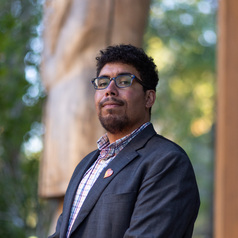
Assistant Professor of Geography, University of Victoria Deondre Smiles currently serves as an Assistant Professor of Geography. He is Black/Ojibwe/settler, and is a citizen of the Leech Lake Band of Ojibwe. Smiles is a geographer whose research interests are multifaceted, including Indigenous geographies/epistemologies, human-environmental interaction, political ecology, and tribal cultural resource preservation/protection. He currently serves as the Chair of the Indigenous Peoples Specialty Group of the American Association of Geographers (AAG); he is also a member of the Native American and Indigenous Studies Association (NAISA), and the Canadian Association of Geographers. (CAG). He also serves as a member of the editorial board of the journal Native American and Indigenous Studies.