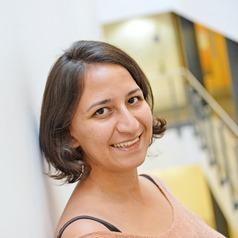
Lecturer in Work and Organisation, University of Sussex I am a Lecturer in Work and Organisation at University of Sussex Business School. My research interests are care, affective labour, future of work and psychosocial studies. Previously, I held research posts in teams investigating care homes for older people in the UK, whistleblowing and domestic abuse services with funding from ESRC, ACCA and EIDHR. My PhD thesis explores the ethos of love for one's job and affective labour drawing on a multi-sited psychosocial ethnography of the Turkish fine-dining sector. My first peer-reviewed article based on this study has been published by the prestigious Organisation Studies journal. More on my research and impact work is available in my ORCID profile: https://orcid.org/my-orcid?orcid=0000-0002-0442-1289.
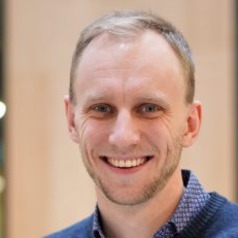
Associate Professor of Psychology, Hope College Daryl R. Van Tongeren is an associate professor of psychology at Hope College. Before joining the faculty in 2012, he was a postdoctoral fellow at Virginia Commonwealth University for one year. His research focuses on the social motivation for meaning and its relation to virtues and morality. Specifically, he and his students adopt a social-cognitive approach to study meaning in life, religion and virtues, such as forgiveness and humility. His research has been funded by generous grants from the John Templeton Foundation. Daryl's research focuses on social psychological explanations for some of life's "big questions" — he studies the social motivation for meaning, the social cognitive function of religion and prosocial behaviors and virtues.
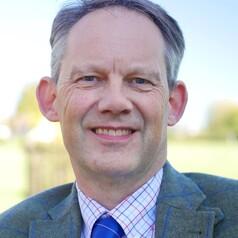
Professor of Marketing, Clemson University My research focuses, broadly, on consumer behavior and decision making. More specifically, I research consumer price and number judgements, patterned behavior (streaks), online information processing, agricultural marketing, and anything else I find interesting. My research has appeared in outlets such as the Journal of Marketing Research, Journal of Retailing, Journal of the Academy of Marketing Science, Decision Support Systems, Journal of Business Research, Journal of Advertising, and Marketing Education Review.
Assistant Professor in Civil and Global Engineering, University of Toronto I love applying the tools of engineering to analyze problems that matter. Much of my research invents new ways of managing and improving water supply systems in big cities around the world. I am currently an assistant professor in Global and Civil Engineering at the University of Toronto.
Professor of Bovine Medicine, Production and Reproduction, University of Bristol Professor Barrett worked on bovine respiratory vaccine use in the 1990s and has a long-term interest in antimicrobial resistance (AMR) and responsible use of medicines in the livestock production sector. He has sat on several influential policy committees including the British Society for Antimicrobial Chemotherapy, Antibiotic Action, the Dairy UK antimicrobial group, the Veterinary Schools’ Council on AMR and is a former chair of the British Veterinary Association (BVA) medicines committee. He has also worked with other influential groups such as the Responsible Use of Medicines in Agriculture Alliance (RUMA) as a member of their independent scientific group, the National Office of Animal Health (NOAH), the Agriculture and Horticulture Development Board (AHDB), the Cattle Health and Welfare Group (CHAWG) and the Veterinary Medicines Directorate (VMD). Professor Barrett is a member of an interdisciplinary research group focussed on antimicrobial resistance with an extensive portfolio of related research, ranging from detection of AMR organisms and genes on farm to documenting veterinarians’ and farmers’ opinions and practices in relation to veterinary medicines. This group has won the University of Bristol Vice Chancellor’s Impact Award for research and the prestigious ‘Agriculture and Food’ Antibiotic Guardian Award. He is a former editor of the journal Cattle Practice and currently sits on the editorial boards of The Veterinary Journal and Veterinary Medicine and Science as well as being the consultant editor of the journal Livestock. He took up the position of Professor of Bovine Medicine, Production and Reproduction at the University of Bristol in 2011, after 18 years at the University of Glasgow and was awarded a Fellowship of the Royal College of Veterinary Surgeons for Meritorious Contributions to Clinical Practice in 2017. In 2019 he was made an Associate of the Royal Agricultural Societies (ARAgS) for a veterinary career spanning 30 years in support of UK livestock agriculture – clinical practice, education, research and professional leadership. He is a Fellow of the Higher Education Academy and became Bristol Veterinary School Education Director in 2020. In 2021 he also became a Fellow of the Royal Society of Biology (FRSB).
Associate Professor, Anthropology, University of Toronto David’s research directly addresses the central anthropological question of human uniqueness. In other words, the question that drives his work is what is it about our species that has made us the most successful animal on the planet? In the quest to understand what makes humans special, he’s comparatively worked with human and non-human primates (and wolves and dogs) around the globe to better understand the behavioral, physiological, and cognitive suite of traits that likely played a crucial role in our success. Specifically, his research investigates the link between sleep and human evolution through revolutionary new approaches, recording sleep data sets and sleep architecture for a range of primates including lemurs, zoo orangutans, wild chimpanzees, and humans living in different types and scales of societies. His research has probed sleep’s role in cognition, sociality, and group dynamics throughout human evolution.