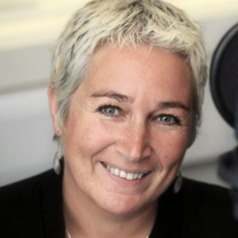
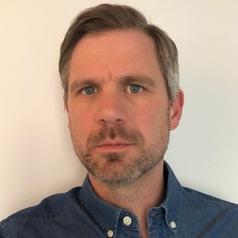
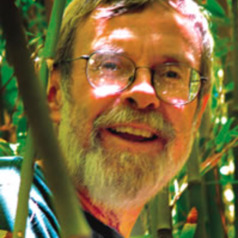
Head of Journalism & Media, Nottingham Trent University I lead the Department of Journalism and Media at Nottingham Trent University in the UK, which houses the Centre for Broadcasting and Journalism, and have designed and delivered undergraduate and postgraduate programmes focused on journalism, broadcasting, and media since the 1990s. Former roles include Deputy Head and Director of Teaching and Learning of the School of English and Journalism at the University of Lincoln. My broadcasting career with the BBC as a producer, reporter and presenter spanned news, current affairs and general programming. My later work was recognised with six Regional (International) RTDNA Edward R Murrow Awards. This broadcasting work fed directly into my teaching, which has encompassed radio and broadcast journalism practice and theory at undergraduate and postgraduate levels. I developed a particular research interest in radio history, such as the BBC’s output during World War 2 and the early days of BBC Local Radio. I have examined radio as the original social medium, considering its enduring relevance today and more recently I extended my scholarship to consider the relationship between broadcasting and the monarchy. My teaching, research and industry engagement has led to involvement with a number of organisations in the field. I am a Director on the Board of the US-based Broadcast Education Association, where I represent the international members. This builds on longstanding commitments with UK groups such as the Radio Studies Network and Radio Academy. I also serve on the Committee of the Association for Journalism Education and was the Vice-President of the European Journalism Training Association where I worked to ensure that organisation’s membership of the World Journalism Education Congress.
Associate Professor, University of Amsterdam Daphne van der Pas is a political scientist. Her research interests include gender and politics, media coverage of politicians, representation and political leadership.
Associate Professor of Intelligent Systems and Data Science, Anglia Ruskin University Having received his MSc and PhD degrees in physics, Domenico worked as a scientific associate at Cern for seven years. His research there mainly focused on the development of an innovative time-of-flight detector for one of the biggest High-Energy Physics experiments for the Large Hadron Collider in Geneva. The detector design was based on Multi-gap Resistive Plate Chambers (MRPC), reaching a sensitivity of 70 picoseconds (the highest ever reached) and its use in a large-scale experiment marked an important milestone for particle physics. As a music composer and researcher in auditory display, Domenico worked with organisations like Cern and Nasa, creating music from scientific data. He has been involved in the application of grid technologies for science and the arts since the late 1990s, chairing the ASTRA (Ancient instrument Sound/Timbre Reconstruction Application) project for the reconstruction of musical instruments by means of computer models using the European Grid Infrastructure (EGI.eu). His research interests include data sonification and auditory display, analogue and digital electronics, audio recording and studio techniques, sound synthesis, acoustics and psychoacoustics and distributed computing and network monitoring. Domenico's research has been featured on several international peer-reviewed magazines (Physics Letters B, Nuclear Instruments and Methods, European Physics Journal) and in interviews for (among the others): Financial Times, The Guardian, The Times, BBC, CNN, Discovery Channel, Discover magazine, New Scientist and Scientific American.
Part-time lecturer, author, creative facilitator and medical doctor, University of Cape Town I trained as a medical doctor (M.B.ChB), and work as a locum in a GP practice. As an award-winning author and creative facilitator, am a practitioner in the field of medical humanities. I am a founder member of the Life Righting Collective, teaching creative writing to individuals and groups, including as a guest lecturer in the Commerce and Health Sciences faculties at the University of Cape Town.
Karolinska Institutet I am a general practitioner based in Stockholm, Sweden. I hold a PhD in epidemiology, with my research focusing on microscopic colitis and its associated disorders. Currently, I am engaged as a post-doctoral researcher at Karolinska Institutet, where I am continuing my research into microscopic colitis.
Professor of Conservation Paleobiology, National Tropical Botanical Garden, and Adjunct Professor, University of Hawaii Dr. David A. Burney is a paleoecologist and conservation biologist who has worked extensively in Africa as well as Hawaii, Madagascar, and other tropical islands. His research has focused on past environments, fire history, and natural disasters. He has over a half century of practical experience in conservation, starting out as a park ranger and including serving as a technical consultant for government projects and international programs. Prior to moving to Kaua`i he was a professor at Fordham University in New York. He received an M.Sc. in conservation biology from the University of Nairobi (Kenya) and a Ph.D. in zoology with a minor in botany from Duke University. He is the author of over 100 scientific articles and monographs, many concerning pollen and other airborne particulates, sedimentary deposits, and the processes of extinction and environmental change. In 2006 he was awarded a Guggenheim Fellowship to write a book on his work at Makauwahi Cave on Kaua`i, published by Yale Press (Back to the Future in the Caves of Kaua`i). His research has been featured on National Geographic Television, Discovery Channel, Hawaii Public Television, NOVA, and National Public Radio, and he holds the honorary title of National Geographic Explorer. With his wife Lida Pigott Burney, he established the Makauwahi Cave Reserve on Kaua`i to protect, research, and restore Hawaii’s richest fossil and archaeological site and reestablish thousands of native plants on the surrounding landscape. He currently holds the emeritus position of professor of conservation paleobiology at the National Tropical Botanical Garden, where he served as director of conservation from 2004 until 2012. His studies of tsunami deposits, fire history, and climate change have contributed to discussions and practical steps toward safer communities and healthier ecosystems.