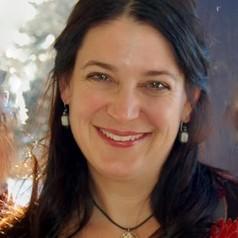
Research Professor of Global Affairs, Tufts University Dyan Mazurana, PhD, is a Research Professor at the Fletcher School of Law and Diplomacy, the Friedman School of Nutrition Science and Policy, Tufts University, and Research Director at the Feinstein International Center, Tufts University. Her research focuses on the areas of women, children, and armed conflict, gendered dimensions of humanitarian response to conflict and crises, documenting serious crimes committed during conflict, and accountability, remedy, and reparation. She serves as an adviser to several governments, UN agencies, human rights NGOs, and child protection organizations regarding humanitarian assistance and improving efforts to assist youth and women affected by armed conflict. This work includes the protection of women and children during armed conflict, including those people associated with fighting forces, as well as remedy and reparation in the aftermath of violence. Dyan has written and developed training materials regarding gender, human rights, armed conflict, and post-conflict periods for civilian, police, and military peacekeepers involved in UN and NATO operations. In conjunction with international human rights groups, she contributed to materials now widely used to assist in documenting serious violations and abuses against women and girls during conflict and post-conflict reconstruction periods. She has worked in Afghanistan, the Balkans, Nepal, and southern, west and east Africa. She has published more than 100 scholarly and policy books, articles, and international reports and her work has been translated into more than 30 languages. Dyan has a Ph.D. and an M.A. in women’s studies from Clark University.
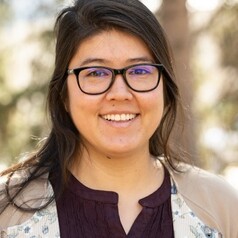
Postdoctoral Scholar in Forestry and Environmental Resources, North Carolina State University I am currently a postdoctoral scholar at North Carolina State University, where I manage the Crowd the Tap participatory science (citizen science) project that crowdsources the locations of lead plumbing and where I study participation in our project. My research shows that engaging participants through partner organizations can help increase the diversity of participants. I also do contract work with the North Carolina Environmental Justice Network supporting their participatory science where I support communities interested in protecting their air quality. I have a PhD in Ecology with a Human Environment Interactions Emphasis from Colorado State University where I studied how scientists communicate about and carry out environmental participatory science projects. Finally, I have a bachelor's degree from Lee University Biological Sciences.
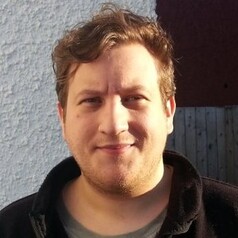
Privacy Officer, New Brunswick Institute for Research, Data and Training, Research associate, Faculty of Law, University of New Brunswick I have been the Privacy Officer for the New Brunswick Institute for Research, Data and Training (NB-IRDT) since it originated in 2015. Since 2018, I have had the privilege to serve as the Privacy Team Lead for the Health Data Research Network, of which NB-IRDT is a member. In 2021, I began an appointment as a research associate with the UNB Faculty of Law and serve as part-time lecturer in sociology and public policy at St. Thomas University. My research work focuses on the intersection between law, policy, and privacy particularly in relation to research work involving large data sets of personal and personal health information.
Associate Professor of Marine Sciences, Virginia Institute of Marine Science David Samuel Johnson, Ph.D., is a marine ecologist who studies how global changes (sea-level rise, climate change, ocean warming, nutrient enrichment, climate migrants) affect coastal ecosystems. He is interested in how ecosystems will be altered as viewed through the lens of animal and plant responses to these global changes. For instance, how does the spread of climate migrants, species the expand or shift their distributions due to climate change, affect the ecosystems they move into? He uses field observations coupled with field and laboratory experiments to answer these questions. He is an expert in marine invertebrates, especially worms, crustaceans, and bivalves.
Postdoctoral Climate Crisis Research Fellow, University of Canterbury Dalila Gharbaoui, Ph.D. is a Postdoctoral Research Fellow at the University of Canterbury part of the Pacific Ocean and Climate Crisis Assessment supported by the New Zealand Ministry of Foreign Affairs. Dalila holds a Ph.D. in Political and Social Sciences from the University of Liege (Hugo Observatory on Environment, Migration and Politics) and a Ph.D. in Pacific studies from the University of Canterbury with the support of the Marsden Fund Te Pūtea Rangahau a Marsden. Dalila’s PhD thesis focused on climate change, planned relocation, and land governance in the Pacific region. She authored numerous research works related to climate change, adaptation and (im)mobility in the Pacific region, Africa, and Europe. Dalila has actively participated in various international, national, and regional discussions on human mobility, resilience and climate change, providing her expertise on topics such as community retreat, planned relocation, including at the United Nations Framework Convention on Climate Change (UNFCCC). Previously, Dalila worked as a researcher in policy and research teams and as consultant for organizations such as the United Nations High Commissioner for Refugees (UNHCR), the International Organization for Migration (IOM), the United Nations Convention to Combat Desertification (UNCCD), the United Nations University Institute on Comparative Regional Integration Studies (UNU-CRIS), International Crisis Group and Amnesty International. Research profile: https://profiles.canterbury.ac.nz/Dalila-Gharbaoui https://www.hugo.uliege.be/cms/c_4870327/en/hugo-dalila-gharbaoui
Assistant Professor in the School of Film, Trinity College Dublin David Stevenson is an Assistant Professor at Trinity College Dublin in the School of Film. His research interests focus on theorizing Japanese digital cultures and the application of interdisciplinary methodology and close reading to video games and animation. Recently, David has been examining the relationship between game narratives, their aesthetics, and the industrial efforts that produce them.