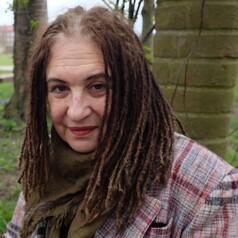
Senior Lecturer in Law at the University of Queensland, The University of Queensland Dr Dani Linder is a Bundjalung/Kungarykany/Yorta Yorta woman from Grafton, New South Wales, a public lawyer and legal academic at the University of Queensland. Dr Linder's research interests include: -Electoral law and policy reform; -International human rights law; -Indigenous people and Australia's criminal justice system - Indigenous cultural identity; -Indigenous political participation and disenfranchisement; and -Indigenous constitutional recognition.
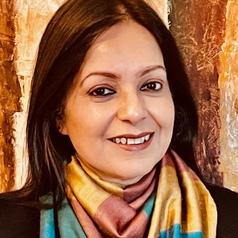
Professor of Literature, Australian Catholic University Debjani Ganguly specializes in post-1945 English and global anglophone literatures. Her research is informed by postcolonial and world literary theories, new formalisms, new materialism, media ecologies, philosophies of technology and digitality, human rights discourse, and environmental concerns. She is the author of This Thing Called the World: The Contemporary Novel as Global Form (Duke 2016) and Caste, Colonialism and Counter-Modernity (Routledge 2005), and the editor of the two- volume The Cambridge History of World Literature (2021). Her third monograph, Catastrophic Modes and Planetary Realism, is forthcoming from Cambridge University Press. She is the general editor of the CUP monograph series, Cambridge Studies in World Literature. Debjani is a Fellow and Life Member of Clare Hall, Cambridge, Fellow of the Royal Asiatic Society of Great Britain and Ireland, and advisory board member of the Harvard Institute for World Literature, the Trinity Long Room Hub at Trinity College Dublin, and the Academy of Global Humanities and Critical Theory (Bologna). As director of humanities institutes at the University of Virginia (2016-2023) and the Australian National University (2007-2014), Debjani Ganguly has fostered international projects and networks in the fields of environmental humanities, digital humanities, informatics, big data, and AI, human rights and refugee migration, and global south studies. Prior to her appointment at the University of Virginia, she directed the Humanities Research Centre (HRC) at ANU. Debjani completed her doctoral work at ANU in 2002 and served as tenured faculty in ANU’s School of Literature, Languages and Linguistics until 2015.
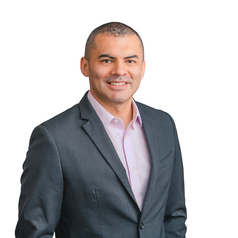
Project Director at the EDHEC Infrastructure & Private Assets Research Institute, EDHEC Business School MSc Economics - During Darwin’s stint with the World Bank Singapore office, he was the Program Manager of the World Bank Quality Infrastructure Investment (QII) Partnership and Lead of the Global Infrastructure Connectivity Alliance (GICA). He was also part of an infrastructure analytical team that advised governments globally on how to plan and invest in infrastructure to maximize economic, social, and environmental impact. He specialised in the development of tools to improve governments’ infrastructure investment and planning processes, as well as the assessment of impacts and performance of infrastructure projects. Darwin had also developed the World Bank Infrastructure Prioritization Framework (IPF), a tool piloted in several countries to assist governments to prioritize infrastructure investments. Before being transferred to the Singapore office in end 2013, he worked for the Economics Unit of the World Bank Sustainable Development Department for the Latin America and the Caribbean Region. His last employment before joining the World Bank was with the National Planning Department of Colombia, whereby Darwin worked with them as an economist. Darwin holds a master’s and bachelor’s degree in Economics from the National University of Colombia.
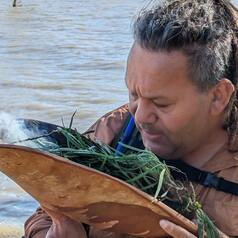
Barkindji/Malyangapa Indigenous Knowledge holder, Indigenous Knowledge Dave Doyle is a Barkindji/Malyangapa man living on Barkindji country in Broken Hill NSW. Dave works as an Aboriginal Health Practitioner with the Royal Flying Doctor Service, is an active member of the Menindee Elders Group, a Director of Barkindji Native title, makes art and has a keen interest in native plants and Barkindji bush medicines.
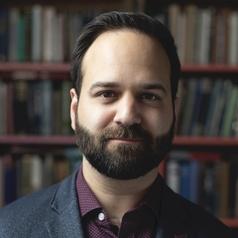
Associate Professor of Physics, University of Colorado Boulder The experimental nuclear physics group at the University of Colorado studies the properties of the strong nuclear interaction, one of the four fundamental forces, under extreme conditions. When ordinary nuclear matter is subjected to sufficiently high temperatures and densities, the sub-atomic quark and gluon particles which comprise it become free and form a quark-gluon plasma (QGP). In the first few microseconds after the Big Bang, all the quarks and gluons which would eventually condense into the nuclear matter we see around us existed in a QGP phase. Thus, studying this phase of matter allows us to explore the properties of the Early Universe. We can create these high-temperature, high-density conditions at particle colliders around the world such as at the Large Hadron Collider (LHC) or Relativistic Heavy Ion Collider (RHIC). In these machines, large nuclei (called heavy ions) are accelerated to energies equal to several hundred or thousand times their rest mass and brought into a head-on collision, creating a droplet of primordial QGP. Our group is involved in the Heavy Ions program at the ATLAS Experiment at the LHC, situated at CERN in Geneva, Switzerland. The LHC collides pairs of nuclei and nuclei with protons at TeV-scale energies, producing the hottest matter ever made on Earth (over five trillion Kelvin). Within ATLAS, we participate in operational data-taking at the LHC and in offline data analysis. In addition, we are involved in building the next-generation collider detector for nuclear physics, the sPHENIX Experiment at RHIC, situated at Brookhaven National Laboratory in Long Island, NY. RHIC is a versatile machine which can collide a variety of nuclear species and investigate the QGP under conditions closer to the phase transition temperature than the LHC. Our work for sPHENIX includes experimental beam tests of calorimeters, development the electronic trigger system, and simulations work. My particular research areas are: (1) understanding how high-energy quarks and gluons lose energy as the traverse the QGP using reconstructed jet, electroweak, and heavy flavor probes; (2) finding the limiting system size or conditions under which traditional signatures of QGP formation appear or disappear; and (3) exploring the momentum and spatial structure of nuclei in small collision systems where a sizable region of QGP is not expected to be formed.
Associate professor, University of East London Debra Benita Shaw is a Reader in Cultural Theory at the University of East London. She is a critical posthumanist interested in the relationship between technology, architecture and what it means to be human. She is also a literary critic specialising in science fiction. Her most recent monographs are Posthuman Urbanism (2018) and Women, Science & Fiction Revisited (2023).