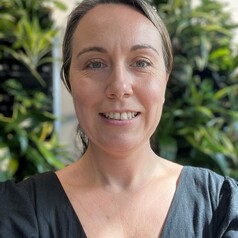
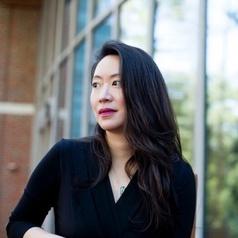
Senior Lecturer and Associate Head of Engagement, Management Department, UTS Business School, University of Technology Sydney Dr Ece Kaya is the Associate Head of Engagement and Senior Lecturer in the Management Department at the UTS Business School. She is also the author of the book "Transformation of Sydney’s Industrial Historic Waterfront: The Production of Tourism for Consumption". Prior to this appointment, she worked at Western Sydney University as a tutor, subject coordinator, and lecturer, where she completed her PhD in heritage and tourism studies at the Institute for Culture and Society. Ece also holds an M.Sc. in urban planning. Her research expertise is on the relationship between tourism and urban transformation, the impact of gentrification on industrial waterfronts,and the historical and cultural context of industrial heritage places. Ece is a Centre for Sport, Business and Society member at UTS. Her current research project explores women surfers' experiences and aims to understand wider issues of the surfing industry.
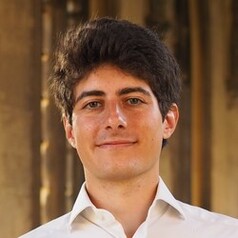
Lecturer in Natural Language Processing, University of Edinburgh I am an assistant professor in Natural Language Processing at the University of Edinburgh and a visiting professor at NVIDIA. Previously, I was a visiting postdoctoral scholar at Stanford University and a postdoctoral fellow in computer science at Mila - Quebec AI Institute in Montreal. In 2021, I obtained a PhD from the University of Cambridge, St John’s College. Once upon a time I studied typological and historical linguistics at the University of Pavia. My research has been featured on the Economist and Scientific American. The main research foci of my lab are: - Modular deep learning: I am interested in designing neural architectures that route information to specialised modules (e.g., sparse subnetworks). This facilitates systematic generalisation and conditional computation. It also helps control the model’s behaviour, e.g., mitigating its hallucinations. - Efficient architectures: The goal is to make language models more efficient by compressing their intermediate representations and memory. As a side effect, this also makes them break free from tokenizers and learn hierarchical abstractions over raw data. - Computational typology: I wish to understand how language varies, across the world and its cultures, with the help of computational tools. Multimodal models in particular give us an powerful tool to study how form depends on grounded, embodied representations of meaning and function. My research earned a Google Research Faculty Award. I received two Best Paper Awards at EMNLP 2021 and RepL4NLP 2019. I am a board member of SIGTYP, the ACL special interest group for computational typology, a member of the European Lab for Learning and Intelligent Systems (ELLIS), and part of the TACL journal editorial team.
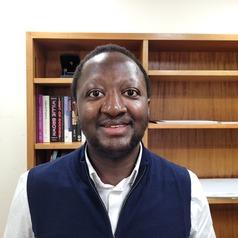
Professor of Business, American University Kogod School of Business Professor Carmel teaches Information Technology (I.T.) at the Kogod School of Business at American University in Washington D.C. He studies or has studied various technology-related topics. He is currently studying the future of identity technologies. He has also studied the globalization of technology work: crowdsourcing, impact sourcing, global software teams, offshore outsourcing,
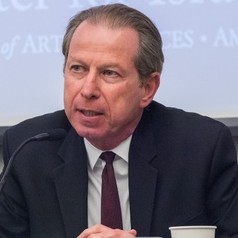
Associate Professor, Marketing Division, Babson College Ellie J Kyung is currently an Associate Professor in the Marketing Division at Babson College. She was previously a Visiting Associate Professor in the Marketing and Management Communications Division at Cornell University’s S C Johnson College of Business, a Visiting Scholar at The Wharton School at the University of Pennsylvania, and an Associate Professor in the Marketing area at the Tuck School of Business at Dartmouth. Prior to becoming an academic, Kyung was a consultant with Monitor Group, where she worked on client projects focused on marketing and multi-channel strategy and served as co-director of Marketspace’s Applied Interface Research Lab. She teaches the MBA core marketing course and previously taught an elective research-to-practice seminar, “Time in the Consumer Mind,” on how the psychology of time influences consumer decision making. She was awarded the Tuck Teaching Excellence Award by the Tuck Class of 2021 and was the first female professor to win an elective teaching award at Tuck. Consumers frequently make decisions reflecting on past experiences or speculating on the outcome of future experiences. Kyung’s research is focused on the critical question of what shapes people’s mental representations when making these reflections and speculations, with the aim of understanding their behavior and decision making. Her interest is in understanding how people’s mental representations are shaped by 1) the way in which we ask questions about these experiences, 2) the response alternatives they are provided to answer these questions, and 3) the context in which these experiences in occur. In particular, she is interested in the effects of perceived time, speed, and distance on these aspects of mental representation, with a focus on implications for technology-based survey, interface, and communication design. Kyung’s research has been published in journals such as Journal of Consumer Research, Journal of Marketing Research, Organizational Behavior and Human Decision Processes, Journal of Experimental Social Psychology, and Psychonomic Bulletin and Review. She serves on the Editorial Board of Journal of Consumer Research and recently received an Outstanding Reviewer Award (2019). She is an Associate Editor for Journal of Consumer Research was a co-chair of the Society for Consumer Psychology Conference in 2022. Kyung holds degrees from Yale University (B.A. in Economics, International Studies) and New York University (M. Phil, Ph.D in Marketing). She lives in New Hampshire with her husband and two daughters.