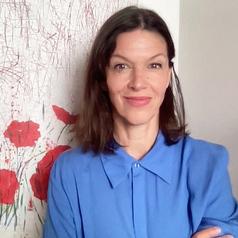
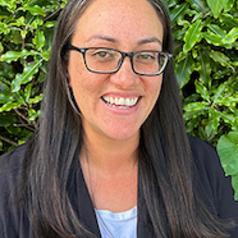
PhD Candidate in Political Studies, Queen's University, Ontario Emma Fingler (she/her) is a SSHRC-funded doctoral candidate of Political Studies at Queen’s University researching gender, disaster response operations, and regional governance in South and Southeast Asia. She is a Doctoral Fellow with the Research Network on Women, Peace and Security (RN-WPS) at McGill University and is a Graduate Research Fellow with the Centre for International and Defence Policy (CIDP) at Queen’s University. Emma is also a Teaching Fellow at Queen’s University. Prior to joining Queen’s, she was the Special Assistant to the United Nations Resident Coordinator in Kathmandu Nepal. She holds an M.A. in Global Governance from the University of Waterloo’s Balsillie School of International Affairs and a B.A. Hons. in Political Studies from Bishop’s University.
Reader in Political Theory, Queen Mary University of London I am Reader in Political Theory at Queen Mary University London, UK and my research focuses on the intersection of ethics of war and ethics of technology with an emphasis on unmanned and autonomous / intelligent military technologies and their impact on the politics of contemporary warfare. I am the author of ‘Death Machines: The Ethics of Violent Technologies’ (Manchester University Press) and have written extensively on military AI, autonomous weapons and the ethical implications of such military machines. I am a 2024 Leverhulme Research Fellow, with a project on the poliitcs of Apocalyptic AI.
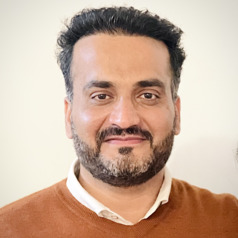
Research Assistant in Educational Policy, University at Albany, State University of New York Enayat Nasir is a Ph.D. scholar in educational policy and leadership at the State University of New York at Albany (SUNY Albany). He has earned a Master of Science in the same discipline from SUNY Albany and has also undertaken Project Management studies at Cornell University. He is an alumnus of prestigious programs like the Fulbright Program, the Swedish Institute, and the World Innovation Summit for Education. He researches equity in education, public-private partnerships, and the privatization of higher education. His research and advocacy work has gained considerable attention. Enayat shares his expert opinions and analyses through various channels, including his blog (https://enayatnasir.substack.com/). Enayat is deeply committed to advocating for girls' education in Afghanistan.
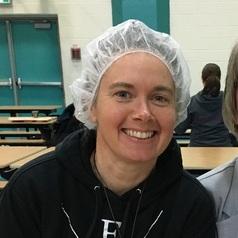
Postdoctoral Fellow, School of Science and the Environment, Grenfell campus, Memorial University of Newfoundland Emily Doyle is a postdoctoral fellow at Grenfell campus of Memorial University of NL. Under the supervision of Dr. Vodden at the Rural Resilience Lab, Emily’s main focus is on coordinating the PhiLab Atlantic Hub. PhiLab is a SSHRC funded partnership research project focused on investigating the social and environmental impact and engagement of philanthropy. Emily is currently engaged in research about the interaction of food systems and philanthropy working in partnership with the Three Rivers Mi’kmaq Band. Other areas of current research include investigating the Living Lab as an innovative practice, investigating promising models of school food programs and understanding health systems and accountability.
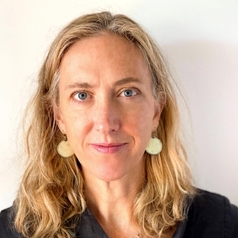
Associate Research Professor of International Relations, Tufts University Elizabeth Stites directs the Feinstein International Center’s Research Program on Conflict and Livelihoods, focused on the effects of conflict and violence on civilian livelihoods. She is particularly interested in how different members within a household make changes to their livelihoods in times of conflict or crisis, and also how violence and livelihood strategies can reinforce each other. On the policy level she examines the effects of humanitarian, development, and military policies on livelihoods, security, and gender roles. Her field work aims to improve the effectiveness of international and national policies through evidence-based research reflecting the lived experiences of local communities. She aims to understand the challenges and hopes that inform people’s daily decision making, and strives to ensure that local people’s voices and experiences are heard in contexts in which they are often invisible. She has worked in multiple countries in sub-Saharan Africa, in Afghanistan, Bosnia, and Nepal and on the Syria crisis. Prior to joining Feinstein, Stites worked as a consultant to UN organizations, academic centers, and international non-profits. She lived in South Africa for four years in the 1990s, where she researched post-apartheid land restitution and worked closely with families, community groups, government agencies, and non-profit organizations. She holds a B.A. from Wesleyan University, an M.A. from the University of Cape Town (South Africa), and an M.A.L.D. and a Ph.D. from The Fletcher School at Tufts University.
Associate Professor of Hauora Māori, University of Otago My research focuses on the way in which health policy and the health system can improve Māori health outcomes in Aotearoa New Zealand.