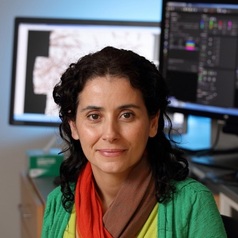
Senior Lecturer, Cardiff Metropolitan University I am a senior lecturer in Education at Cardiff Metropolitan University, specialising in Additional Learning Needs (ALN), disability and inclusion. I have been working at the University for 14 years during which I have taught across a range of different undergraduate programmes but currently deliver modules on the BSc (Hons) Education, Psychology and SEN (special educational needs) programme. During my time as a lecturer, I completed a part-time PhD which explored how assistive technology could support the needs of pupils with a visual impairment. Prior to this I was a Research Assistant at the University where I conducted research relating to a range of different areas relating to education.
Lecturer in Film and Media, Bangor University Dr Elena Hristova is a Lecturer in Film and Media at Bangor University, Wales, UK. I'm a historian of U.S. media and culture. My research is at the intersection of media and communication history, critical whiteness studies, gender studies, social movements, and critical approaches to methodology. My current work examines the history of women's labour in media and communication research and it's implications for disciplinary foundations and research methodology. My research has been published in the International Journal of Communication, and my co-edited (with Aimee-Marie Dorsten and Carol A. Stabile) collection The Ghost Reader: Recovering Women's Contributions to Media Studies is published in January 2024 by Goldsmiths Press. I used to edit Teaching Media Quarterly, an open access peer reviewed journal for the undergraduate classroom.
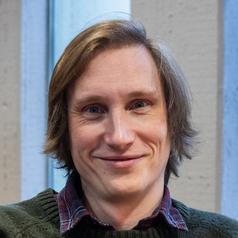
Associate Professor of Biology and Cell Biology, University of Virginia Through evolutionary history the human genome was optimized to promote survival in environments where food is mostly scarce. These survivor-genomes clash with an environment where calorie-rich foods are readily available. Based on the premise that the genes networks that allow animals to endure starvation are under strong selective pressure and consequently conserved, we use a combination of cutting-edge functional genomics, biochemical, cell biology, genetic, and physiological approaches to identify and characterize the conserved gene networks that allow the animal model Caenorhabditis elegans to adapt to changes in food availability. Ultimately, our research would contribute to better understanding of how dysfunctional gene networks affect or cause obesity, diabetes, and cardiovascular disease, and accelerate aging.
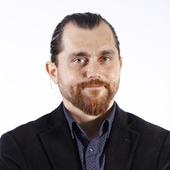
Project scientist for the Transients and Pulsars with MeerKAT (TRAPUM) collaboration, Max Planck Institute for Radio Astronomy My primary research interests are pulsars, radio telescopes and high-performance computing. At the Max Planck Institute for Radio Astronomy (MPIfR) in Bonn, I lead a team of scientists, software engineers and systems architects who specialise in the development of high-performance instrumentation for radio telescopes around the world. Our instruments aim to provide universal processing systems, capable of handling the myriad use cases for radio telescopes, from pulsar observations to spectroscopy and very long baseline interferometry. We work with cutting-edge, commodity off-the-shelf GPU and FPGA accelerators to push the limits of what our telescopes can do. I also serve as the project scientist for the both the Transients and Pulsars with MeerKAT (TRAPUM) collaboration and the MPIfR-MeerKAT Galactic Plane Survey (MMGPS). The TRAPUM collaboration uses the MeerKAT radio telescope in South Africa to hunt for radio pulsars in places of special interest throughout the Galaxy and beyond. Through observations of supernova remnants, gamma-ray sources, globular clusters and nearby galaxies we have discovered more than 100 new pulsars, including exotic systems that probe fundamental physics. The MMGPS is a unique pulsar and imaging survey that uses MeerKAT to observe the Galactic plane at multiple frequencies. Its goals are to discover new pulsar systems and probe the galactic magnetic field. To enable the TRAPUM and MMGPS projects, as well as the ERC-funded MeerTRAP project, which searches for fast transients with MeerKAT, my team and I at the MPIfR built and operate two powerful computing clusters located on the MeerKAT site. One of these clusters provides MeerKAT with the ability to perform high-time resolution observations in may hundreds of different directions at the same time. The other provides the means to analyse the data, to search for extreme relativistic pulsar binary systems. My team and I work on several other instrumentation projects. These include the ERC-funded, Crete-based ARGOS telescope, the joint Max-Planck-Gesellschaft (MPG) - Chinese Academy of Sciences (CAS) funded cryogenically-cooled phase array feed programme and the pan-European ERC-funded radio technology programme RADIOBLOCKS. We also operate the SARAO and MPG-funded, SKA-MPG telescope, the first dish of the Square Kilometre Array radio telescope.