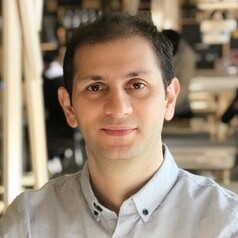
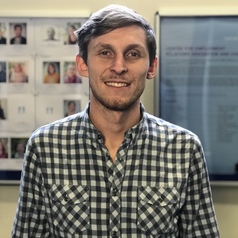
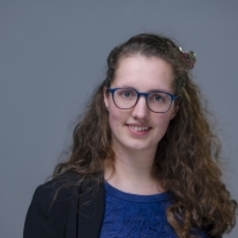
Associate professor in robotics, Durham University Farshad Arvin is an Associate Professor in the Department of Computer Science at Durham University. Farshad's research interests include Swarm Robotics, biohybrid robotics and Autonomous Multi-agent Systems.
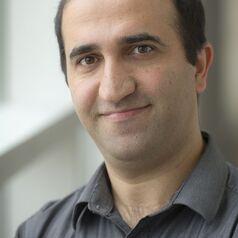
Research Associate Professor, Department of Earth & Environmental Sciences, University of Waterloo Dr. Fereidoun Rezanezhad is a Research Associate Professor in the Department of Earth and Environmental Sciences at University of Waterloo. He received his PhD in 2007 from the University of Heidelberg, Germany, in soil and environmental physics. His research broadly focuses on soil-water-atmosphere interactions and the effects of climate change and management practices on carbon and nutrient biogeochemistry in natural and disturbed ecosystems. Rezanezhad has extensive field experience in terrestrial and wetland ecosystems, specifically with soil and water quality, and nutrient and greenhouse gas flux monitoring. His current research targets cold regions Critical Zone science with a particular focus on hydro(bio)geochemical soil processes in cold-temperate to subarctic and permafrost regions.
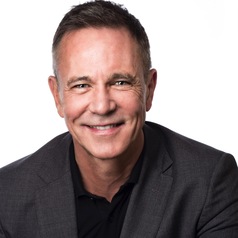
Reader in Media Innovation and Entrepreneurship, University of Central Lancashire François is a media innovation specialist with wide international experience who teaches across a range of practical and theoretical journalism courses, as well as supervising PhD studies on topics related to innovation and sustainability. A National Teaching Fellow of the Higher Education Academy, he is on the leadership team of the UCLan Research Centre for Digital Life and a member of the Media Innovation Studio.
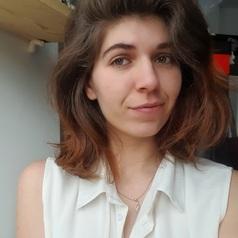
Doctorante en Écologie halieutique et biologie moléculaire, Institut national de la recherche scientifique (INRS) Étudiante au doctorat de biologie à l'INRS - AFSB dans les domaines de l'écologie halieutique et de biologie moléculaire. Mon sujet de recherche s'intitule "Biopsie liquide et approche omique pour le suivi de populations de téléostéens dans le golfe du Saint-Laurent". Je m'intéresse au développement de nouveaux biomarqueurs de l'état de santé des poissons qui soient sensibles, simples, pratiques, peu coûteux et minimalement invasif pour l'animal. Les espèces sur lesquelles je travaille sont toutes socio-économiquement importantes, mais les changements récents de l'environnement soulèvent des problèmatiques au niveau des pêcheries, puisque leur population est en diminution depuis plusieurs dizaines d'années. Pour ce faire, je m'inspire de l'étude du microbiome circulant, ou des différentes bactéries que l'on peut détecter dans le sang via leurs acides nucléiques. En effet, celui-ci est très sensibles et permet de détecter toutes sortes de pathologies ou de stress sur l'organisme chez l'humain, et j'essaye de l'adapter au téléostéens afin de mieux évaluer leur état de santé, puis par la suite mieux gérer la pêche sur ces espèces.
Research Fellow, University of Leeds Interdisciplinary researcher working on sociological and social-psychological perspectives around climate change. I am interested in institutional and individual level factors influencing climate change actions and perceptions. Of particular interest to my research are workers and labour unions in the social-ecological transformation and the role of value orientations.
Lecturer at Global Systems Institute, University of Exeter I'm a complexity scientist with experience modelling climate, energy systems and the economy. I'm working on innovation in the energy system and the transition towards sustainable energy. I have been involved in the EEIST project led previously by Jean-Francois Mercure. The project seeks to inform energy policy in China, Brazil and India, as well as the UK and the EU. As part of this project, I've improved the representation of the power sector in the energy-economy-environment model E3ME-FTT. Major energy technologies in E3ME-FTT are represented with evolutionary economics, so that the diffusion of a new technology follows an S-curve. I've improved the power sector model by improving the representation of learning, getting higher-quality data and improve the representation of energy storage. As a next step, I'm involved in developing a submodel of E3ME-FTT for flexibility, storage and hydrogen to gain a better understanding of the diffusion of high shares of variable renewables, and the way sector coupling can help. This should inform what type of policies are effective now that the major barriers towards diffusion are changing (supply chain / grid stability rather than costs) I did my PhD within mathematics in the Exeter Climate Systems group with Peter Cox. It involved finding a theoretical basis for emergent constraints and improving (statistical) techniques. For some processes, a group of climate models shows a relationship between a past and future variable. Measurements of the first allows us to exploit this relationship and get a better estimate of our future climate. My focus was on decadal variability, historical warming and climate sensitivity.