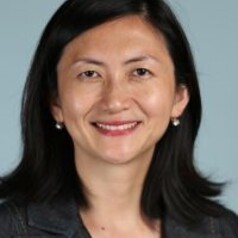
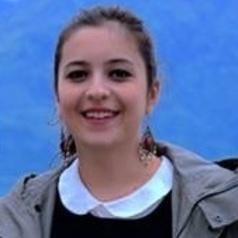
Assistant Professor, Faculty of Law and John Dossetor Health Ethics Centre, University of Alberta Florence Ashley is an Assistant Professor at the Faculty of Law and member of the John Dossetor Health Ethics Centre. An award-winning transfeminine jurist and bioethicist who moves through academia using a profoundly transdisciplinary approach, Florence conducts broad-ranging research on issues faced by transgender people in the legal and healthcare systems. Florence holds BCL/JD degrees and an LLM (Bioeth) from McGill University and received their SJD from the University of Toronto. In 2019-2020, they served as the first openly transfeminine law clerk at the Supreme Court of Canada in the chambers of Justice Sheilah Martin. Florence is the author of Banning Transgender Conversion Practices: A Legal and Policy Analysis (UBC Press, 2022; foreword by UN Independent Expert Victor Madrigal-Borloz). They have published over 30 refereed articles and chapters in journals including the University of Toronto Law Journal, the NYU Review of Law & Social Change, Nature, the Journal of Medical Ethics, the Canadian Medical Association Journal, Perspectives on Psychological Science, and MIND. Their work has been cited by the Supreme Court of Canada, the United Nations Independent Expert on Sexual Orientation and Gender Identity, and the World Professional Association for Transgender Health standards of care. Florence is a frequent contributor to public conversations on feminist and LGBTQ issues, penning op-eds and offering their expertise to journalists. They are a founding fellow of the Centre for Applied Transgender Studies and sit on the editorial board of its flagship Bulletin of Applied Transgender Studies. Florence is a member of the Law Program Committee of the Women’s Legal Education and Action Fund (LEAF) and of the National Council of the Canadian Civil Liberties Association (CCLA).
Associate Professor in Political Science and International Relations, UNSW Sydney Fengshi Wu is an Associate Professor in Political Science and International Relations at the School of Social Sciences, University of New South Wales (UNSW), Sydney, Australia. She is a world leading scholar in environmental politics, state-society relations, and global governance with the empirical focus on the Asia Pacific region (esp. East Asia, Southeast Asia, and Central Asia). Her recent research and teaching interests highlights the global transformation of the energy system rapidly accelerated by the challenges and geo-politics of climate change.A graduate of the University of Maryland (PhD in political science) and Beijing University (BA Hons International Relations), she has been a Visiting Professor at the Harvard-Yenching Institute (2008-2009) and the Sciences Po, Paris (Nov. 2024).
Koala Biologist, CQUniversity Australia I am a biologist, with an in-depth understanding of animal biology, zoology and skills in laboratory work. During my PhD in koala ecology, I expanded my expertise to include research based on monitoring wildlife in the natural environment. I radio-tracked koalas, examined their health status, observed their movements and their fodder selection. Since then, I have been interested in the prevalence of disease and other issues causing the decline of many koala populations. Currently, I am a researcher with Koala Research-CQ (Central Queensland) at Central Queensland University. I have designed surveys to assess the number of koalas and evaluate koala habitat. My current research focuses on the non-invasive detection and assessment of stress and disease in koalas with a particular focus, but not exclusively. on populations of Central Queensland. Aside from my research, I have been involved with Landcare groups in improving the habitat of koalas and in the rescue of koalas after wildfires.
Senior Scientist, International Centre of Insect Physiology and Ecology Dr Fathiya Mbarak Khamis is a senior scientist in ICIPE’s Plant Health Theme. She holds BSc and MSc degrees in biochemistry from Jomo Kenyatta University of Agriculture and Technology and a PhD in molecular biology from Kenyatta University. She has worked in Kenyatta University transitioning from a graduate assistant to a tutorial fellow and later a lecturer in the Department of Biochemistry and Biotechnology. Fathiya is currently working on native and invasive insect pests of fruits and vegetables that are of economic importance for food security in Africa and beyond. She applies molecular techniques to assess the safety of insects as a sustainable source of nutritious food for humans and feed for livestock. She has taken a key role in utilising her expertise to develop and promote effective and ecologically sustainable integrated pest management systems, and to assess microbial safety of edible insects and their rearing substrates, which is critical for mainstreaming the insects’ alternative sources of protein for food and feed in the continent. She serves as a member of ICIPE’s institutional biosafety committee and Institutional Board of Postgraduate Studies, a member of the Biochemical Society of Kenya and on the editorial board of Frontiers in Insect Physiology and is a reviewer for several high impact peer reviewed journals. Fathiya has authored and co-authored more than 100 articles in international peer-reviewed journals and book chapters with a Google Scholar citation of 1984, an h-index of 23 and i10 index 50. She is active in building research capacity in Africa through mentoring and supervising students, young scientists, and technical staff. In recognition of her contribution to research and development in Africa, Dr Khamis was awarded the 2019 TWAS-Abdool Karim Prize in biological sciences.
Chercheur spécialiste des migrations internationales et études sur le Moyen-Orient, Swedish Institute of International Affairs (UI) Politiste de formation, Fanny Christou est diplômée de Sciences Po Toulouse (2013). Elle est aussi titulaire d'un Master Recherche en Géopolitique et Relations Internationales (Université de Toulouse, 2013) et d'un autre Master en Stratégies Culturelles Internationales (Université d'Albi, 2014). Après une expérience professionnelle à l’Organisation internationale pour les migrations, elle a obtenu son Doctorat en Géographie - codirigé entre l'Université de Poitiers (Migrinter) et l'Université Américaine de Beyrouth - en décembre 2017. Ses travaux de thèse portent sur la territorialisation de la mobilisation politique de la diaspora palestinienne en Suède, , avec un intérêt particulier sur les migrations palestiniennes de Jordanie, du Liban, de Syrie et des territoires occupés palestiniens vers l’Europe du Nord pour interroger ce que signifie « être Palestinien » aujourd’hui. Tout au long de son parcours doctoral, Fanny a reçu divers prix de recherche et distinctions (Institut des Hautes Etudes de Défense Nationale, Fondation de France, Fondation Poitiers Université). Elle a par la suite pu s’intéresser à la diaspora palestinienne installée en Allemagne grâce à l’octroi d’une bourse post-doctorale de la Fondation Croix Rouge française entre 2018 et 2019. Elle a bénéficié, pour la conduite de ces travaux de recherche, d’un accueil scientifique au Centre for Advanced Middle Eastern Studies, Université de Lund, Suède, où elle a également travaillé sur deux projets de recherche inscrits dans le programme The Middle East in the Contemporary World MECW. À la suite d'un post-doc international à l'Université de Lund, dans le cadre d'un projet de recherche portant sur les migrations et le changement climatique au Soudan, Fanny est désormais chercheure fellow au Swedish Institute of International Affairs (Middle East and North Africa Programme) où elle mène un projet sur les diasporas palestiniennes et kurdes en Suède. Elle a également enseigné en France, en Suède et au Danemark divers sujets portant sur la géopolitique du Moyen-Orient. Fanny Christou est chercheure associée à Migrinter, Université de Poitiers, à l’Institut Convergences Migrations, France et au Centre arabe de recherches et d’études politiques de Paris (CAREP Paris).