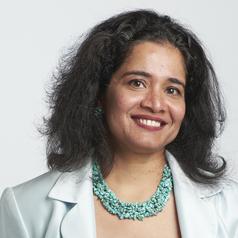
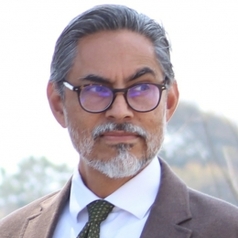
Professor of Comparative Cognition, University of Sussex Gillian is a comparative psychologist interested in human and non-human primate cognition. Her research involves the integration of modern technology and the convergence of methodologies across multiple disciplines. Gillian began her research studies in primate cognition as an undergraduate in cognitive science at the University of California San Diego. She subsequently earned a D.Phil. from Oxford University where she investigated the neural correlates of human language and attention using neuroimaging methods (EEG, PET, fMRI). As a postdoctoral student, Gillian honed her developmental psychology knowledge running behavioral and imaging studies of infant cognitive development at the Centre for Brain and Cognitive Development under the direction of Mark Johnson. Using knowledge of human cognition and quantitative neuroscience techniques, a second postdoctoral position awarded by the Daphne Jackson Trust at the University of Sussex, provided an opportunity to develop a new multidimensional method (MDM) to investigate naturalistic behavior across disparate populations. This research focused on gaining a better understanding of both the evolution and the development of human and non-human primate nonverbal communication skills through the quantitative assessment of western lowland gorilla behavior.
Lecturer in Animal Behaviour and Welfare, School of Psychology, Queen's University Belfast Grace is a Lecturer in Animal Welfare and Behaviour at the School of Psychology, Queen’s University Belfast. She holds a First Class Honours BSc in Applied Psychology (2011) and an MSc in Animal Behaviour and Welfare, with Distinction (2012). In 2017, she completed her PhD in Farm Animal Welfare Science. Her research focuses on farm animal welfare, particularly pigs, focusing on harmful behaviours, and post-mortem indicators of welfare. She also investigates cat welfare, the psychology of pet-keeping, and strategies for changing human behaviour to improve animal welfare. Grace’s work aims to enhance the well-being of animals and promote better human-animal relationships.
NHMRC Emerging Leader Research Fellow, Institute of Musculoskeletal Health, University of Sydney I am an NHMRC-funded Postdoctoral Research Fellow at the Institute for Musculoskeletal Health, The University of Sydney. My work aims to improve musculoskeletal health in Australia and internationally.
Professor of Art Therapy Research, Drexel University Dr Girija Kaimal (EdD, MA, ATR-BC) is Associate Professor, Interim Chair and Assistant Dean for the Division of Human Development and Health Administration at the Drexel University College of Nursing and Health Professions. She serves as interim Chair to the oldest creative arts therapies department in the world preparing clinicians and researchers in art therapy, music therapy, dance movement therapy and counseling. In her Health, Arts, Learning and Evaluation (HALE) research lab, she examines the physiological and psychological health outcomes of visual and narrative self-expression. She has published over 80 peer-reviewed papers and published a book with Oxford University Press called The Expressive Instinct. Her research has been continually funded since 2008 by federal agencies like the Department of Defense, Department of Education, National Endowment for the Arts as well as foundation and academic centers and has been featured by NPR, CNN, The New York Times as well as a range of media outlets worldwide. In her current studies, she is examining outcomes of art therapy for military service members with traumatic brain injury and post-traumatic stress, narratives from Gulf war veterans, and arts-based approaches to mitigate chronic stress among patients and caregivers in pediatric hematology/oncology units. Additional international research projects include examining the therapeutic underpinnings of indigenous and traditional artforms and the creative self-expression in times of adversity across the human lifespan. Living out her research interests, she has been a lifelong visual artist and her art explores the intersection of identity and representation of emotion. Her service commitments at present include being the President of the American Art Therapy Association (a member organization of over 4,300 members) and faculty senate representative from CNHP. Dr. Kaimal has a doctorate from the Harvard University Graduate School of Education, Master of Arts from Drexel University and Bachelor's in Design from the National Institute of Design in India.
Executive Director, AI and Cyber Futures Institute, Charles Sturt University Ganna Pogrebna is a behavioral data scientist, decision theorist, educator, author, and academic writer. She currently serves as the Executive Director of the Artificial Intelligence and Cyber Futures Institute at Charles Sturt University, the Lead for Behavioural Data Science at the Alan Turing Institute (UK), and an Honorary Professor of Behavioural Business Analytics and Data Science at the University of Sydney. She is known for her work in combining data science methods with those from economics and psychology to model human behaviour under risk and uncertainty.
Professor of Chicana and Chicano Studies, University of California, Santa Barbara Gerardo Aldana is professor of Chicana/o Studies at the University of California, Santa Barbara. His research takes a history of science approach to the astronomical knowledge recorded in Mayan hieroglyphic inscriptions as well as that captured in architectural construction. His most recent book, Calculating Brilliance: an intellectual history of Mayan astronomy at Chich’en Itza (University of Arizona Press, 2022), explores the historical development of the Dresden Codex Venus Table, culminating in its final version deployed at Mayapan.