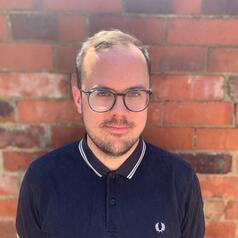
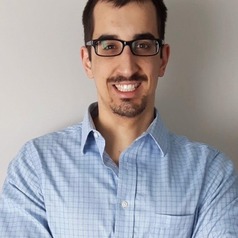
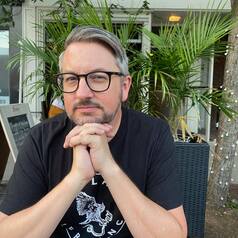
Leverhulme Early Career Fellow, University of Manchester I am a writer and researcher based in Manchester, currently working on a project on energy privatisation as a Leverhulme Early Career Fellow (Uni of Manchester). Prior to this I researched environmental planning at Newcastle and UCL. My academic research focuses on the ideology and state practices of the energy transition. I have also written on energy and UK politics for Tribune, LRB, Labourlist and New Socialist.
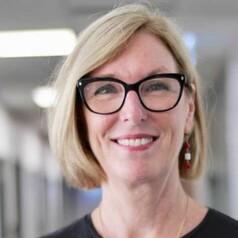
Senior Lecturer in the School of Education and Professional Studies, Griffith University My teaching career spans 35 years in school systems, where I have taught across a range of disciplines and held several high-profile positions. I am employed at Griffith University within the School of Education and Professional Studies (EPS) in an array of courses across the Bachelor of Education, Masters of Secondary Teaching, and Graduate Certificate in Special Needs Education. The completion of a Doctorate of Education in 2014 has afforded me the opportunity to build a national profile in special needs education. My thesis adopted social constructionism as a theoretical framework for exploring the schooling experience of six adolescent boys diagnosed with Attention Deficit Hyperactivity Disorder (ADHD). My current research on differentiated learning experiences and teaching practices best suited to students with ADHD in selected Queensland schools is providing me with a platform to build an international profile as a leader in the area.
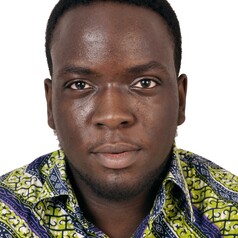
PhD Student in Human Geography, Queen's University, Ontario A dedicated and highly motivated doctoral student in Human Geography, specializing in Immigration and International student retention in Canada. My research delves into specific data sets and trends within this field, aiming to contribute valuable insights to both academic research and policy development.
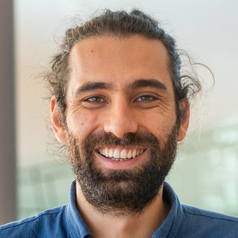
Professeur, Département des sciences de l'activité physique, Université du Québec à Trois-Rivières (UQTR) Gabriel Moisan est professeur au Département des sciences de l'activité physique de l'Université du Québec à Trois-Rivières depuis 2020. Sa programmation de recherche porte sur l’évaluation orthopédique des patients ainsi que sur la biomécanique du pied et de la cheville lors de la locomotion, avec un accent particulier sur la façon dont les orthèses plantaires modifient la biomécanique des membres inférieurs. Gabriel Moisan est titulaire d’un doctorat de premier cycle en médecine podiatrique et d’une maîtrise en sciences de l’activité physique de l'Université du Québec à Trois-Rivières, Canada, ainsi que d'un doctorat en sciences biomédicales de l'Université de Montréal, Canada. Il a également complété un postdoctorat à l’University of Salford au Royaume-Uni et un postdoctorat à l’Université Laval au Canada. Ses recherches ont permis de développer des connaissances importantes sur de nouvelles méthodes pour effectuer l’évaluation orthopédique des patients ainsi que les déficits biomécaniques chez les personnes atteintes de troubles neuromusculosquelettiques lors de la locomotion et sur la capacité des supports externes (p. ex., orthèses plantaires) à atténuer ces déficits. En plus de sa carrière de chercheur, il est également podiatre depuis 2014.
Professor of Psychology, University of Toronto In general, my lab focuses on issues of social connection and disconnection. I’m well versed in attachment theory, and have spent a lot of time working on issues around the intersection of attachment avoidance and intimacy (e.g., Muise et al., in press; Sanscartier & MacDonald, 2019; Schrage et al., in press). However, much of the research in my lab is student-driven, so it is difficult to anticipate what direction the lab’s work will take in the future. For example, my past students have developed ideas around fears of being single (e.g., Spielmann et al., 2013), relationship decision making (e.g., Joel et al., 2013), and implicit beliefs about sexuality (e.g., Maxwell et al., 2017). My current students focus on issues including positive emotion in romantic relationships, relationship maintenance processes, and even the process of conducting research itself. I’m always open to pursuing a good idea. However, one emerging theme of the lab’s work is the intersection of singlehood and sexuality. Long-term singlehood is becoming increasingly common yet little is known about what predicts well-being in singlehood (Pepping, MacDonald, & Davis, 2018). Some data from my lab suggests that feeling sexually satisfied is particularly related to being happy with singlehood and life in general (Park, Impett, and MacDonald, in press). But what leads people to feel like their sexual needs are met (or not) as a single person? Not only do we not know, but we don’t even have good measurement instruments to answer the question. My lab is trying to work on both of these issues. Some broader issues that interest me now include thinking about attachment theory in light of longitudinal findings on the relatively small role of childhood treatment in adult attachment security (see Fraley & Roisman, 2019), the role of Big 5 Personality traits in attraction and maintenance of relationships (e.g., Park & MacDonald, 2019), and better understanding what people are doing psychologically when they let go of a close relationship (e.g., LeRoy et al., 2019).