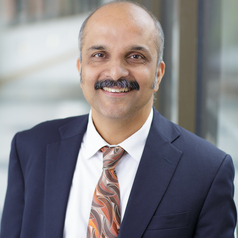
Professor of Neurology, University of Florida Giridhar Kalamangalam, MD, DPhil, is Wilder Family endowed professor and the Division Chief of Epilepsy at the UF College of Medicine. He was recruited by UF Health to his current position in September 2017. Dr. Kalamangalam was born and raised in India, where he completed medical school at the Jawaharlal Institute of Postgraduate Medical Education and Research (JIPMER) in Puducherri. He was a Rhodes scholar to Oxford University, England, where he earned a master’s degree (MSc) in applied mathematics and a research doctorate (DPhil) in mathematical biology. He obtained clinical training in internal medicine by rotation in various hospitals in the British National Health Service and completed a general neurology residency at the Institute of Neurological Sciences, Glasgow. He was fellowship trained in epilepsy and EEG at Cleveland Clinic. Dr. Kalamangalam’s career has been devoted to the care patients with epilepsy and research in the science of, and around, epilepsy. His publications have appeared in multiple peer-reviewed journals, and his work has been funded by the National Institute of Neurological Disorders and Stroke as well as the American Epilepsy Society, among others.
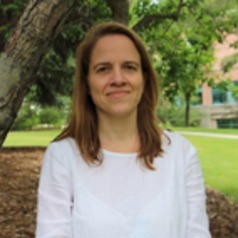
Associate professor, Faculty of Social Work, University of Calgary Gina Dimitropoulos joined the Faculty of Social Work as an Assistant Professor in 2015. She has over 20 years of clinical experience in both tertiary care and community based settings delivering family based treatments, group therapy and individual counselling for adolescents and adults with mental health issues. She teaches graduate level clinical and research courses. Gina also has extensive research experience in various methodologies including randomized controlled trials, mixed methods analyses, health services research and qualitative research. She has three broad areas of research that all aim to promote inter-agency collaborations to support young people with mental health issues and their families. Gina is involved as a principal investigator or co-investigator on leading national and international studies evaluating family based treatments for children and adolescents with eating disorders. Secondly, Gina works with researchers to develop and evaluate best practices for transitioning young people with complex health needs and mental health issues from adolescent to adult services in Alberta. Finally, Gina is involved in research to identify the longitudinal impact of child maltreatment and child pornography on the psycho-social development of children and adolescents.
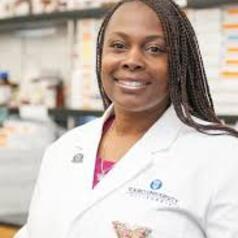
Associate Professor, College of Osteopathic Medicine, Touro University Dr Grace Marie Jones is an assistant professor at Touro University California, where she teaches biochemistry and works to understand the role of fructose and carbohydrate consumption on lipid synthesis, insulin sensitivity and chronic disease. Dr Jones is a co-investigator on several NIH-funded studies and supervises laboratory analyses at TUC's Mass Spectrometry Core Lab. She recently published a paper in the Journal of Lipid Research outlining a method to study postprandial lipoproteins. She holds a PhD focused in molecular genetics from Albert Einstein College of Medicine.
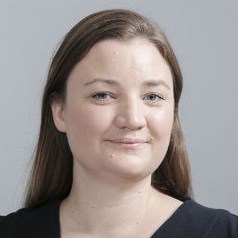
Associate Professor in Criminal Law, Durham University Gemma joined Durham Law School as Associate Professor in Criminal Law in September 2022. Her research interests and expertise broadly lie at the intersection between criminal law and public international law. This includes exploring issues around transnational criminal law, extradition, European criminal law, Part Three of the Trade and Cooperation Agreement, and criminal jurisdiction amongst others. Her work aims to understand barriers to criminal justice cooperation, particularly between the UK and other states and seeks to facilitate better cooperation which also adequately protects the privacy and fundamental rights of citizens. In recent years she has worked on two funded projects which considered the implications of Brexit for criminal justice cooperation between the UK and Ireland and policing of the dark web. She has most recently written on UK access to electronic evidence stored overseas and the continued role EU data protection rules play in cooperation with third states such as the U.S., even after Brexit. Her focus is on producing research which engages with policy and practice. She draws on her background as a barrister practising in criminal law from 2005 to 2012 and her many years of experience teaching students undertaking the vocational stage of qualification as a barrister at Northumbria University. Maintaining links with the profession continues to be important to her work. She regularly contributes to Parliamentary inquiries and consultations and has twice given oral evidence to a Parliamentary Committee which can be seen here and here. She has experience of writing policy focused research papers aimed at a non-academic audience and has written for think tanks such as UK in a Changing Europe and the LSE Brexit blog. She has made media appearances on radio and been cited by the Guardian, the BBC, and the Irish Times and the Irish Law Commission. She has also provided training to the judiciary on the extradition provisions of the Trade and Cooperation Agreement. Outside of the university Gemma currently sits on the advisory board of the Independent Commission on UK-EU Relations focusing on the post-Brexit relationship between the UK and EU in the field of criminal justice and security cooperation. She is also an elected committee member of the European Criminal Law Association (UK) which aims to study, discuss and provide information on the development of the criminal law in Europe by means of seminars and publications. She also founded the UK-Irish Criminal Justice Cooperation Network with funding from the AHRC and previously was a committee member of the Association of Law Teachers. She has been Principal Investigator, Co-investigator or team member in 7 funded research projects which have been funded by the European Commission, Nordsfork, the Equalities and Human Rights Commission, the Society of Legal Scholars and the Arts and Humanities Research Council. She is book review editor of the International Journal of Evidence and Proof. She is currently the Bar Standards Board Lead External Examiner for Advocacy.
Lecturer of criminology, University of Southern Queensland Gianni is a Lecturer in Criminology based at the Ipswich campus. Prior to joining the School of Law and Justice in 2023, Gianni obtained her PhD in applied cognitive and social psychology from The University of Queensland in 2020 with no corrections and was a Postdoctoral Research Fellow in the School of Psychology at the University of Queensland working in collaboration with Queensland Police Service. Gianni is interested in research relating to the role evidence in legal decision-making. How do jurors and other legal decision-makers understand forensic evidence? How can we improve their understanding? How should forensic experts (e.g., fingerprint examiners) testify about their decisions and expertise in a way that will enable jurors to understand and evaluate the evidence appropriately? Gianni is also interested in exploring the role of contextual relationship evidence (for an overview, see: Tidmarsh, Powell, & Darwinkel, 2012) in helping jurors to understand the complexities of gendered violence offending and overcome common stereotypes.
PhD Candidate, University of Adelaide Gianluca Di Censo is a PhD student at the University of Adelaide. His research is on how gambling advertising influences young people. His primary research interests are in health and addictive behaviours. He also has an interest in evolutionary and developmental psychology.